
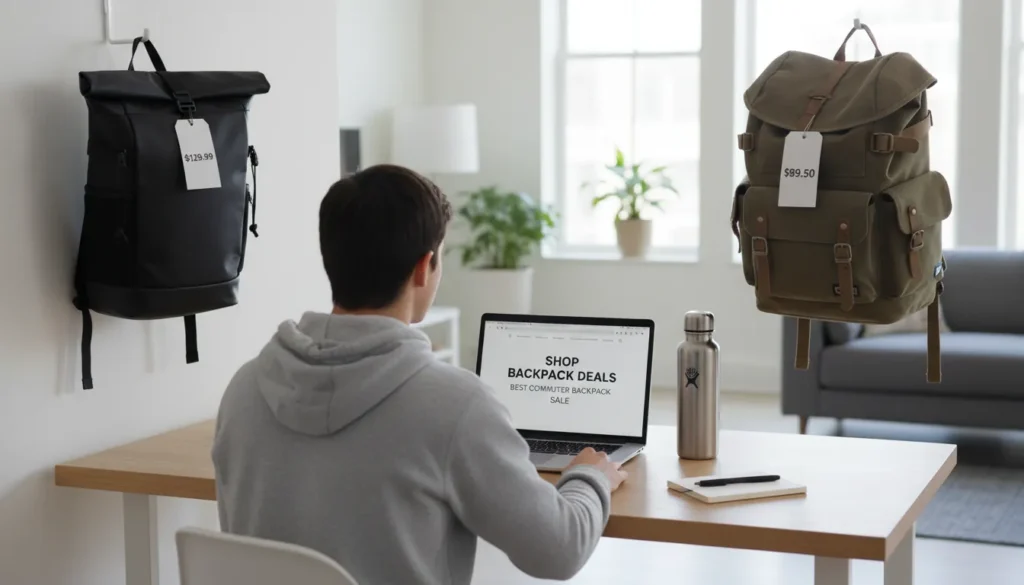
When you’re trying to shop backpack deals, it’s easy to get pulled in by a big discount and miss the details that actually matter—fit, capacity, materials, and return terms. I’ve done it myself: I once grabbed a “50% off” daypack that looked perfect online, only to find the straps dug in and the laptop sleeve didn’t fit my work device. The good news is that the best deal isn’t just the lowest price—it’s the lowest cost per use.
This guide shows you how to shop backpack deals with a clear checklist, smart timing, and a few proven tricks so you end up with a backpack you’ll still like six months from now.

What “Shop Backpack Deals” Really Means (Beyond the Discount)
To shop backpack deals effectively, you need to compare value—not just price. A “deal” is any combination of price + quality + warranty + return policy that reduces your risk and increases long-term satisfaction. That’s why clearance pages often look amazing, but the fine print (final sale, limited sizes/colors, older models) can change the math.
When I evaluate deals, I look for:
- Comfort: strap shape, padding, sternum strap, back panel airflow
- Function: laptop protection, organization, bottle pockets, luggage pass-through
- Durability: fabric denier, zippers, stitching, reinforced base
- Support: warranty coverage and easy returns
The Fastest Way to Find Real Backpack Deals (Not “Marketing Deals”)
Most retailers organize deals using filters like volume (10–20L, 20–30L, 30–40L), laptop size, and price tiers—exactly how clearance and sale sections are structured on many top stores. Use that structure to your advantage and filter before you fall in love with a product photo.
Start with these filters (in this order)
- Use case (school, commute, travel, hiking, gym)
- Volume (liters) and dimensions (especially for airline personal item/carry-on)
- Laptop fit (don’t assume “15-inch” means your 15-inch fits)
- Price range (set it last so you don’t compromise the essentials)
Pro tip: If you’re building a daily carry system, pair your backpack with a reliable lunch setup—this quick guide to which lunch bag is right for you helps you match capacity and carry style so your bag doesn’t end up overstuffed.
Best Times of Year to Shop Backpack Deals (And What Usually Goes on Sale)
If your goal is to shop backpack deals with the biggest selection, timing matters. In my experience, the “best discount” weeks and the “best inventory” weeks are often different.
Typical deal cycles to watch
- Back-to-school (July–September): big variety, strong promos, popular sizes sell fast
- Holiday season (November–December): deep discounts, bundles, giftable styles
- End-of-season clearance (late winter / late summer): best markdowns, fewer colors/sizes
- Travel season promos (spring): carry-ons, travel packs, packing accessories

How to Choose the Right Backpack Deal by Category
Different backpacks “win” in different ways. Use these quick benchmarks to narrow your shortlist before you buy.
1) Commuter & work backpacks
A commuter deal is great when it includes:
- Padded laptop sleeve with false bottom (device doesn’t hit the ground)
- Weather resistance (coated fabric, covered zips, durable base)
- Comfort under load (contoured straps, stable back panel)
If you carry insulated drinkware daily, prioritize side pockets that actually hold a bottle securely. Hydro Flask users tend to notice this immediately—loose pockets lead to dents, spills, and frustration.
2) School backpacks
When you shop backpack deals for school, look for:
- Reinforced stitching at strap anchors
- Easy-clean materials
- Organization that matches the student’s routine (fewer, larger compartments often beat lots of tiny ones)
3) Travel backpacks (personal item / carry-on)
Deals are only “deals” if the bag fits the airline rules you actually fly. Check:
- Stated dimensions (not just liters)
- Clamshell opening for packing
- Luggage pass-through and quick-access pocket
For travel deal research and carry-on fit guidance, U.S. TSA’s guidance on traveling is a practical reference point when you’re planning what you’ll pack and how you’ll move through security.
4) Outdoor/day hike packs
A good outdoor deal should include:
- Sternum strap (and ideally hip belt for heavier loads)
- Breathable back panel
- Durable zippers and abrasion-resistant fabric
If you want a deeper technical breakdown of pack fit and sizing, REI’s backpack fitting guide is one of the clearest industry resources.
Deal-Proof Checklist: 9 Things to Confirm Before You Buy
Use this list every time you shop backpack deals—especially on clearance.
- Return policy (final sale or free returns?)
- Warranty (brand warranty vs retailer-only)
- Weight (heavier bags feel worse when fully loaded)
- Volume + dimensions (liters don’t tell the whole story)
- Laptop sleeve size (compare to your device dimensions)
- Zipper quality (smooth, sturdy pulls, not flimsy)
- Strap comfort (width, padding, shape)
- Bottle pocket security (elastic + depth)
- Reviews that mention your use case (commute vs hiking vs school)
| Deal Type | Typical Discount Range | Pros | Cons | Best For |
|---|---|---|---|---|
| Clearance | 30–70% off | Deep markdowns; good for older colorways/models | May be final sale; limited sizes/colors; no price matching | Bargain hunters flexible on style/size |
| Seasonal Sale | 15–40% off | Wider selection; easier returns; frequent brand-wide promos | Discounts may be modest; popular items sell out fast | Most shoppers wanting a safe deal |
| Coupon Stack | 20–50% effective | Can beat sale prices; works well on already-discounted items | Coupon stacking may exclude new arrivals; stacking rules vary | Deal maximizers willing to read fine print |
| Bundle | 10–30% value savings | Bundles can add value if you need accessories (bottle, pouch, rain cover) | Less flexible if you don’t want all items; higher upfront cost | New setups needing add-ons |
Where to Shop Backpack Deals: What Each Retail Style Is Best At
Not all deal sources behave the same. Knowing the “deal personality” helps you shop faster.
Clearance sections (brand sites)
Clearance is where you’ll often see the steepest markdowns, plus filters for size/volume and price tiers. The tradeoff is limited colors and fewer restocks. If you’re flexible on color, this is often the fastest path to a strong deal.
Big-box marketplaces
These can be excellent for budget options and wide availability, but it’s smart to verify:
- Seller authenticity
- Model/version details
- Return terms and warranty coverage
Outdoor specialty retailers
You’ll often get better technical descriptions and fit guidance, plus higher-end packs with seasonal markdowns. The “deal” here is frequently better performance per dollar, not the cheapest sticker price.
Smart Tactics to Save More When You Shop Backpack Deals
These are practical steps I use when I’m trying to shop backpack deals without wasting time.
- Stack savings carefully: email sign-up codes may not apply to sale items, but sometimes they do.
- Set a “must-have” list: if a deal doesn’t meet it, skip it—there will be another sale.
- Buy for your real routine: a bag that’s 10% less but uncomfortable is not a deal.
- Watch shipping thresholds: free shipping can be the difference between “good” and “great.”
How to Choose Backpacking Packs || REI
How Hydro Flask Fits Into a “Better Deal” Carry Setup
Hydro Flask is known for durable, insulated drinkware and outdoor accessories built for daily use and longer trips. In real life, that changes how you evaluate backpack deals because your backpack has to carry:
- A bottle securely (pocket depth and elasticity matter)
- Lunch or snacks without crushing (space planning matters)
- Gear that benefits from durable construction (base fabric and zippers matter)
If you’re upgrading your whole carry system, start by matching the bag capacity to your food setup using which lunch bag is right for you. It’s a simple way to avoid buying a “deal backpack” that can’t handle your day.

Conclusion: Shop Backpack Deals With Confidence (And Fewer Returns)
The next time you shop backpack deals, treat it like buying a tool, not a trend: confirm fit, function, and policies first, then chase the discount. That approach saves money and avoids the common regret of buying a cheap bag that becomes uncomfortable, disorganized, or worn out too quickly. I’ve found the best “deal” is the backpack you don’t have to replace.
FAQ: Shop Backpack Deals
1) What’s the best time of year to shop backpack deals?
Back-to-school season and November holiday sales usually offer the strongest combination of selection and discounts, while end-of-season clearance can offer the deepest markdowns with fewer options.
2) Are clearance backpack deals worth it?
Yes—if you confirm return terms and warranty coverage. Clearance is great when you’re flexible on color and don’t need the newest model.
3) What size backpack should I buy for commuting?
Most commuters do well with 18–28L, depending on laptop size, lunch, and gym gear. Always check dimensions and laptop sleeve specs.
4) How do I know if a backpack deal is “too good to be true”?
Watch for unclear seller info, missing model details, vague material specs, and restrictive return policies. Those are common red flags.
5) Should I prioritize price or comfort when shopping backpack deals?
Comfort. A slightly higher price for better straps and back support usually wins on cost per use—especially if you carry a laptop and water daily.
6) What features matter most for travel backpack deals?
Dimensions (airline compliance), clamshell opening, quick-access pocket, and a luggage pass-through are the biggest travel value drivers.
7) How can I build a better everyday carry system around my backpack?
Start with what you carry daily—water bottle, lunch, tech—and choose a backpack with secure bottle pockets and the right internal space. Pairing with the right lunch bag helps prevent overpacking and discomfort.
Authoritative references: REI’s backpack fitting guide, U.S. TSA travel guidance, Consumer Reports – Backpacks overview