
A giftware shop is a little like a “panic button” for life: birthdays sneak up, holidays arrive fast, and people want something that feels thoughtful—without spending hours searching. I’ve worked with makers and small retailers who had great products but still struggled with slow days, low margins, or “I can get this anywhere” competition. The fix usually isn’t more inventory; it’s clearer positioning, smarter merchandising, and personalization that customers will pay extra for. This guide breaks down what modern giftware shoppers want and how to build a giftware shop that’s memorable, profitable, and easy to run.
What a Giftware Shop Is (and What Customers Expect Now)
A giftware shop sells gift-ready items—decor, accessories, keepsakes, novelty goods, seasonal gifts, and often small luxuries like candles or gourmet treats. What’s changed is the bar for “special.” Shoppers increasingly expect:
- Fast gifting: ready-to-wrap packaging, clear “for him/her/host/kids” sections
- Meaning: personalization, local stories, or artisan details
- Confidence: easy returns, clear pricing, and helpful staff recommendations
In practice, the best giftware shops don’t try to sell everything. They sell a point of view—and make gifting simple.
Why Giftware Shops Win (Even Against Big Marketplaces)
Big marketplaces are convenient, but they can feel generic. A strong giftware shop wins by doing three things better:
- Curate: fewer items, higher “yes” rate
- Guide: signage, bundles, and “gift in 60 seconds” options
- Personalize: names, dates, locations, inside jokes—done on demand
I’ve seen even small counters outperform larger stores when the shopper can walk out with a customized item in minutes. That’s not just a product; it’s an experience.
10 Profitable Laser Engraving Products // Engraving With The xTool F1 Ultra
Best-Selling Giftware Categories (and How to Merchandise Them)
Most giftware shops perform best with a balanced mix of “easy wins” and “signature items.” Here’s a practical category framework you can merchandise in zones.
1) Everyday Grab-and-Go Gifts
These are your volume drivers—low friction, easy decisions, giftable year-round.
- Candles, soaps, bath sets
- Socks, small accessories, keychains
- Mugs, tumblers, journals, pens
- Mini decor and desk items
Merchandising tip: Place these near checkout with clear price points and “under $25” signage.
2) Occasion-Based Gifts
Shoppers often browse by event, not by product type.
- Birthday, anniversary, wedding, new baby
- Graduation, housewarming, teacher gifts
- Seasonal: Valentine’s Day, Mother’s Day, Christmas
Merchandising tip: Use endcaps or a dedicated “Upcoming Occasions” wall that changes monthly.
3) Personalized and Custom Gifts (Your Margin Builder)
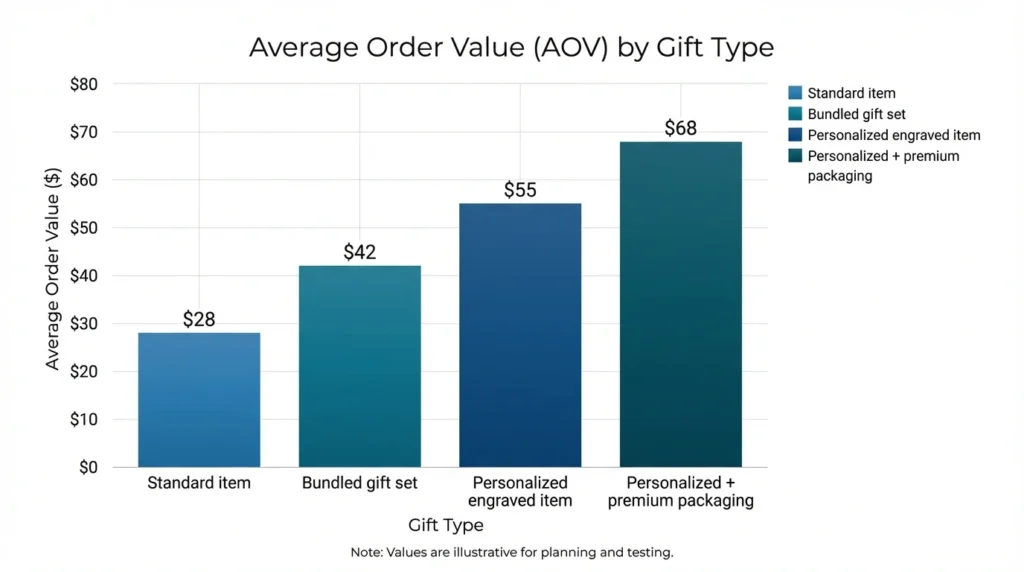
Personalization is where many giftware shops increase conversion and average order value.
- Engraved keychains, jewelry tags, ornaments
- Custom drinkware, keepsake boxes, photo items
- Location-based souvenirs (city names, coordinates, landmarks)
If you want a deeper look at how personalization helps in tourist and souvenir settings, see how laser customization solves souvenirs retail challenges.
The Business Case for Personalization in a Giftware Shop
Personalization works because it changes the shopper’s question from “Is this worth $29?” to “Will they love their name on it?” In stores I’ve helped optimize, customization also reduces price comparison—because the product becomes unique.

What to Personalize (Simple, High-Impact)
Start with items that engrave/mark quickly and look premium:
- Metal tags, keychains, jewelry blanks
- Acrylic ornaments and signage
- Wood keepsake boxes and coasters
- Glassware and drinkware (with proper settings and safety)
For ready-to-use materials that fit gift presentation, browse material jewelry and display packaging.
How to Set Up an On-Demand Personalization Corner (Without Chaos)
A personalization station can be small, but it must be predictable. The goal is speed, safety, and consistent results.
A simple workflow that works in real stores
- Choose templates: monograms, name + date, short phrases
- Limit options: 3 fonts, 6 icons, max 20 characters
- Proof on screen: customer approves spelling before production
- Produce + QC: wipe, inspect, package immediately
- Record settings: build a “material recipe” library for repeatability
I tried “unlimited customization” early on with a partner shop and it backfired—lines got long, staff got stressed, and errors rose. When we reduced choices and added templates, turnaround time dropped and customer satisfaction went up.
| Issue | Likely Cause | Fix | Prevention |
|---|---|---|---|
| Misspellings | Customer details recorded incorrectly; no proof step | Reconfirm spelling; redo item if possible; offer expedited remake | Require written order form; send proof for approval; read-back at checkout |
| Inconsistent engraving depth | Incorrect material setting; worn bit/blade; uneven item surface | Recalibrate settings; replace consumables; secure item with jig | Daily test engrave on scrap; scheduled maintenance; use material presets |
| Long wait times | Understaffing at peak hours; batching inefficiencies; rework load | Add peak-hour coverage; triage simple jobs; pause walk-ins if needed | Appointment slots; clear service-time menu; track turnaround KPIs |
| Damaged items | Improper clamping/handling; heat buildup; incorrect tool choice | Stop job; document; replace/refund per policy; adjust tooling | Staff training; protective fixtures; pre-check fragile items; cooling breaks |
| Unclear pricing | Inconsistent add-ons; outdated signage; unclear quote process | Provide itemized quote; honor posted price if applicable; update POS | Standard price matrix; visible signage; quote template; periodic price audits |
Pricing Strategy for a Giftware Shop (Simple and Defensible)
A giftware shop needs pricing that feels fair yet protects margin. Personalization makes this easier because you can charge for service and speed.
A practical pricing model
- Base product price (retail)
- Personalization add-on (flat fee)
- Rush fee (optional, for peak times)
- Packaging add-on (box, ribbon, card)
Bundle ideas that sell
- “Gift-ready set”: item + personalization + premium box
- “Host bundle”: engraved coaster set + candle + card
- “Corporate quick pack”: 10–50 units with consistent branding
If you sell to teams and offices, you’ll get mileage from curated lists like 25 Best Personalized Business Gifts & Custom Corporate Gifts.
Inventory Planning: What to Stock (and What to Stop Overbuying)
Giftware shops often tie up cash in slow-moving “cute but niche” items. A healthier approach is to stock:
- Core basics that sell weekly (candles, cards, small accessories)
- Seasonal winners in controlled quantities
- Blanks for personalization (so you can “make” inventory on demand)
A simple rule I use
- If it can’t sell in 90 days, it must either be seasonal, personalized, or a brand anchor you’re proud to display.
In-Store Experience: Make Gifting Feel Easy
A giftware shop is a decision-making environment. Reduce friction with:
- Clear zones: “Under $25,” “Host Gifts,” “For Kids,” “Local Favorites”
- One “hero” display that changes weekly
- Gift wrap station visible to shoppers
- Staff scripts: “What’s the occasion and your budget?”

Online + Local SEO for Giftware Shops (Quick Wins)
Even if you’re retail-first, local search drives foot traffic. Focus on:
- Google Business Profile: categories, products, FAQs, fresh photos
- Location pages: “giftware shop in [city]” with parking and hours
- Occasion landing pages: “Mother’s Day gifts,” “wedding gifts,” “teacher gifts”
- Short-form video: personalization demos and “gift in 5 minutes” clips
Pro tip: Your personalization service is a keyword magnet. Use phrases like “custom gifts,” “engraved gifts,” and “same-day personalization” naturally across pages.
Common Giftware Shop Mistakes (and How to Fix Them Fast)
- Too much variety, not enough clarity: tighten your category signage and hero displays.
- No signature offer: add personalization, bundles, or local exclusives.
- Pricing that’s hard to explain: separate base price from customization and packaging.
- Seasonal whiplash: plan a 12-month calendar and order in waves.
Conclusion: Build a Giftware Shop People Remember (and Return To)
A giftware shop succeeds when it makes customers feel like gifting is solved—quickly, confidently, and with a personal touch. The fastest path to differentiation is a curated assortment plus on-demand personalization that turns “nice” into “keepsake.” If you’re building or upgrading your shop, start small: pick 10–20 items that personalize well, create templates, and market “gift-ready in minutes.”
FAQ: Giftware Shop Questions People Also Ask
1) What is a giftware shop?
A giftware shop is a retail store (or online store) that sells gift-ready items such as decor, accessories, stationery, keepsakes, and seasonal gifts, often with wrapping and personalization services.
2) What are the best products to sell in a giftware shop?
Top performers usually include candles, cards, mugs, small accessories, home fragrance, and personalized items like engraved keepsakes or custom ornaments.
3) How do giftware shops make money?
They earn through retail margins, bundles, seasonal spikes, and value-added services like gift wrapping and personalization (which can raise average order value).
4) How can a giftware shop stand out from big online stores?
By curating a clear style, offering local or exclusive items, and providing fast personalization and gift-ready packaging that saves shoppers time.
5) Is personalization worth adding to a giftware shop?
Yes—personalization can reduce price comparison, increase conversion, and support higher margins because the product becomes unique to the customer.
6) What should I stock for holidays in a giftware shop?
Plan best-sellers early (ornaments, gift sets, wrapping, stocking stuffers), order in waves, and reserve space for personalized seasonal items.
7) How do I market a local giftware shop online?
Optimize your Google Business Profile, create occasion-based pages, post short videos of personalization, and use local keywords like “giftware shop in [city].”