
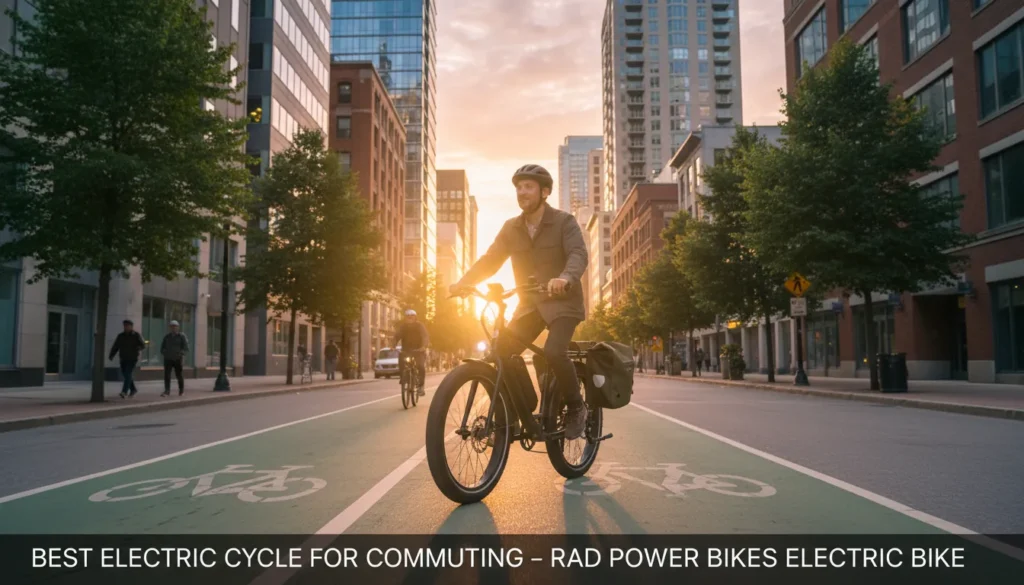
When your commute feels like a daily boss fight—traffic, parking, rising fuel costs—the best electric cycle starts to look less like a “nice-to-have” and more like a practical upgrade. I’ve watched new riders go from “I’m not a bike person” to riding three times a week simply because pedal assist removes the hardest parts: hills, headwinds, and sweaty arrivals. The catch is that the “best” option depends on your roads, your body, and your errands. This guide breaks down what actually matters, so you can pick the best electric cycle for how you ride—without getting lost in spec sheets.

What “Best Electric Cycle” Really Means (Spoiler: It’s Not One Model)
The best electric cycle is the one that matches your daily use with the least friction. For a commuter, “best” often means stable handling, reliable brakes, and lights you don’t have to think about. For a parent or small business owner, “best” can mean a strong rack system and predictable low-speed control. For weekend explorers, it’s traction, comfort, and enough range to roam.
To keep it simple, most buyers land in one of these buckets:
- City/commuter: pavement, stop-and-go, potholes, mixed weather
- Cargo/utility: groceries, kids, tools, heavier loads
- Off-road/all-terrain: dirt, gravel, sand, steep grades
- Folding/lightweight: storage limits, stairs, transit connections
If you already know your bucket, jump to the matching section and you’ll get closer to the best electric cycle for your real life.
The 7 Buying Factors That Separate a Great E‑Bike from a Regret Purchase
1) Motor power vs. how it feels (torque, tuning, and hills)
Many guides emphasize watts, but real-world performance is also about tuning, cadence behavior, and how smoothly the bike delivers power at low speed. A 500W–750W hub motor can feel very different depending on controller settings and bike weight. If you expect hills or heavy cargo, prioritize confident starts and steady climbing over top speed bragging rights.
What I recommend checking:
- Does it pull smoothly from a stop without “lurching”?
- Does assist feel predictable in traffic?
- Is it designed for your terrain (flat city vs. mixed hills)?
2) Battery safety and usable range (not marketing range)
Range varies wildly with rider weight, tire pressure, wind, temperature, hills, and how much you rely on throttle/assist. In practice, “usable range” is what you get when riding like a normal person, not a lab test. Look for reputable battery systems and clear warranty support—this is where ownership experience is won or lost.
Authoritative guidance is worth reading before you buy:
3) Fit and frame style (step-thru vs. step-over)
Fit problems are the silent killer of “best electric cycle” satisfaction. Step-thru frames are easier for frequent stops, riders with limited mobility, or anyone carrying a backpack. Step-over frames can feel stiffer and more “traditional,” but the best choice is the one you’ll ride comfortably in real clothes.
4) Brakes and tires (your actual safety system)
On an e-bike, you’re heavier and faster than on a regular bike, so braking matters more. Hydraulic disc brakes are a common “worth it” upgrade for consistent stopping power. Tire width affects comfort and confidence: wider tires can reduce harshness on broken pavement and improve stability.
5) Weight and storage (especially for apartments)
Many e-bikes weigh 50–75+ lbs. If you have stairs, a tight hallway, or need to lift the bike onto a rack, weight becomes a daily tax. Folding or lightweight categories can be the best electric cycle choice purely because you can live with them.
6) Service network and parts availability
Direct-to-consumer value is great—until you need a tune-up in peak season. A brand with a strong partner network can reduce downtime and stress. Rad Power Bikes’ model combines direct sales with local bike shop partners, which is a practical advantage for many riders.
7) Legal class and speed (avoid buying the “wrong” bike)
E-bikes are often categorized into Class 1/2/3, each with different speed limits and access rules. If you ride multi-use paths, local rules matter. For a clear explainer, see what different classes of electric bikes mean.
Quick Match: Which Type Is the Best Electric Cycle for You?
| Rider Goal | Best E‑Bike Category | Key Features to Prioritize | Common Mistake to Avoid | Rad Power Bikes Collection Link |
|---|---|---|---|---|
| Commuting | City/Commuter E‑Bike | Fender + lights, comfortable geometry, puncture‑resistant tires, moderate range, rack mounts | Choosing too much power/weight instead of comfort and reliability | https://www.radpowerbikes.com/collections/electric-commuter-bikes |
| Cargo/Errands | Cargo/Utility E‑Bike | High payload capacity, rear rack/longtail or front basket, sturdy frame, stable handling, torque for hills | Underestimating total load and skipping cargo accessories | https://www.radpowerbikes.com/collections/electric-cargo-utility-bikes |
| Off-Road/Outdoors | Fat Tire/All‑Terrain E‑Bike | Wider tires for traction, front suspension, strong brakes, higher torque, weather resistance | Buying street tires and limited suspension for rough terrain | https://www.radpowerbikes.com/collections/electric-fat-tire-bikes |
Use this shortcut if you’re torn:
- If you ride 5–15 miles a day in traffic, start with commuter/city models.
- If you replace car trips, start with cargo/utility.
- If you ride gravel, trails, or rough roads, start with off-road/all-terrain.
- If storage is the problem, start with folding/lightweight.
Best Electric Cycle for City Riding and Commuting
For most people, commuting is where an e-bike pays you back fastest. The best electric cycle for commuting is stable at speed, visible in low light, and comfortable for everyday clothes. Features like integrated lights, fenders, and a rack aren’t “extras”—they’re what make riding repeatable.
Start your search here:
In my experience, commuters are happiest when they:
- Choose a bike that feels easy to mount/dismount at stoplights
- Prioritize tire comfort and braking over max speed
- Plan a simple charging routine (same outlet, same time)
Best Electric Cycle for Cargo, Kids, and Errands
If you want to carry groceries, a backpack full of work gear, or kid seats, the best electric cycle is the one that stays composed under load. A strong frame, stable geometry, and purpose-built rack ecosystem matter more than a flashy display. Cargo riding also changes how you brake and corner, so predictable handling is the real “premium feature.”
Explore options built for hauling:
Practical tips I’ve learned from setting up utility e-bikes:
- Don’t max out rack capacity daily—leave margin for safer handling
- Use panniers/baskets to lower the center of gravity
- Check tire pressure more often; underinflation feels worse when loaded
Best Electric Cycle for Off-Road and Outdoor Riding
For dirt, gravel, and mixed terrain, traction and control beat raw speed. The best electric cycle for outdoors typically uses wider tires and a ride position that keeps you confident on loose surfaces. Also, consider how you’ll transport it—off-road rigs can be heavy.
A good starting point:
If you’re comparing brands, it helps to see how the broader market frames “tested picks” and performance priorities:

Rad Power Bikes: Why It’s Often a “Best Electric Cycle” Choice for Real Life
Rad Power Bikes has built scale (680,000+ riders) by focusing on practical categories—commuter, cargo, folding, trikes—rather than niche racing specs. The direct-to-consumer model can keep value strong, while the partner service network helps solve the biggest pain point I see with e-bikes: “What happens when I need maintenance?”
What stands out from an ownership perspective:
- Category depth: city, cargo, off-road, folding, trikes, step-thru options
- Support structure: service partners plus dedicated customer support
- Practical design: accessories and utility features that make daily riding easier
If you’re unsure which model style fits you, a guided selector can save time:
Common Mistakes People Make When Buying the Best Electric Cycle (and How to Avoid Them)
-
Buying for top speed instead of comfort
You’ll ride more if it fits well and feels stable. -
Underestimating storage and lifting
Measure your doorway, hallway turns, and parking spot before you buy. -
Ignoring service access
A “great deal” isn’t great if you can’t get it fixed quickly. -
Overestimating range
Plan for worst-case days: cold weather, hills, heavier loads. -
Skipping a test ride
If possible, ride something similar to confirm posture and handling.
Class 1 vs 2 vs 3 E‑Bikes: Complete Guide by Priority Bicycles

Conclusion: The Best Electric Cycle Is the One You’ll Ride Next Week
The best electric cycle isn’t the one with the most impressive spec list—it’s the one that makes your next ride feel easy, safe, and repeatable. I’ve found that riders who choose based on use case (commute, cargo, off-road, storage) end up happier than riders who chase numbers. If you want a brand built around practical transportation, Rad Power Bikes is a strong place to start because the lineup maps cleanly to real needs and is backed by a large rider community.
FAQ: Best Electric Cycle Questions People Ask
1) What is the best electric cycle for daily commuting?
Look for a city/commuter e-bike with comfortable geometry, reliable brakes, integrated lights, and a rack/fender setup that fits your route and weather.
2) How much should I spend on the best electric cycle?
Budget should match usage. Frequent commuters and cargo riders get more value from stronger components and better support than occasional riders.
3) Is a 500W motor enough for the best electric cycle?
Often yes for flat-to-moderate terrain. For steep hills or heavy cargo, pay attention to how the bike delivers torque and how stable it feels under load.
4) How far can the best electric cycle go on one charge?
Real-world range depends on assist level, hills, rider weight, wind, and temperature. Plan conservatively if you rely on the bike for commuting.
5) What’s the difference between Class 1, Class 2, and Class 3 e-bikes?
They differ by top assisted speed and whether a throttle is allowed. Local rules can affect where you can ride.
6) Are cargo e-bikes safe for carrying groceries or kids?
Yes when designed for it—focus on rack ratings, handling under load, and braking performance, and use proper accessories.
7) What should I test on a test ride to find the best electric cycle?
Check start/stop control, braking feel, hill starts, comfort at your typical speed, and how easy it is to mount/dismount and park.