
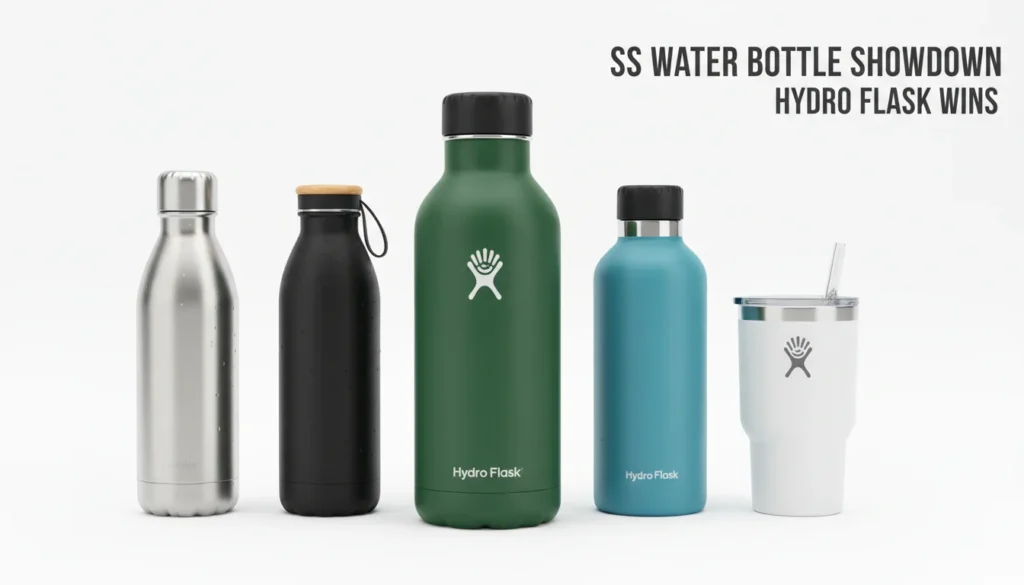
An ss water bottle (short for stainless steel water bottle) is one of those everyday upgrades you don’t notice—until you go back. I learned this the hard way on a hot trail day: my old plastic bottle turned water lukewarm and “plasticky” within an hour, and it made drinking feel like a chore. A well-built stainless steel bottle fixed that instantly: better taste, tougher build, and (when insulated) real temperature control.
In this guide, you’ll learn what “SS” really means, how insulation works, what features matter most, and how to pick the right ss water bottle for work, school, travel, or the outdoors—using Hydro Flask’s TempShield™ design as a practical benchmark.

What Is an SS Water Bottle (and Why Stainless Steel Beats Plastic)
An ss water bottle is typically made from food-grade stainless steel—most commonly 18/8 stainless steel (also called 304), which is known for corrosion resistance and clean taste. Unlike many plastics, stainless steel doesn’t absorb flavors or odors as easily, and it holds up better to drops, dents, and daily abuse. For many people, the “switch” is less about trends and more about reliability.
Stainless steel bottles come in two main types:
- Single-wall (non-insulated): lighter, simpler, but won’t keep drinks cold/hot for long.
- Double-wall vacuum insulated: significantly better temperature retention and reduced condensation.
For broader background on plastic waste and why reusable bottles matter, see Science Magazine’s reporting on plastic in ocean litter.
How Double-Wall Vacuum Insulation Works (TempShield™ Explained Simply)
Most premium insulated SS bottles use the same core physics: two stainless steel walls with a vacuum between them. With less air to transfer heat, the bottle slows temperature change dramatically. This also helps prevent that sweaty “cold bottle” condensation on the outside.
Hydro Flask’s TempShield™ double-wall vacuum insulation is built around that principle, tuned for real-life use: commuting, gym bags, backpacks, cup holders, and long outdoor days. I’ve found the biggest practical benefit isn’t just “hours of cold”—it’s that you’re more likely to finish the bottle because the drink stays enjoyable.
If you want a manufacturer explanation of the vacuum-insulation concept (in plain language), Stanley’s FAQ describes the mechanism clearly: how vacuum-insulated bottles work.

The 7 Features That Actually Matter When Buying an SS Water Bottle
Most product pages list dozens of specs, but these are the decision-makers that affect daily satisfaction. When you compare any ss water bottle, focus here first:
- Insulation type
- If you want cold water all day (or hot coffee), choose double-wall vacuum insulation.
- Steel grade
- Look for 18/8 stainless steel for durability and taste neutrality.
- Mouth style (wide vs standard)
- Wide mouth: easier ice, faster cleaning.
- Standard mouth: easier one-handed sipping, less splash.
- Cap system
- Straw caps for quick sips; chug caps for faster flow; flex/sip styles for hot drinks.
- Leak resistance
- A “good seal” matters more than most people think—especially in laptop bags.
- Powder coat / exterior finish
- Helps grip, resists scratches, and improves day-to-day durability.
- Size + fit
- Consider cup holder compatibility and carry comfort (a great bottle you hate carrying becomes a shelf item).
Choosing the Right Size: A Practical SS Water Bottle Cheat Sheet
Size is less about “more is better” and more about matching your routine. If you’re refilling near a water station, smaller is fine; if you’re traveling or outdoors, capacity becomes insurance.
- 18–24 oz: desk, school, short commutes, lighter carry
- 32 oz: “one bottle for most days” sweet spot
- 40 oz+: long shifts, road trips, hiking days, fewer refills
| Size (oz) | Best for | Pros | Trade-offs | Typical carry method |
|---|---|---|---|---|
| 18–24 | Commuting, short workouts, kids | Fits most cup holders; light when full; quick to finish before water warms | More frequent refills; not ideal for long days; easier to forget to top up | Backpack side pocket, car cup holder, hand carry |
| 32 | Everyday use at work/school, gym sessions | Good balance of capacity vs. size; fewer refills than 24 oz; often still cup-holder friendly (varies by brand) | Heavier when full; may not fit all cup holders; can feel bulky in smaller bags | Backpack side pocket, tote bag, desk carry |
| 40 | Long shifts, hikes, all-day hydration | Fewer refills; strong daily hydration cue; great for outdoor use | Frequently won’t fit standard cup holders; noticeably heavy when full; can be awkward one-handed | Backpack, shoulder strap/carry handle, desk/bench |
| 64 | Camping, long road trips, shared/backup water | Minimal refill frequency; useful as a “base” bottle at camp/car; ideal for high-intake days | Very heavy when full; rarely fits cup holders; cumbersome to carry and drink from directly | Car floor/seat, camp table, carried by handle short distances |
Hydro Flask as a Benchmark: What You’re Paying For (and Who It’s For)
Hydro Flask has become a reference point in the insulated ss water bottle category because the product decisions are aimed at real usage: insulation performance, durable finishes, and cap ecosystems that match different drink styles. In practice, you’re paying for consistent temperature retention, dependable sealing, and a bottle that still looks and performs well after months of use.
It’s not the only stainless steel bottle on the market, but it’s a strong “known quantity” if you want fewer surprises. Independent review roundups can also help you sanity-check options; Serious Eats regularly tests drinkware and publishes methodology-based picks: best stainless steel water bottles.
Common SS Water Bottle Problems (and Fixes That Work)
Even great bottles run into the same few issues. Here’s what I see most often—and what actually helps:
- Metallic taste
- Usually improves after a thorough wash; avoid storing acidic drinks too long.
- Lingering odor
- Deep clean the bottle and the cap (caps hold smells).
- Leaks
- Check gasket alignment and debris in threads; replace worn seals.
- Stains
- Baking soda paste for interior; avoid harsh abrasives that can scratch.
For Hydro Flask-specific care, these guides are genuinely useful:
- three ways to clean your hydroflask
- is your hydro flask dishwasher safe
- three infused water recipes to help you stay hydrated
How to Clean a Stainless Steel Bottle (and 4 Things to Avoid)
SS Water Bottle Buying Tips for Sustainability (Without the Greenwashing)
A stainless steel bottle can reduce single-use plastic consumption, but sustainability also depends on how long you keep and use it. The most eco-friendly bottle is the one you’ll carry daily for years, not the one that looks good for a week.
When evaluating sustainability claims, look for:
- Durability and repairability (caps, gaskets, long-term support)
- Materials transparency (steel grade, BPA-free components)
- Long service life (finish quality, dent resistance, warranty clarity)
If you want a quick overview of how brands position steel bottles around reuse and durability, Waterdrop’s category page is a simple example of common materials/features (18/8 steel, leakproof focus): stainless steel bottles overview.
Conclusion: The Best SS Water Bottle Is the One You’ll Use Every Day
An ss water bottle sounds like a small purchase, but it changes how consistently you hydrate—because your drink stays the way you wanted it. If you care about cold water that lasts, fewer leaks, and a bottle that doesn’t pick up weird flavors, stainless steel (especially vacuum-insulated) is the practical choice. Hydro Flask remains a top pick for people who want dependable TempShield™ performance, durable finishes, and cap options that fit real routines.
If you’re deciding between sizes or cap styles, share your daily use case (commute, gym, hiking, school) in the comments and I’ll help you narrow it down.

FAQ: SS Water Bottle Questions People Search
1) What does “SS” mean in ss water bottle?
“SS” usually means stainless steel, commonly 18/8 (304) food-grade steel.
2) Is an ss water bottle better than plastic?
For taste, durability, and long-term reuse, stainless steel is often better. Insulated stainless also keeps drinks cold/hot much longer.
3) Do stainless steel water bottles keep water cold?
Only vacuum-insulated stainless bottles reliably keep drinks cold for extended periods. Single-wall stainless changes temperature faster.
4) What size ss water bottle should I buy for everyday use?
Many people find 32 oz is the best balance of capacity and carry comfort. If you need cup holder fit, consider smaller sizes.
5) Why does my ss water bottle smell?
Odors usually come from the cap and gasket, not the steel. Clean both thoroughly and let them dry fully.
6) Can I put an ss water bottle in the dishwasher?
Some bottles and caps are dishwasher safe, but it varies by brand and finish. Check the manufacturer guidance first.
7) Is 18/8 stainless steel safe for water bottles?
Yes—18/8 stainless steel is widely used for food and beverage containers due to corrosion resistance and neutral taste.