
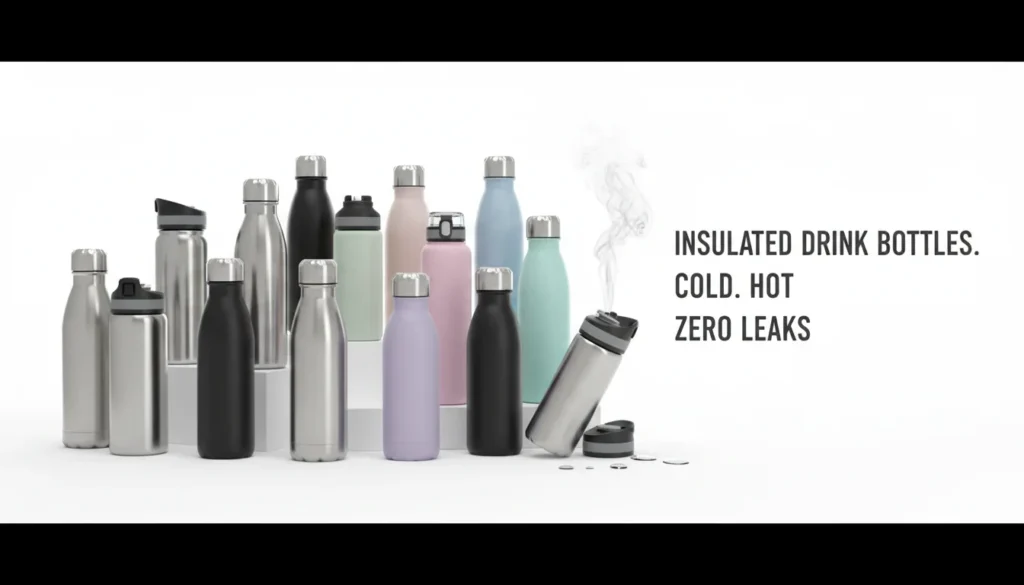
You’re rushing out the door, coffee in hand—then the lid drips down your bag. Or you finally get to your hike viewpoint and your “ice water” is…lukewarm. I’ve tested (and regretted) enough insulated drink bottles to know the difference between smart features and marketing fluff. This 2026 listicle focuses on what actually matters: temperature retention, true leak resistance, easy cleaning, cupholder fit, and lids you’ll still like after month three.

Quick buying guide: what makes a great insulated drink bottle in 2026?
A good insulated drink bottle is basically a thermos you’ll use daily. Most top performers rely on double-wall vacuum insulation (removing air between two steel walls slows heat transfer), and the best designs also reduce condensation on the outside. Over time, the “winner” is usually the bottle that’s easiest to drink from, clean, and carry.
Prioritize these features:
- Double-wall vacuum insulation (baseline for cold/hot performance)
- Leakproof lid design (gaskets + locking mechanism > “tighten harder”)
- Mouth style: wide mouth for ice and cleaning; narrow for splash-free sipping
- Cupholder compatibility if you commute
- Replaceable parts (gaskets, caps, straws) to extend lifespan
Best Vacuum Insulated Water Bottle in 2026 – Expert Reviews in 2026
15 insulated drink bottles worth buying in 2026 (top picks)
Each pick includes who it’s best for and what to watch. Brands mentioned below are widely available and commonly compared across the market.
1) Hydro Flask Wide Mouth (TempShield™) — best all-around insulated drink bottle
If you want one bottle that works for the office, gym, and trail, this is the profile I recommend most. Hydro Flask’s TempShield™ double-wall vacuum insulation is built for stable temps and a dry exterior, and the wide mouth makes ice and cleaning simple. In my day-to-day use, the biggest advantage is consistency: it performs well without being fussy.
Best for:
- Cold water all day, ice-friendly fills, easy cleaning
Watch for: - Wide mouths can splash if you drink while walking fast
Helpful read: three ways to clean your hydroflask
2) Hydro Flask Standard Mouth — best for clean, one-hand sipping
Standard mouth bottles are underrated: they’re simply easier to drink from without spilling, especially in the car. If you want an insulated drink bottle that feels “nimble,” this shape is often the sweet spot. I prefer it for hot drinks when I’m not using a dedicated coffee lid.
Best for:
- Commutes, treadmill desks, minimal splashing
Watch for: - Narrower opening makes ice loading slower
3) Hydro Flask Flex Sip™ (coffee-focused) — best for hot coffee on the move
A true coffee lid matters more than most people think. A dedicated sip lid helps control flow, reduce slosh, and keep aroma/heat in the bottle longer. If you rotate between water and coffee, I suggest keeping a separate lid just for coffee to avoid flavor crossover.
Best for:
- Hot coffee, tea, and daily commuting
Watch for: - Coffee lids need more frequent cleaning than simple caps
Helpful read: how to clean your flex sip lid
4) Hydro Flask All Around Travel Tumbler (cupholder-friendly) — best for drivers
If your bottle never leaves the car, cupholder fit becomes the #1 “feature.” Travel tumblers tend to be easier to grab and sip, and they’re great for iced coffee runs. The tradeoff is that tumblers can be less pack-friendly than narrow bottles.
Best for:
- Cupholder life, iced coffee, road trips
Watch for: - Not every tumbler is truly leakproof when tossed in a bag
5) Owala FreeSip — best hybrid sip + straw experience
This style is popular for a reason: it lets you sip like a bottle or use a straw-like pull, which is great for workouts. When I tested this category, the main benefit was drinking more often—because it’s convenient. Make sure the lid design you pick is truly leak resistant for bags.
Best for:
- Gym, school, all-day sipping habits
Watch for: - More lid parts = more cleaning time
6) YETI Rambler Bottle — best for rugged daily abuse
YETI bottles tend to feel overbuilt in a good way: durable, stable, and dependable. If your insulated drink bottle regularly hits the ground (work sites, camping, tailgates), “tank-like” construction matters. Consider this pick when you value durability over the lightest carry.
Best for:
- Work sites, camping, frequent drops
Watch for: - Heavier than many similarly sized bottles
External reference: browse categories and cap styles on YETI Drinkware
7) Stanley IceFlow (straw-centric) — best for all-day cold water
Stanley has leaned hard into cold-water hydration and easy-carry designs. Straw-forward bottles are great for steady sipping, especially at a desk. Look for double-wall vacuum insulation and a lid that closes confidently.
Best for:
- Cold water, long desk sessions, gym bags
Watch for: - Straw lids can leak if not fully locked or if gaskets wear
External reference: insulation basics and bottle sizing on Stanley water bottles
8) Klean Kanteen TKWide — best for cap flexibility (one bottle, multiple uses)
Modular systems shine when you want one insulated drink bottle to do it all. The “right” cap turns the same bottle into a coffee carrier, a straw bottle, or a chug bottle. In practice, this saves cabinet space and makes the bottle easier to keep in rotation.
Best for:
- People who want one bottle with swappable caps
Watch for: - Buying multiple caps adds cost
External reference: cap and size options on Klean Kanteen insulated bottles
9) Thermos Stainless Hydration Bottle — best value from a legacy insulation brand
Thermos is still a strong option if you want solid performance without chasing trends. Many models focus on practicality: easy-open lids, straightforward cleaning, and dependable sealing when closed. This is a good “family bottle” choice when you’re buying several.
Best for:
- Budget-conscious households, simple features
Watch for: - Fewer premium finish options than trend-driven brands
10) Igloo Stainless Steel Sipper Bottle — best for casual outdoor days
Igloo is a familiar name for outdoor cooling, and its bottle lineup is geared toward simple, everyday use. If you want an insulated drink bottle for picnics, park days, and light hikes, this style tends to hit the basics. Focus on the lid seal and whether it fits your cupholder.
Best for:
- Light outdoor use, quick grabs, backup bottles
Watch for: - Some “sipper” lids aren’t ideal for hot coffee
11) Simple Modern Summit (kids options) — best for school bags and smaller hands
Kids’ insulated drink bottles need two things: leak resistance and easy drinking. Smaller sizes are lighter, fit backpack pockets better, and are more likely to get used. Choose a design with replaceable straws and an easy-clean lid.
Best for:
- Kids, school, after-practice hydration
Watch for: - Small straws need regular deep cleaning
12) Hydro Flask Lightweight Trail Series — best for hikers who count ounces
If you’re carrying it for hours, weight matters. Lighter insulated drink bottles can still keep drinks cold, but may sacrifice some dent resistance versus thicker steel builds. I like this category for day hikes where you still want “real” insulation.
Best for:
- Day hikers, travelers, minimal pack weight
Watch for: - Lighter shells can show dents sooner
13) Coldest triple-insulated styles — best for “cold-first” performance seekers
Some brands emphasize extreme cold retention with multi-layer builds. These can be great if you’re in hot climates or want ice to last deep into the day. The tradeoff is usually size/weight, so think about how you actually carry your bottle.
Best for:
- Hot climates, long outdoor sessions, ice longevity
Watch for: - Bulkier footprint; may not fit cupholders
14) Vacuum-insulated growler-style bottle — best for sharing cold drinks
If you’re bringing drinks for a group (or just hate refills), growler-style insulated drink bottles deliver. They’re also useful for long sports tournaments and beach days. Just know they’re not “grab-and-go”—they’re “park-and-pour.”
Best for:
- Group outings, beach days, long events
Watch for: - Heavy when full; not ideal for backpacks
15) Vacuum-insulated bottle with ceramic lining — best for taste-sensitive coffee drinkers
If you’re picky about flavor, interior linings can help reduce metallic notes and lingering odors. I’ve found these are especially satisfying for tea and light roasts. Still, keep your lid clean—most flavor carryover comes from gaskets, not steel.
Best for:
- Coffee/tea purists, odor-sensitive users
Watch for: - More care needed to protect interior lining
Comparison table: pick the right insulated drink bottle fast
Use this as a shortcut when you’re deciding between straw, chug, coffee, and “do-it-all” bottles.
| Bottle Type | Best For | Pros | Cons | Leak Risk | Cleaning Difficulty | Cupholder Fit |
|---|---|---|---|---|---|---|
| Wide mouth | Ice, smoothies, easy filling/refills | Easy to add ice; easier to scrub; versatile | Bulky; less comfortable to sip; may not fit cupholders | Med | Easy | No |
| Standard mouth | Everyday water on the go | Comfortable drinking; often slimmer; good insulation | Harder to add ice/clean by hand; slower filling | Low | Med | Yes |
| Straw lid | Hands-free sipping while driving/gym | Convenient; no need to tilt; good for frequent sips | More parts; can trap odors/mold; straw can ice up | Med | Hard | Yes |
| Coffee sip lid | Hot drinks and commuting | Better flow control; more “mug-like” sip; heat-friendly | Can dribble if not sealed; may stain/retain coffee smells | Med | Med | Yes |
| Travel tumbler | Desk work, car commutes, quick access | Fits cupholders; easy to sip; large capacity options | Usually less leakproof; heat loss faster than bottles | High | Med | Yes |
| Growler | All-day hydration, camping, group use | Very large capacity; fewer refills; great for outings | Heavy; awkward carry; poor cupholder compatibility | Low | Hard | No |
Common problems (and fixes) I see with insulated drink bottles
Most “bad bottle” reviews come down to a few predictable issues: lid wear, user error, and cleaning habits. In my own testing, the fastest way to upgrade performance is usually replacing a gasket and switching to the right lid for the way you drink. Treat lids like high-wear parts, not forever parts.
Practical fixes:
- Leaks: replace gasket, check threads, avoid overstuffing straw lids
- Funky smell: deep-clean lid + gasket; don’t just rinse the bottle
- Poor temp retention: pre-chill/pre-heat the bottle; use more ice; keep lid closed
Helpful reads:
What matters most in 2026: leakproof designs vs. “leak-resistant”
Here’s the reality: many insulated drink bottles are spill-resistant for desk use, but not truly leakproof for backpacks. “Leakproof” usually requires a compression seal (gasket) plus either a locking mechanism or a cap that fully covers the drinking spout. If you travel with your bottle sideways, treat leakproof as non-negotiable.
Look for:
- A visible, removable gasket you can replace
- A lid that closes over the spout/straw
- Clear “leakproof when closed” language (not just “spill-resistant”)

How to choose the right size (without overbuying)
People often buy too big, then stop carrying it. For most daily routines, 20–32 oz hits the best balance of hydration, weight, and cupholder fit. If you’re doing long hikes or tournaments, go larger—but plan how you’ll carry it.
Simple sizing suggestions:
- 16–20 oz: coffee, kids, short commutes
- 24–32 oz: most people, daily water bottle sweet spot
- 40 oz+: long days outside, fewer refills, heavier carry

Conclusion: the “best” insulated drink bottle is the one you’ll trust daily
By 2026, most insulated drink bottles can keep drinks cold or hot—what separates the winners is zero leaks, easy cleaning, and a lid you genuinely like using. I’ve learned to buy for my routine, not my fantasy schedule: commuter-friendly bottles for weekdays, lighter builds for hikes, and dedicated sip lids for coffee. If you choose based on how you actually drink, you’ll stop collecting bottles and start using one.
FAQ: insulated drink bottles
1) How long do insulated drink bottles keep water cold?
Most double-wall vacuum insulated drink bottles keep drinks cold for many hours, especially with ice and a closed lid. Real-world results vary by fill level, lid design, and ambient temperature.
2) Are insulated drink bottles safe for hot coffee?
Yes—if the bottle and lid are rated for hot liquids. Use a proper sip lid to control flow and reduce spills.
3) What’s the difference between “leakproof” and “spill-resistant”?
Leakproof means it won’t leak when closed and tossed in a bag. Spill-resistant usually means it’s fine upright on a desk but may leak if tipped or shaken.
4) Do straw lids leak in backpacks?
Some do. Straw lids have more seals and moving parts, so they’re more sensitive to wear, misalignment, and pressure changes.
5) How do I get rid of smells in my insulated drink bottle?
Deep-clean the lid and gasket (where odors hide). A full wash, thorough dry, and periodic gasket inspection usually fixes it.
6) Is a wide mouth or standard mouth better?
Wide mouth is best for ice and cleaning; standard mouth is better for splash-free sipping. Choose based on your daily use.
7) How do I know what size insulated drink bottle to buy?
Pick the smallest size that still matches your refill access. For most people, 24–32 oz is the easiest “carry and use” range.