
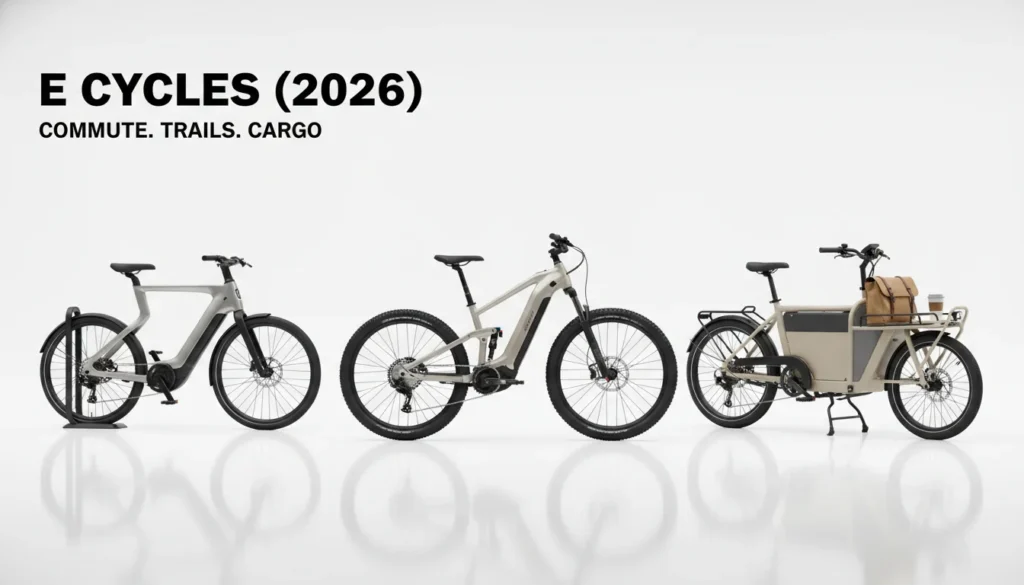
Electric bikes have a way of showing up right when you need them—when the hill feels steeper than it used to, when parking is a mess, or when errands would be easier with a little extra push. If you’re searching for the best e cycles, you’re probably not looking for hype—you want a bike that fits your routes, your body, and your budget. The tricky part is that “best” changes fast depending on whether you’re commuting, hauling kids, or exploring dirt paths.
I’ve helped new riders narrow down options by starting with real use cases, not spec sheets. In this guide, you’ll learn what actually matters (motor class, range, fit, service), the common mistakes that waste money, and how brands like Rad Power Bikes design practical e-cycles for daily life. By the end, you’ll be able to shortlist the best e cycles for your needs with confidence.

What “Best E Cycles” Really Means (It’s Not Just Speed or Range)
The best e cycles are the ones you’ll ride often because they match your terrain, storage, and comfort needs. A high top speed won’t help if the bike is too heavy to carry upstairs, and a huge battery won’t matter if the fit hurts your back. The most reliable approach is to define your “job to be done” first, then choose the e-cycle category that’s built for it.
Most buyers end up happiest when these basics align:
- Use case: commute, recreation, cargo/utility, off-road, folding, or stability-focused (trike)
- Fit & comfort: frame style (step-thru vs step-over), reach, saddle comfort, handlebar height
- Support: warranty, parts availability, and local service options
If you want a practical starting point, Rad Power Bikes organizes its lineup around real rider needs—city commuting, cargo hauling, folding portability, and all-terrain riding—so you’re not guessing from a wall of specs.
Quick Snapshot: Types of E Cycles and Who They’re Best For
Choosing among the best e cycles gets easier when you map bike types to daily scenarios. Here’s the simplest breakdown I use when advising first-time ebike buyers.
- City/Commuter e-cycles: Best for bike lanes, pavement, and predictable routes
- Cargo/Utility e-cycles: Best for groceries, kids, and replacing car trips
- Off-road/All-terrain e-cycles: Best for gravel, trails, and mixed surfaces
- Folding e-cycles: Best for apartments, RVs, and multi-modal commuting
- Trikes & stability e-cycles: Best for extra balance and confidence at low speeds
To browse by purpose, Rad Power Bikes’ collections make this straightforward, especially for commuting and hauling:
The 7 Buying Factors That Separate “Best” From “Regret”
When people tell me they bought the “wrong” e-cycle, it usually comes down to one of these factors. Use this checklist to compare the best e cycles without getting lost in marketing.
1) Motor power and torque (feel matters more than watts)
Wattage is easy to advertise, but torque and tuning are what you feel on hills and starts. Many review roundups list a wide spread—250W commuter-style builds up to 750W+ utility builds—because the “right” power depends on rider weight, cargo, and grade.
2) Battery size and real-world range
Range depends on assist level, rider weight, wind, tire pressure, and hills. A good rule is to plan for less than the max claim if you ride fast, carry loads, or climb often. If your commute is 8–12 miles each way, prioritize consistent range over chasing the biggest number.
3) Class and top speed (and local rules)
In the U.S., you’ll often see:
- Class 1: pedal assist up to 20 mph
- Class 2: throttle + assist up to 20 mph
- Class 3: pedal assist up to 28 mph
Some paths restrict Class 3 or throttle use, so confirm your local regulations before deciding what “best e cycle” means for your routes.
4) Weight and storage reality
Many capable e-cycles weigh 50–75 lb (and cargo models can be more). If you have stairs, a tight hallway, or a small car trunk, weight and dimensions can matter more than speed.
5) Brakes, tires, and stopping confidence
Heavier bikes need stronger braking. Look for quality disc brakes and tires matched to your surfaces (slicker for city, knobbier or wider for mixed terrain). This is one of the biggest safety multipliers.
6) Fit and frame style (step-thru is underrated)
Step-thru frames are often easier for daily stops, riders with limited mobility, or anyone mounting with cargo. The best e cycles are the ones that feel natural every time you get on.
7) Service support and parts availability
This is where many online-only brands fall short. Rad Power Bikes combines direct-to-consumer pricing with a network of local bike shop partners for test rides and service—an advantage when you need a tune-up, brake bleed, or quick part replacement.
For a deeper rider-first framework, Rad’s guide is a solid reference: How To Choose the Right Ebike for You
Common “Best E Cycles” Mistakes (and How to Avoid Them)
People often buy based on one headline feature, then discover the bike doesn’t fit their life. Here are the errors I see most—and the fixes that lead to a better e-cycle choice.
| Common Mistake | Why It Causes Problems | Better Approach | What to Check Before Buying |
|---|---|---|---|
| Buying by max speed only | Prioritizes top speed over stability, braking, and legal compliance; can reduce range and increase wear | Choose a speed that fits your commute and local rules; prioritize braking, handling, and comfort | Local e-bike class/speed limits; brake type (hydraulic vs mechanical); motor power and controller heat management |
| Overestimating range | Real-world range drops with rider weight, hills, wind, cold, and higher assist levels | Size the battery for worst-case days and keep a buffer (20–30% extra) | Battery Wh rating; expected range at your weight/terrain; removable battery option; charger speed |
| Ignoring bike weight/storage | Heavy bikes are hard to carry upstairs, fit in racks, or load into cars; reduces daily usability | Match bike weight and frame size to how you store/transport it; consider folding if needed | Total weight; fold dimensions/hinge quality; handle/carry points; rack and elevator/stair constraints |
| Choosing wrong tire type | Wrong width/tread increases flats, poor grip, or high rolling resistance | Pick tires for your surfaces (road, mixed, gravel) and prioritize puncture protection | Tire size and clearance; tread pattern; puncture belt/tubeless compatibility; availability/cost of replacements |
| Skipping service/warranty research | Hard-to-service brands lead to long downtime and expensive repairs; warranty claims may be difficult | Buy from brands with local support and clear parts availability | Warranty length/coverage; nearby service partners; parts lead times (battery, display, motor); return policy |
| Not test riding | Fit and handling issues (reach, saddle comfort, jittery steering) show up only in-person | Test ride similar models and adjust fit before deciding | Frame size/geometry; stand-over height; handlebar reach; brake feel; noise/vibration under load |
| Under-buying cargo capacity | Overloading affects steering/braking and can damage racks/wheels; unsafe for kids/groceries | Choose a model designed for your typical payload with proper racks and wheel strength | Rated payload (rider + cargo); rack rating and mounting standards; wheel/spoke strength; compatibility with panniers/child seat |
Practical tip from experience: I once prioritized “lighter weight” over “braking feel” on a test ride, and I regretted it immediately on a downhill stop. The bike wasn’t unsafe, but it didn’t feel confident—and confidence is what makes you ride more often.
Best E Cycles by Use Case: A Buyer’s Shortlist Framework
Instead of naming a single “best,” use this shortlist method to find the best e cycles for your riding style. Start with your primary use case, then apply 3 must-haves.
Best e-cycles for commuting
Commuter-friendly e-cycles usually win on comfort, visibility, and predictable handling. Look for:
- Upright geometry for comfort and awareness
- Fenders/lights compatibility (or included)
- Efficient tires and dependable brakes
If commuting is your main goal, start here: Electric City & Commuter Bikes
Best e-cycles for cargo, kids, and car replacement
Cargo/utility e-cycles shine when they’re stable under load and easy to mount. Prioritize:
- Rated payload and rack ecosystem
- Strong braking performance under weight
- A frame that stays steady at low speed
A focused place to compare utility-first options: Electric Cargo & Utility Bikes
Best e-cycles for trails and mixed terrain
All-terrain e-cycles need traction and durability more than top speed. Look for:
- Wider tires for grip and comfort
- Geometry that feels stable on loose surfaces
- Components that can handle vibration and dirt
For route ideas and riding styles that fit outdoor use: Ebikes for Outdoor Enthusiasts
How Much Should You Spend on the Best E Cycles?
Price doesn’t equal quality, but it does influence components, battery size, and support. In the market, you’ll see everything from value-focused commuters to premium lightweight and performance builds. Publications that test and review many models can help you sanity-check categories and expectations.
For third-party comparisons and buying guidance, these are reputable starting points:
- Consumer Reports electric bike buying guide
- Electric Bike Report: best electric bikes
- Bicycling: best electric bikes
My rule: spend for the things you can’t “upgrade later” cheaply—frame fit, braking confidence, and support. Accessories are easy; a wrong-sized bike isn’t.
What Most Riders Use Their E Cycles For (and Why It Matters)
A lot of “best e cycles” searches come from people trying to replace short car trips. When you know the most common use cases, you can pick a bike category that’s already optimized for that job.

Use this to pressure-test your choice: if 60% of your rides are errands and commuting, a heavy knobby-tire trail bike may feel slower and less efficient on pavement—even if it looks “more capable.”
Test Ride Checklist: 10 Minutes That Saves You Months of Doubt
If you can test ride, do it. The best e cycles feel right quickly, and the wrong ones reveal themselves fast.
Use this quick script:
- Start/stop 3 times: does it surge or feel smooth?
- Ride a hill or simulate load: does it bog down?
- Hard brake once (safely): does it feel stable and straight?
- Turn tightly: does it feel manageable at low speed?
- Check fit: can you comfortably reach bars and put a foot down?
5 Things To Know BEFORE Buying An E-Bike!
Rad Power Bikes in the “Best E Cycles” Conversation (Brand Fit, Not Hype)
Rad Power Bikes has been in the ebike space since 2005 and has built a large rider community (680,000+). In my experience, brands earn “best” status when they reduce friction after purchase—shipping, setup guidance, parts access, and service options matter as much as motor specs. Rad’s mix of direct-to-consumer value and local partner support is designed to make ownership practical, especially for riders using an ebike as transportation.
If you’re comparing options, focus on matching category to lifestyle:
- City/commuter riders: prioritize comfort and daily reliability
- Cargo riders: prioritize payload, stability, and accessory ecosystem
- Outdoor riders: prioritize traction, durability, and geometry

Conclusion: The Best E Cycles Are the Ones You’ll Ride Tomorrow
The best e cycles aren’t defined by a single spec—they’re defined by how well they fit your daily routes, storage, comfort, and support needs. When you choose based on use case first (commute, cargo, trails, folding, stability) and validate with a short test ride, you avoid the most expensive mistakes. If you want a practical, rider-focused place to start, Rad Power Bikes’ category-based lineup makes it easier to match the bike to the job.
FAQ: Best E Cycles (People Also Ask)
1) What are the best e cycles for daily commuting?
Look for a city/commuter e-cycle with a comfortable upright position, reliable brakes, and a battery sized for your round trip with buffer for wind and hills.
2) Are Class 3 e cycles worth it?
They can be if you ride longer distances or mix with faster traffic, but check local path rules—some trails restrict Class 3 access.
3) How much range do I really need in an e-cycle?
Plan your longest typical ride and add 30–50% buffer. Real-world range drops with high assist, heavy cargo, cold weather, and hills.
4) What’s better: hub motor or mid-drive for the best e cycles?
Hub motors are common and cost-effective, often great for commuting and utility riding. Mid-drives can feel natural on climbs and leverage gears, but may cost more—choose based on terrain and budget.
5) What should I prioritize for an e-cycle that carries kids or groceries?
Payload rating, stable handling, strong brakes, and a proven accessory ecosystem (racks, seats, baskets) matter most.
6) How heavy are most e cycles?
Many popular models fall around 50–75 lb, and cargo bikes can be heavier. If you have stairs or limited storage, factor weight in early.
7) Where can I find trustworthy e-cycle reviews?
Look for outlets that test multiple bikes and explain methodology, like Consumer Reports, Electric Bike Report, and Bicycling.