
Bicycle Rentals Made Easy: How to Choose the Right Bike (Including E-Bike Rentals) and Avoid Hidden Fees
Bicycle rentals are the fastest way to turn “we should explore” into “we’re riding.” I’ve rented bikes in beach towns, big cities, and trail hubs, and the pattern is always the same: the shop matters as much as the bike. The good news is that with a simple checklist, you can book bicycle rentals that fit your route, your comfort level, and your budget—without surprise charges or a bike that feels wrong after mile two.

Why bicycle rentals are more popular than ever (and when to rent vs. buy)
Bicycle rentals work for vacations, weekend plans, and “try-before-you-buy” decisions. Many riders want a low-commitment way to explore a city, a coastline, or a park without transporting a bike. Rentals also let you match the bike to the day—cruiser today, e-bike tomorrow, maybe a cargo bike for errands.
If you’re considering an e-bike long-term, renting is one of the smartest first steps. I tried an e-bike rental on a hilly route I normally avoid, and it completely changed how far I was willing to ride—and how fresh I felt at the end. If you’re leaning toward ownership after renting, browsing options like Electric City & Commuter Bikes can help you compare styles you may have tested on a trip.
Types of bicycle rentals (and which one fits your trip)
Most bicycle rentals fall into three buckets: local bike shops, app-based bike share, and peer-to-peer rentals. Each has tradeoffs in price, convenience, and bike quality. Choosing the right model upfront prevents common headaches like limited sizing, short ride limits, or unclear damage rules.
1) Local bike shop rentals (best for comfort, fit, and longer rides)
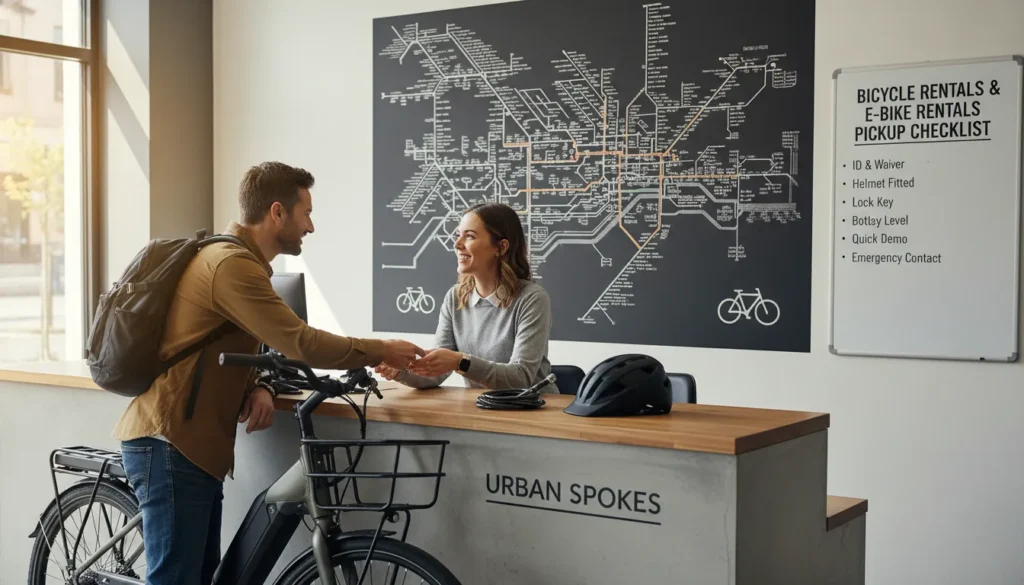
A shop rental is usually the best choice for full-day exploring, scenic routes, or any ride where comfort matters. You’re more likely to get proper sizing, a quick safety check, and help picking the right bike. Many shops also include helmets, locks, and route tips—or offer them as easy add-ons.
2) Bike share (best for quick hops in cities)
Bike share is ideal for short rides and one-way trips. You unlock with an app, ride, and dock again—simple and fast. The tradeoff is less control over fit and comfort, and costs can climb if you ride longer than planned.
3) Peer-to-peer rentals (best for specialty bikes and gear bundles)
Peer-to-peer platforms can be great when you need something specific—like a gravel bike, kid carrier setup, or bikepacking gear. Just be extra careful about insurance, ID verification, and pickup logistics.
How to choose the right rental bike in 5 steps
Picking a rental bike is less about the brand and more about matching the bike to your route, body, and goals. Use this quick process to avoid “this seemed fine in the parking lot” regret.
-
Match the bike to the terrain
- Flat beach path: cruiser or comfort hybrid
- Mixed city streets: commuter/hybrid, ideally with gears
- Hills or long distances: e-bike rental for range and pacing
- Trails: mountain bike (confirm trail rules and tire type)
-
Get the fit right
- Stand-over height should feel safe and stable
- Saddle height should allow a slight knee bend at the bottom of the pedal stroke
- Handlebar reach should not strain your back or wrists
-
Ask about included gear
- Helmet, lock, lights, bell, flat kit, phone mount
- Child seats, trailers, baskets, cargo racks (if needed)
-
Confirm battery and range (for e-bike rentals)
- Ask the real-world range for your terrain and rider weight
- Confirm charger availability for multi-day rentals
- Check assist levels and how to read the battery display
-
Do a 60-second test ride
- Brakes: smooth and strong
- Shifting: no skipping
- No wobble, rubbing, or odd noises
Pricing: what bicycle rentals really cost (and what drives the total)
Bicycle rentals are often priced by the hour, day, or week. The base rate is only part of the story—accessories, damage waivers, late fees, and delivery can change the final number quickly. In my experience, the “best value” rental is the one that includes the essentials you’d otherwise add at checkout.

Common fees to watch for
- Deposit/hold on card (refunded if returned in good condition)
- Damage waiver vs. full insurance (read what’s excluded)
- Late return fees (sometimes charged per hour)
- Battery replacement policy (for e-bikes)
- Theft responsibility (lock requirements matter)
The bicycle rentals checklist: questions to ask before you pay
These questions take two minutes and can save you a ruined afternoon. I keep them in my notes and run through them every time I book bicycle rentals in a new place.
- What’s included: helmet, lock, lights, flat kit?
- Is there a minimum rental time or a mileage limit?
- What happens if the bike is stolen—what proof do you need?
- Can I swap bikes if the fit feels off after 10 minutes?
- For e-bikes: what’s the battery range on this route, realistically?
- Is roadside help available if I get a flat?
| Issue | Likely Cause | What to Ask/Do | Prevention Tip |
|---|---|---|---|
| Bike feels too big/small | Wrong frame size; saddle/handlebar set incorrectly | Ask for a different size; adjust saddle height; check reach and standover | Confirm size at booking; do a quick fit check before leaving |
| Brakes squeal or feel weak | Wet/dirty rims/rotors; pads worn; cable/hydraulic needs adjustment | Test brakes at low speed; ask staff to clean/replace pads or adjust brakes | Avoid spraying rotors; do a brake check in the lot before riding |
| E-bike battery drops fast | High assist level; headwind/hills; underinflated tires; cold weather | Lower assist; check tire pressure; ask for battery health check or swap | Start with moderate assist; keep tires properly inflated; plan charging |
| Chain skips in higher gears | Worn chain/cassette; derailleur misadjusted; bent hanger | Stop hard pedaling when it skips; ask for derailleur tuning or bike swap | Shift gently under load; avoid cross-chaining; report skipping early |
| Got charged extra at return | Late return; damage; missing accessories; cleaning fee; wrong plan | Ask for an itemized receipt; review return time; inspect notes/photos; dispute politely | Take pickup/return photos; return on time; confirm included items |
| Lock/helmet missing at pickup | Not issued; misplaced; inventory mismatch | Ask staff to provide missing items; verify on rental contract before leaving | Do a checklist at pickup; keep accessories together during the ride |
Why e-bike rentals are a game-changer (especially for groups)
E-bike rentals make it easier for mixed fitness levels to ride together. They also expand your “ride radius,” which matters in destinations where the best viewpoints, neighborhoods, or food stops are spread out. For many riders, an e-bike rental is the difference between a 45-minute spin and a full-day adventure.
From a business standpoint, e-bike rentals can also drive repeat customers and higher satisfaction because riders finish feeling good, not exhausted. If you’re exploring this angle, Rad Power Bikes shares practical insights in Five Reasons for Businesses to Rent Ebikes.
Safety and rules: ride smart in any city or park
Bicycle rentals are safest when you treat the first five minutes like a preflight check. Confirm brakes, tire pressure, and seat clamp tightness. If you’re riding in traffic, prioritize visibility and predictability over speed.
Quick safety basics
- Wear a helmet and use lights at dusk or in fog
- Ride with traffic and signal turns
- Keep a safe door-zone distance from parked cars
- Lock the frame and rear wheel to an immovable object
For e-bike rentals, ask what class of e-bike it is and where it’s allowed. Some trails and paths restrict certain e-bikes, and rules vary by location.
Planning a great rental route (without overdoing it)
The best bicycle rentals experience is paced, not rushed. I plan a route with one “anchor stop” (coffee, viewpoint, museum) and build a loop around it. That way, if weather turns or someone gets tired, you can shorten the ride without stress.
Simple route planning tips
- Choose protected lanes or multi-use paths when possible
- Aim for a loop that ends near the rental shop
- Add a buffer for photo stops and snack breaks
- For e-bikes: plan for headwinds and hills (they affect range)
Try before you buy: turning a rental into the right e-bike purchase
If your rental makes you think, “I’d actually do this at home,” you’re not alone. The smartest next step is a structured test ride on the kind of bike you’d realistically use—commuter, cargo, folding, or step-thru. Rad Power Bikes outlines a solid approach in Want to Test Ride an Ebike? Here’s How..
When you test ride, focus on:
- Start/stop stability and low-speed handling
- Comfort over bumps (tires + riding position)
- Realistic range for your commute or errands
- How easy it is to store and secure
Where Can I Find Local E-bike Rentals? – The Cycling Junkies
Conclusion: make bicycle rentals the easiest “yes” on your trip
Bicycle rentals should feel like freedom, not friction. With the right rental type, a quick fit check, and clear pricing, you’ll spend your time riding instead of troubleshooting. And if an e-bike rental opens up a whole new kind of ride for you, that’s a strong signal to explore ownership options built for daily life.
FAQ: bicycle rentals
1) How much do bicycle rentals cost per day?
Daily pricing varies by city and bike type. Standard bikes are usually cheaper, while e-bike rentals cost more due to battery and maintenance, and may include different fee structures.
2) Do bicycle rentals include helmets and locks?
Sometimes. Many shops include a lock and offer helmets, while some charge per item. Always confirm what’s included before checkout.
3) What should I check before leaving the rental shop?
Test brakes, shifting, tire pressure, and seat height. Confirm you have the key or code for the lock and understand the return time and location.
4) Are e-bike rentals worth it for beginners?
Yes, especially for hills, longer distances, or mixed-ability groups. Ask for a quick tutorial on assist levels and braking before you ride.
5) What happens if a rental bike gets stolen?
Policies vary. Many require proof you used the provided lock correctly. Ask about theft coverage, required locking method, and documentation.
6) Can I rent a bike for a week (or longer)?
Most shops offer weekly rates and sometimes monthly rentals. Longer rentals can be a better value, especially if accessories are included.
7) Is bike share cheaper than bicycle rentals from a shop?
Bike share can be cheaper for short rides, but costs can rise with per-minute pricing and longer trips. Shop bicycle rentals often win for all-day comfort and fit.
Authoritative references: PeopleForBikes—E-bike resources • NHTSA—Bicycle safety • National Park Service—Biking