
Champagne has a way of showing up when life asks for a little ceremony—an engagement, a promotion, a “we made it through the week.” I still remember the first time I bought Champagne for a dinner party and realized I didn’t know what Brut meant, why some bottles cost $50 and others $250, or whether my regular wine glasses would ruin the bubbles. If you’ve ever stood in front of the shelf asking the same questions, this guide will walk you through Champagne with confidence—what it is, how to pick it, how to serve it, and how to enjoy every last sip.
What Is Champagne (and Why the Name Matters)?
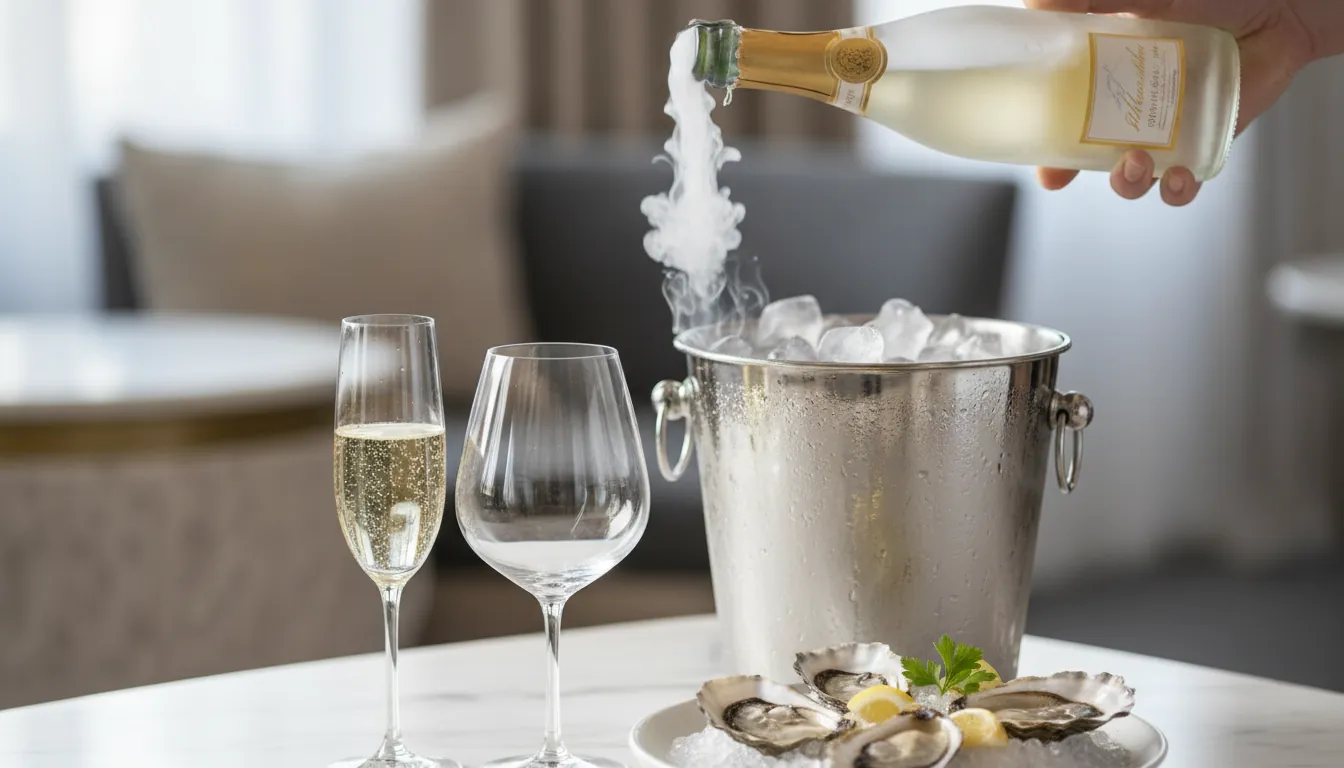
Champagne is sparkling wine made only in the Champagne region of France under strict rules, including the traditional method (secondary fermentation in the bottle). That method builds finer bubbles and complex flavors—think citrus, apple, brioche, toasted nuts—depending on style and aging.
Many sparkling wines are excellent, but they aren’t “Champagne” unless they come from Champagne. This protected naming is one reason Champagne has such consistent quality and higher costs.
For deeper background and standards, the Comité Champagne’s official site is a solid reference: Champagne.fr: the Champagne region and how Champagne is made. For a general overview of grapes, producers, and terminology, see Wikipedia’s Champagne article.
Champagne vs. Sparkling Wine: The Quick Difference You’ll Actually Use
The easiest practical rule: Champagne = place + method + rules. Sparkling wine can come from anywhere and may use different production methods.
When I’m shopping for a party, I decide based on the moment:
- “I want the real thing” → Champagne (especially for gifts and toasts).
- “I want bubbles for a crowd” → quality sparkling wine (Cava, Crémant, Prosecco, etc.).
If you want a simple explainer that compares these categories, this is helpful: The Difference Between Sparkling Wine and Champagne.
The Champagne Label Decoder: Brut, Vintage, Blanc de Blancs, and More
Champagne labels can feel like a secret code. Here’s what actually changes your experience in the glass.
Sweetness Levels (Most People Buy the Wrong One)
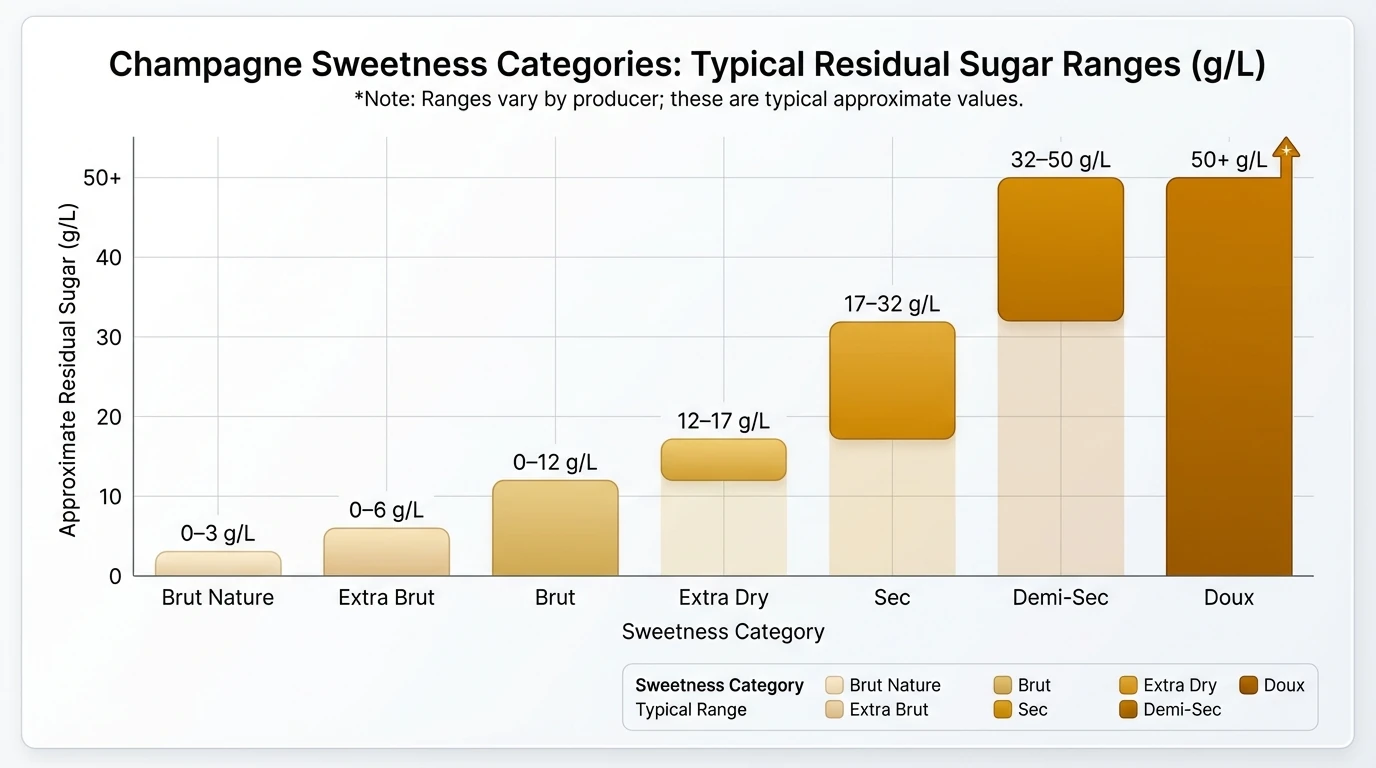
Most shoppers assume “Extra Dry” means the driest—surprisingly, it’s sweeter than Brut in Champagne labeling.
Common sweetness terms from driest to sweetest:
- Brut Nature / Zero Dosage (very dry, sharp, pure)
- Extra Brut (very dry)
- Brut (dry; the most popular)
- Extra Dry / Extra Sec (off-dry)
- Sec / Dry (noticeably sweet)
- Demi-Sec (dessert-friendly)
- Doux (rare, very sweet)
I’ve found Brut is the safest “bring-to-anything” Champagne—food-friendly and crowd-pleasing.
Vintage vs Non-Vintage (NV)
- Non-Vintage (NV): blend of multiple years; consistent house style; great value.
- Vintage: made from one year; often more complex; usually pricier and more “cellar-worthy.”
Grapes & Styles You’ll See
- Blanc de Blancs: white from white grapes (mostly Chardonnay). Tends to be bright, citrusy, elegant.
- Blanc de Noirs: white from black grapes (Pinot Noir/Meunier). Often richer, more structure.
- Rosé Champagne: can be delicate and food-friendly (not just “sweet” like many assume).
For a practical buying checklist, I often point friends to this guide: How to Choose Champagne.
How to Choose Champagne for Any Occasion (Without Overpaying)
Price matters in Champagne, but it’s not the only signal of quality. Here’s a simple approach that works.
1) Match the bottle to the moment
- Toasts & celebrations: NV Brut from a reputable house is reliable.
- Dinner pairing: consider Blanc de Blancs for seafood, Blanc de Noirs for roast chicken or mushrooms.
- Dessert: Demi-Sec is a cheat code with fruit tarts, shortbread, or spicy dishes.
2) Decide what flavor profile you enjoy
Ask yourself:
- Do you like crisp and lean (citrus, mineral)?
- Or toasty and creamy (brioche, hazelnut)?
3) Consider “value tiers” realistically
Champagne pricing varies widely; retailers often group by budget bands (e.g., under $100 vs luxury cuvées). A curated selection page can help you compare styles and price points quickly: Shop Champagne.
Serving Champagne Like a Pro: Temperature, Pouring, and Storage
Serving Champagne correctly is the fastest way to make any bottle taste better.
Best serving temperature
- NV Brut: ~45–50°F (7–10°C)
- Vintage / fuller styles: ~50–54°F (10–12°C)
Too cold mutes aroma; too warm makes it foamy and flat faster.
How to chill fast (without ruining it)
- Ice bucket with ice + water + a handful of salt chills faster than ice alone.
- Avoid the freezer unless you set a timer—broken bottles aren’t rare.
Pouring tips (less foam, more bubbles)
- Tilt the glass at 45°.
- Pour a small amount to create a base.
- Top up slowly.
The Best Champagne Glass: Flute vs Tulip vs Coupe (and What I Use)
Glass choice changes aroma and bubble behavior more than most people expect. For everyday drinkers, the “best” glass is the one that fits your moment—and preserves the experience you paid for.
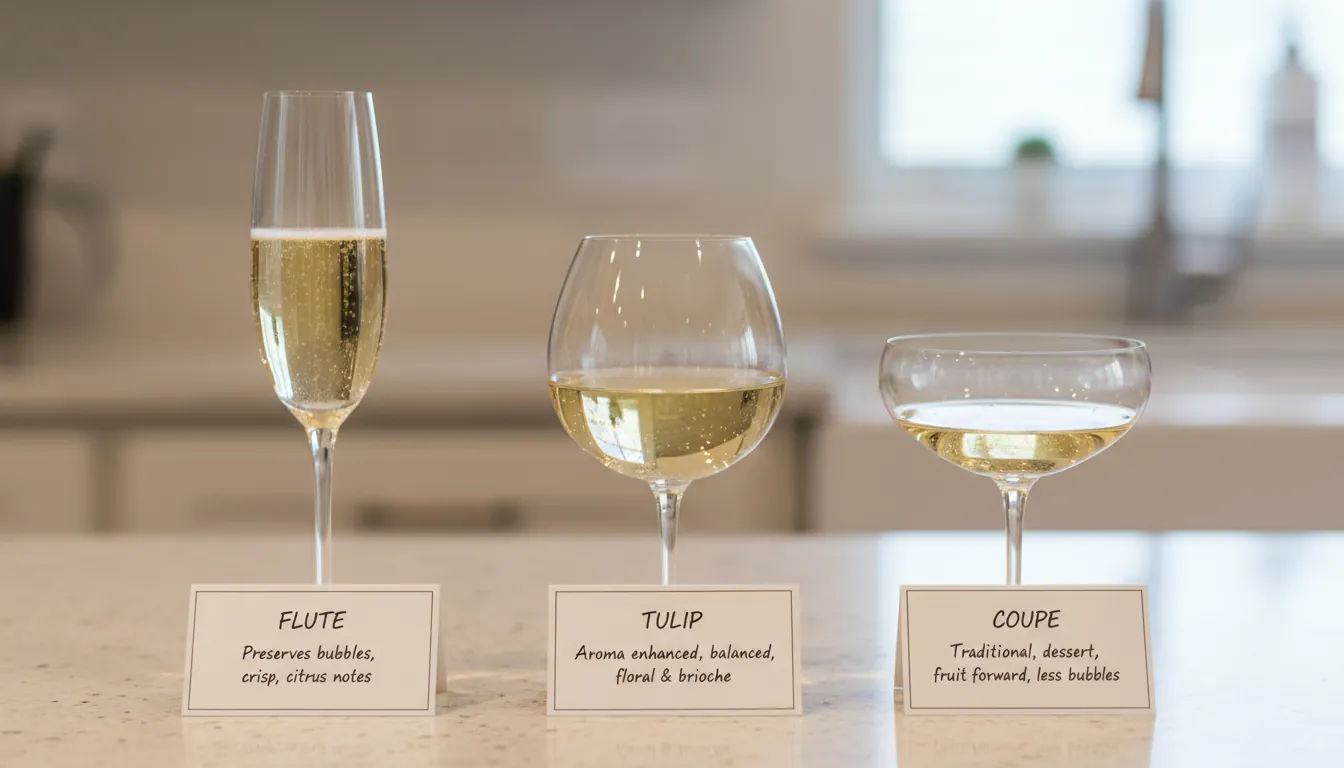
- Flute: keeps bubbles lively; aroma is more restrained. Great for toasts and standing events.
- Tulip glass: best all-around for Champagne—captures aroma while keeping effervescence.
- Coupe: iconic look, but bubbles fade fastest; best for aesthetics, not analysis.
If you want a focused comparison, Corkcicle’s guide breaks it down clearly: Wine Glasses vs Champagne Glasses: What’s the Difference?. For broader glassware context (useful if you’re building a set), see Different Types of Wine Glasses.
| Glass Type | Best For | Aroma | Bubble Retention | When to Avoid |
|---|---|---|---|---|
| Flute | Celebrations; crisp non-vintage Brut; visual bubbles | Low–medium (narrow opening limits nose) | Excellent | Tasting complex vintage/rosé; when you want fuller aromatics |
| Tulip | Most Champagnes; vintage; Blanc de Blancs; rosé | High (captures and concentrates aromas) | Very good | Very tight spaces/large pours; if you prioritize visuals |
| White Wine Glass | Prestige cuvées; aged/vintage; food pairing focus | Very high (maximum expression) | Medium | Lively young Brut where you want long-lasting effervescence |
| Coupe | Cocktails; dessert pairings; vintage-style serving | Medium (quickly dissipates) | Poor | Quality Champagne tasting; anytime you want sustained bubbles |
Champagne + Food Pairing: Easy Wins (Not Just Caviar)
Champagne’s acidity and bubbles make it one of the most flexible wines at the table. I’ve had some of the best pairings with “simple” foods that let the wine’s freshness shine.
Try these crowd-pleasers:
- Brut + salty snacks: popcorn, chips, fried chicken (seriously).
- Blanc de Blancs + seafood: oysters, shrimp, sushi.
- Blanc de Noirs + comfort food: roasted chicken, mushroom dishes, creamy pasta.
- Rosé Champagne + charcuterie: prosciutto, duck, berry-forward appetizers.
- Demi-Sec + dessert/spice: fruit tart, Thai heat, glazed ham.
Common Champagne Mistakes (and How to Fix Them Fast)
Champagne feels fancy, but the mistakes are usually basic and easy to fix.
- Mistake: Buying “Extra Dry” expecting it to be driest
Fix: Choose Brut or Extra Brut for a truly dry Champagne. - Mistake: Serving ice-cold straight from the back of the fridge
Fix: Let it sit 5–10 minutes; aroma opens up quickly. - Mistake: Using a wide coupe for a premium bottle
Fix: Use a tulip or even a white wine glass to keep aromas intact. - Mistake: Popping the cork like a movie scene
Fix: Twist the bottle, not the cork, and aim for a quiet sigh to preserve bubbles.
Champagne at Home: The “Keep It Special” Routine
Champagne is about celebration—but it’s also about small rituals that make a random Tuesday feel intentional. When I host, I set out the right glassware, chill the bottle properly, and keep pours modest so every glass stays lively. The result is less waste, better flavor, and a more memorable moment.
How to Open Champagne (Without it Exploding!)
Conclusion: Make Champagne Feel Effortless (and Worth Every Sip)
Champagne doesn’t need mystery to feel magical. Once you know how to read the label, pick the right sweetness (usually Brut), serve it at the right temperature, and choose a glass that suits the moment, Champagne becomes easy to enjoy—and easy to share. Next time you’re celebrating something big (or just making dinner feel special), let Champagne do what it does best: turn a moment into a memory.
FAQ: Champagne Questions People Search Most
1) What makes Champagne different from sparkling wine?
Champagne must be produced in the Champagne region of France under strict rules, typically using the traditional method with bottle fermentation.
2) Is Brut Champagne sweet?
Brut is considered dry. It can taste fruity, but it’s not “sweet” like Demi-Sec or Doux.
3) What’s the best Champagne for mimosas?
A fresh NV Brut is ideal. If you’re mixing with juice, focus on balance and value rather than rare vintage bottles.
4) Should I use a flute or a coupe for Champagne?
A tulip glass (or even a white wine glass) often gives the best aroma and taste. Flutes are great for keeping bubbles during toasts; coupes are more style than function.
5) How long does Champagne last after opening?
With a sparkling wine stopper and refrigeration, most bottles hold up 1–3 days, though the bubbles fade over time.
6) What temperature should Champagne be served?
Generally 45–50°F (7–10°C) for NV Brut; slightly warmer for vintage to show more aroma.
7) What does “vintage” mean on Champagne?
Vintage Champagne comes from a single harvest year and is typically aged longer, often offering more complexity than non-vintage.