
Why crafts stores still matter in a “buy it online” world
You walk into crafts stores for one thing—glue—and leave with a cart full of ideas. That’s not an accident: crafts stores are built to spark projects, solve supply problems fast, and help you compare materials in your hands. I’ve tested dozens of supplies this way (vinyls, blanks, paints, woods), and nothing replaces seeing thickness, finish, and color in real light. The best part is that a good crafts store can take you from “I’m bored” to “I’m making” in a single visit.

What counts as a “crafts store” today?
Crafts stores now fall into a few clear types, and each one shines in different situations. Big-box craft retailers are convenient for basics and seasonal décor, while art-focused suppliers tend to carry higher-grade paints, paper, and tools. Online craft shops often win on niche inventory (like dies, stamps, or bulk ribbon), and wholesale-style outlets can be a game-changer for small businesses.
Common crafts store categories:
- Big-box craft stores: broad selection, frequent promos, strong seasonal aisles
- Fine art supply stores: better artist materials, more knowledgeable staff
- Paper-craft specialists: stamps, dies, cardstock systems, scrapbooking lines
- Wholesale/public wholesale: bulk florals, ribbon, wreath bases, packaging
- Local maker shops: curated tools, workshops, and community support
Authoritative references worth browsing for category context include Michaels, Blick Art Materials, and CraftOutlet.
The real reason people switch crafts stores (it’s not just price)
Price matters, but most crafters change crafts stores because of consistency. If the vinyl varies by batch, the wood blanks warp, or the paint coverage is unpredictable, you waste time redoing work. When I was producing small runs of engraved gifts, I learned quickly that “cheap blanks” can be expensive after misprints, returns, and remakes.
The most common “switch triggers”:
- Stock-outs on core items (blanks, adhesive vinyl, transfer tape)
- Inconsistent material quality (warping, uneven coating, brittle acrylic)
- Limited sizes/colors (you can’t scale product lines)
- No staff who can answer technique questions
- Returns that are hard or slow for damaged goods
A quick checklist for judging crafts stores in 10 minutes
If you’re deciding between crafts stores, use a fast, practical audit. You’re looking for signs that the store supports both experimentation and repeatable results. This matters whether you’re making one birthday card or 200 engraved keychains.
In-store checks:
- Material labeling: thickness, finish, fiber content, compatibility notes
- Tool ecosystem: do they stock blades, mats, tips, and replacements?
- Sample quality: look for clean cuts, smooth surfaces, consistent dye lots
- Price transparency: clear unit pricing, bulk pricing, and promo rules
- Project adjacency: blanks near the tools/materials that complete the job
Online checks:
- Real photos + reviews that mention use-case (not just “cute!”)
- Shipping protection for fragile items (frames, acrylic, ceramics)
- Easy reorder flow (saved lists, subscriptions, consistent SKUs)
Crafts store essentials by project type (buy smart, not random)
Different crafts stores excel depending on what you make. Instead of “shopping aisles,” think in systems—materials + tools + finishing + packaging. This reduces trial-and-error and helps you standardize outcomes.
Paper crafts & scrapbooking
Best buys:
- Cardstock in consistent weights, scoring tools, adhesives that don’t wrinkle
- Coordinated collections (paper + stickers + stamps/dies)
Watch-outs:
- Cheap adhesives that yellow or warp
- Cardstock that cracks when folded
Home décor & seasonal crafts
Best buys:
- Wreath forms, wired ribbon, florals, wood rounds, stencils, sealers
Watch-outs:
- Florals with weak stems, glitter that sheds, porous woods that blotch stain
Jewelry & small accessories
Best buys:
- Findings, chains, jump rings, resin systems, polishing supplies
Watch-outs:
- Mixed metals that tarnish fast, inconsistent ring sizes
Apparel customization
Best buys:
- Heat transfer vinyl (HTV), blanks, weeding tools, heat-resistant tape
Watch-outs:
- Vinyl that peels after washing, blanks with inconsistent sizing
When crafts stores aren’t enough: moving from “DIY” to “make-to-sell”
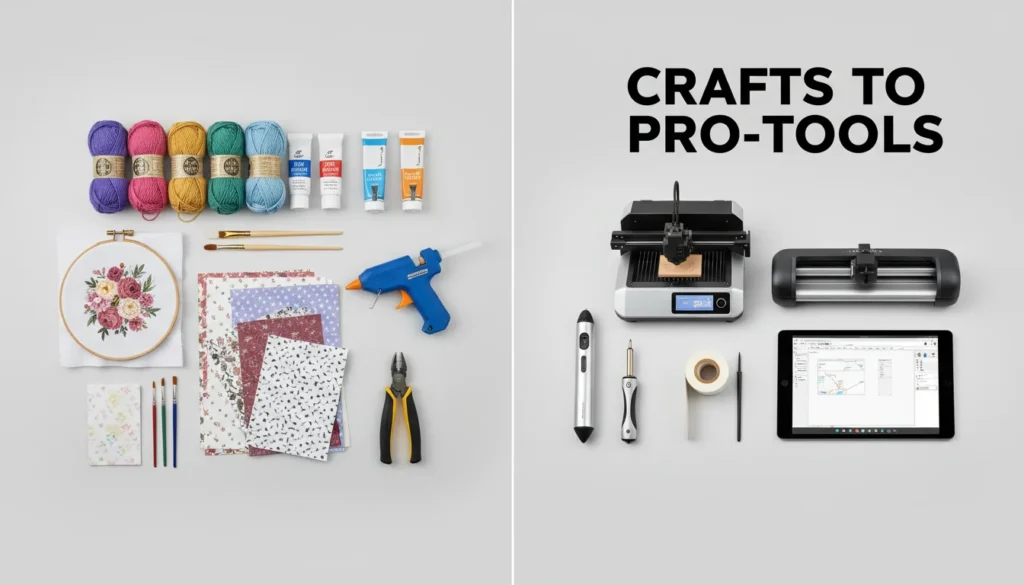
Crafts stores are perfect for learning and prototyping. But once you start selling, you need repeatability: same output, same time, same quality. That’s where fabrication tools—like laser cutting/engraving and DTF printing—often replace (or complement) what you can do with off-the-shelf craft supplies.
I’ve seen this shift happen when makers hit one of these walls:
- You can’t cut cleanly or consistently by hand (time spikes)
- Your product line is limited by pre-made blanks
- You need personalization at scale (names, logos, QR codes)
- You want higher perceived value (engraved wood, acrylic, leather, metal tags)
With xTool’s ecosystem (laser cutters/engravers, DTF printers, software, and safety gear), the goal is to keep the “crafts store creativity” while upgrading the production side—especially for small businesses and classrooms.
Level Up Craft Show Sales: Boosting Laser Engraved Personalized Products with xTool X Jackery! F1
Practical buying strategy: use crafts stores for inputs, not constraints
A high-leverage approach is to treat crafts stores as your materials and finishing supplier, while your “core capability” comes from your tools. For example, buy paint, sealers, and packaging locally, but create your own blanks, signage, tags, and personalized designs in-house.
High-impact items to keep sourcing from crafts stores:
- Acrylic paint, brushes, foam rollers, masking tape
- Sealers (matte/gloss), stains, sanding supplies
- Packaging: tissue, boxes, ribbons, labels
- Seasonal décor elements for bundles and upsells
High-impact items to consider making yourself:
- Custom ornaments, signage, cake toppers, keychains, jewelry cards
- Engraved tumblers and glassware (with proper safety and settings)
- Branded tags, QR code plates, and product inserts
If you’re planning to sell, these guides can help you pick channels and build a plan:
- Where to Sell Crafts Online (Top 30 Websites)
- How to Sell Crafts Online in 6 Steps
- 20 Profitable Crafts To Make And Sell In 2025
Common crafts store mistakes (and how to fix them fast)
Most frustration with crafts stores comes from small process errors: wrong adhesive, wrong surface prep, wrong finish. Fixing these saves money and makes your results look “store-bought” (in a good way).
| Mistake | Why It Happens | Quick Fix | What to Buy Next Time |
|---|---|---|---|
| Buying the cheapest vinyl | Lower-quality adhesive and thinner film lead to lifting, bubbling, and edge peel | Re-clean with isopropyl alcohol, re-squeegee with heat, seal edges for temporary hold | Reputable permanent vinyl (e.g., Oracal 651/Siser), matching transfer tape, alcohol wipes |
| Using indoor paint outdoors | Interior formulas lack UV/mildew resistance; moisture and sun cause peeling | Scrape/sand loose paint, prime properly, repaint with exterior-rated paint and sealer | Exterior acrylic/latex or outdoor craft paint, exterior primer, UV-resistant topcoat |
| Skipping surface prep | Dust, oils, and glossy finishes prevent adhesion and cause early failure | Degrease, scuff-sand glossy areas, wipe clean, then reapply | Sanding sponges (220–320 grit), tack cloth, degreaser/IPA, bonding primer |
| Choosing the wrong wood for laser/paint | Softwoods/green wood warp; open grain and knots cause blotching and uneven burn/finish | Flatten with clamps/weights, seal with sanding sealer, repaint or re-stain | Baltic birch plywood (laser-safe), MDF for paint, pre-sanded boards, sanding sealer/wood conditioner |
| Ignoring cure times | Handling too soon smears ink/paint and traps moisture under topcoats | Let fully cure, lightly sand defects, apply another coat after proper dry time | Fast-drying paint/ink, low-tack masking, drying rack, clear coat compatible with the medium |
| Buying mixed metal findings | Different platings react and tarnish; cheap alloys cause discoloration and skin reactions | Separate pieces by metal type, add clear jewelry sealant, store dry with anti-tarnish strips | Stainless steel/sterling/14k gold-filled findings, consistent plating sets, anti-tarnish bags/strips |
Cost reality: where the money goes in a craft project
If your craft budget feels like it disappears, it’s usually because “small” add-ons stack up—adhesives, blades, sealers, replacement tips, and waste from failed attempts. Tracking cost categories helps you decide whether to keep buying pre-made components at crafts stores or shift to making your own parts.

How to pick the best crafts store for your goals
The “best” crafts store depends on whether you’re creating for fun, teaching, or selling. Use your goal to choose the store type—and build a repeatable supply list you can restock without rethinking every time.
If you craft for relaxation
Prioritize:
- Variety, inspiration, easy returns, seasonal promos
Avoid: - Overbuying “maybe someday” supplies (set a project limit)
If you teach or run workshops
Prioritize:
- Consistent inventory, classroom packs, safer materials, clear labels
Avoid: - Supplies with strong fumes or unclear age ratings
If you sell products
Prioritize:
- Consistent blanks, bulk pricing, predictable restocks, packaging options
Avoid: - One-off seasonal items that can’t be reordered
Safety and quality: the overlooked crafts store advantage
A great crafts store doesn’t just sell supplies—it reduces risk. Look for clearly labeled chemicals, ventilation guidance for sprays, and staff who can recommend safer alternatives. When you expand into fabrication (laser, welding, DTF), safety becomes even more important: fume control, fire prevention, and proper material settings are non-negotiable for professional results.

Conclusion: make crafts stores your launchpad, not your limit
Crafts stores are where ideas become real—fast. They’re perfect for discovery, learning, and sourcing the finishing touches that make products feel polished. But if you’re ready to scale, personalize, or build a business, pairing crafts store supplies with pro-grade fabrication tools can turn “weekend projects” into reliable production.
📌 [Refurbished] xTool M1 Ultra: The World’s First 4-in-1 Craft Machine
FAQ: Crafts Stores
1) What are the best crafts stores for beginners?
Look for crafts stores with starter kits, clear labels, easy returns, and staff who can recommend the right adhesive, paint, or vinyl for your project.
2) Are online crafts stores cheaper than in-store?
Often, yes—especially for niche items and bulk orders—but shipping and damage risk can offset savings. Compare unit price and return policies.
3) What should I always buy at crafts stores (instead of online)?
Time-sensitive basics like adhesives, paint, brushes, sealers, and last-minute blanks are usually best in-store so you can verify quality and finish.
4) How do I know if a crafts store blank is good quality?
Check for warping, chips, uneven coatings, and inconsistent sizing. When possible, buy two and run a test finish before committing to a batch.
5) What’s the difference between an art supply store and a crafts store?
Art supply stores focus on higher-grade materials (paints, papers, brushes) and technique support, while crafts stores emphasize project kits, décor, and broad DIY categories.
6) When should I upgrade from craft tools to a laser engraver or DTF printer?
When you need repeatable quality, faster production, and scalable personalization—especially if you’re selling or producing for events, schools, or teams.
7) What are the most profitable items to make using crafts store supplies?
Personalized décor, event signage, giftables, and apparel add-ons tend to perform well—especially when you standardize materials and packaging for repeat orders.