
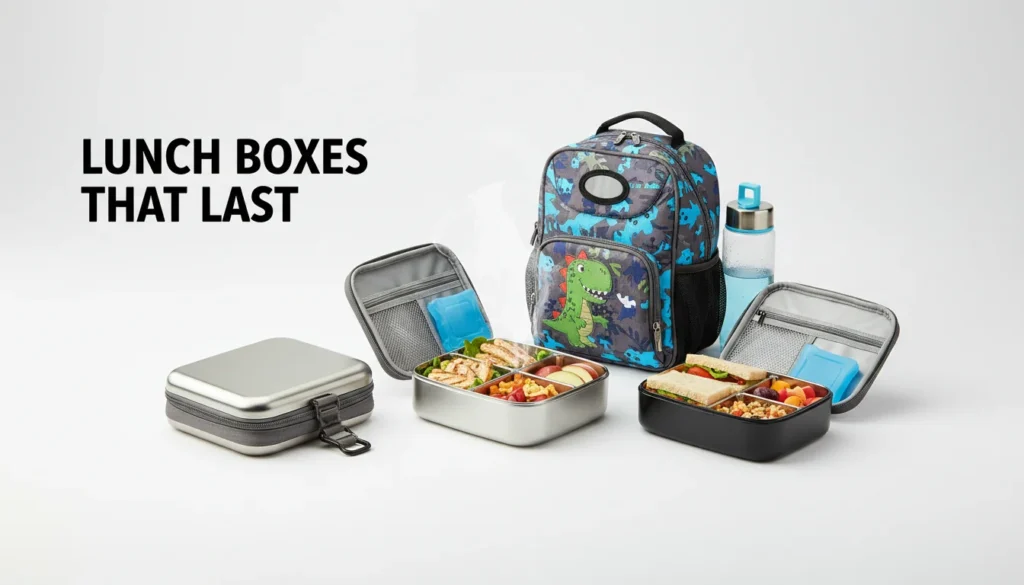
Packing lunch sounds simple—until your salad turns soggy, your soup cools off by 11 a.m., or your bag tips and everything leaks. I’ve tested lunch boxes across commutes, school drop-offs, and long meeting days, and the pattern is clear: the “best” lunch box depends on temperature control, layout, and how you really carry it. The good news is that once you match the lunch box to your routine, you’ll waste less food, spend less on takeout, and enjoy lunch the way you intended.
Corkcicle’s world is built around insulation, spill resistance, and design that fits real life—so in this guide, we’ll break down lunch boxes with the same mindset: performance first, style that lasts, and details that make daily use easier.

What a “Good” Lunch Box Really Means (Beyond Looks)
A lunch box is a portable food system: it needs to protect texture, temperature, and timing. Most lunch box disappointment comes from one mismatch—like choosing a cute bento for a commute that needs serious insulation, or an oversized cooler-style lunch box for a minimal snack day. When you choose based on your habits (not just capacity), lunch gets easier fast.
In my experience, the biggest “quality signals” show up in daily friction points:
- Thermal performance: how long it keeps food cold or warm in your environment.
- Leak resistance: zippers, seams, and container fit matter more than marketing claims.
- Cleanability: wipeable liners and fewer crumbs-catching corners save time.
- Carry comfort: handle placement and strap design decide whether you’ll actually use it.
Types of Lunch Boxes: Pick the Format That Matches Your Day
Insulated soft lunch bags (the everyday MVP)
This is the most common lunch box style for work, school, and travel. It’s flexible, usually lighter than a hard box, and often has pockets for utensils and napkins. If you bring cold lunches most days, an insulated lunch box with room for an ice pack is hard to beat.
Best for:
- Office lunches, school lunches, errands, road trips
- People who want cold food to stay safe and fresh for hours
Bento-style lunch boxes (organization + portion control)
Bento lunch boxes shine when you want compartments and structure. They’re great for snacky lunches, picky eaters, or anyone who wants to keep wet foods away from crunchy foods. The trade-off: many bento boxes need an outer insulated lunch box if you need serious temperature control.
Best for:
- Kids’ lunches, grazing-style meals, salads + toppings
- Anyone who hates food touching
Hard-shell lunch boxes (protection first)
Hard lunch boxes protect delicate items and resist crushing in backpacks. They can be easier to stack in a fridge, too. The downside is bulk and less flexibility for odd-shaped containers.
Best for:
- Backpack carry, crowded fridges, structured packing
Electric/heated lunch boxes (hot lunch without a microwave)
These are popular for job sites, travel, and offices with limited kitchen access. They’re not for everyone, but if hot lunch is the priority, they can be a game changer.
Best for:
- Drivers, field work, shared office kitchens, microwave-free days
The 7 Features to Look for in Lunch Boxes (What Matters Most)
-
Insulation thickness and liner quality
Better insulation slows temperature change. Look for a structured, insulated body and a liner that feels durable—not thin and crinkly. -
Closure design (zipper quality is underrated)
A lunch box zipper that glides smoothly and seals well reduces leaks and helps hold cold air in. -
Capacity that matches your containers
“10L” doesn’t mean much if your favorite containers don’t fit. Measure your go-to containers and check interior dimensions. -
Ice-pack compatibility
The best insulated lunch boxes have a flat surface or sleeve where an ice pack can sit close to the food. -
Leak management
Even if the lunch box isn’t “leakproof,” it should be leak-tolerant: a wipeable liner and reinforced seams help a lot. -
Easy cleaning
If it can’t be wiped quickly, it won’t stay fresh. Antimicrobial claims vary—basic cleanability is more reliable. -
Carry comfort + stability
A non-slip base and balanced handle reduce tipping (and spills) on desks, car seats, and train floors.
| Lunch Box Type | Best For | Pros | Cons | Ideal Add-Ons (ice pack/thermos/bento) | Typical Price Range |
|---|---|---|---|---|---|
| Insulated soft bag | Everyday commuting, flexible packing | Lightweight; fits odd-shaped containers; good insulation | Less protective; can leak if containers aren’t sealed | Ice pack | $15–$40 |
| Bento box | Portion control, meal prep, variety | Built-in compartments; neat presentation; compact | Limited capacity for bulky foods; may not keep food hot | Bento | $12–$35 |
| Hard-shell lunch box | Kids/school, protecting fragile items | Durable; crush-resistant; easy to wipe clean | Heavier; less flexible space; can be bulky | Ice pack | $20–$60 |
| Dual-compartment lunch box | Keeping hot and cold items separate | Separates temps/foods; reduces sogginess; organized | More parts to clean; can be larger; higher cost | Ice pack + thermos | $25–$70 |
| Electric heated lunch box | Office/truck drivers, hot meals without microwave | Reheats food; convenient; no need for shared microwave | Needs outlet/car adapter; slower heating; heavier | Thermos | $35–$90 |
How Long Do Lunch Boxes Keep Food Cold (Realistic Expectations)
“Keep food cold” depends on starting temperature, ice pack size, how often you open the lunch box, and ambient heat. In warm climates or a hot car, even a great lunch box needs help: pre-chilling, larger ice packs, and minimizing empty air space.
If you want a deeper breakdown of performance factors, Corkcicle has a practical guide worth reading: Which Lunch Box Keeps Food Cold the Longest?. I’ve found the biggest upgrade is simple: use two cold sources (a top and bottom ice pack) when you’re packing dairy, meat, or mayo-based foods.

For food safety, the USDA’s guidance on keeping cold foods cold is the gold standard: USDA Food Safety and Inspection Service—Cold Food Safety. For kids’ lunches, the CDC also offers clear, practical tips: CDC—Food Safety.
How to Keep Food Warm in a Lunch Box (Without Dry, Sad Leftovers)
Hot lunches are all about heat retention and moisture control. I’ve had the best results when I preheat the container (or thermos) with boiling water for a few minutes, then pack the food piping hot. A well-sealed insulated container matters more than the outer lunch box for warmth.
For step-by-step methods (and what actually works in real life), use this internal guide: How to Keep Food Warm for Lunch. If you’re packing both hot and cold items, consider a dual-compartment lunch box or separate bags to avoid temperature “averaging.”
Lunch Boxes for Kids vs Adults: What Changes
Kids’ lunch boxes
Kids need lunch boxes that are easy to open, easy to clean, and resilient to drops. Compartments help reduce decision fatigue (“What do I eat first?”), and labels reduce loss. If your child’s lunch sits in a warm classroom, prioritize insulation and ice pack fit over extra pockets.
If you’re building kid-friendly menus that actually get eaten, this is a strong resource: 15 Creative Lunchbox Ideas for Kids: Healthy, Fun, and Allergy-Friendly.
Adult lunch boxes
Adults often need more volume flexibility and a more professional look. The best lunch boxes for work also prioritize leak resistance (laptops and soup don’t mix) and carry comfort for commuting. If your day includes a gym stop or long meetings, look for a lunch box that stays structured even when partially empty.
A Simple Packing System That Makes Any Lunch Box Work Better
When I’m packing lunch boxes for a full day out, I use a repeatable system so I’m not reinventing lunch every morning. It’s fast, and it reduces the “forgot something” problem.
- Start cold, stay cold: chill food overnight; freeze a water bottle if you can.
- Separate wet from crisp: dressings and sauces go in mini containers.
- Minimize air gaps: a fuller lunch box holds temperature better.
- Use the right containers: leakproof for liquids, vented for hot foods (until cooled slightly).
- Pair with insulated drinkware: keeping your drink cold (or coffee hot) reduces the need for extra stops—Corkcicle’s insulated canteens and cups are built for exactly that use case.
For an external deep dive on lunch box testing and practical picks, Wirecutter’s approach is a helpful benchmark: Wirecutter—The Best Kids Lunch Boxes.
Yeti Daytrip Lunch Box VS Lunch Bag – Which One Is Best For You?
Common Lunch Box Problems (and Fixes That Actually Work)
-
Problem: Food gets warm by lunchtime
Fix: Pre-chill food, add a second ice pack, and keep the lunch box out of direct sun. -
Problem: Condensation makes everything soggy
Fix: Put crunchy items in a dry compartment/container; keep fruit separate; use paper towel under cold items. -
Problem: Leaks ruin the bag
Fix: Use leakproof containers for liquids; keep soup upright; choose a lunch box with a wipeable liner. -
Problem: Smells linger
Fix: Air dry fully; wipe with mild soap; occasional baking soda soak for removable containers. -
Problem: It’s too small (or too big)
Fix: Match lunch box size to your standard meal: “snack-heavy,” “one-container,” or “meal-prep full.”
Conclusion: The Best Lunch Boxes Fit Your Routine, Not Just Your Food
A lunch box is a daily companion—quietly doing the job of protecting your time, money, and energy. When you choose lunch boxes based on insulation, cleanability, and the way you actually move through your day, lunch stops being a gamble and starts being a reliable reset. If you’re building a setup you’ll stick with, pair a strong lunch box with insulated drinkware so your whole day stays on track—cold stays cold, hot stays hot, and spills stay rare.
FAQ: Lunch Boxes
1. What size lunch box do I need for work?
Most people do well with a medium insulated lunch box that fits one main container plus snacks and an ice pack. If you meal prep multiple containers, size up.
2. Are bento lunch boxes good for keeping food cold?
Bento lunch boxes help with organization, but many need an outer insulated lunch box and an ice pack for reliable cold holding.
3. How do I keep my lunch box from smelling?
Wash and fully air-dry it daily. For stubborn smells, wipe the interior and use baking soda overnight.
4. How many ice packs should I use in an insulated lunch box?
One works for short days; two (top and bottom) is best for long days, hot climates, or dairy/meat-heavy meals.
5. Can I put hot food in an insulated lunch box?
Yes, but hot food stays hottest in a preheated insulated container (like a food jar). Keep hot and cold items separated.
6. What’s better: lunch bag or lunch box?
A lunch bag is flexible and easy to carry; a hard lunch box offers more crush protection. The “better” choice depends on your commute and what you pack.
7. How do I prevent leaks in my lunch box?
Use leakproof containers, keep liquids upright, and avoid overfilling. A wipeable liner helps if something spills anyway.