
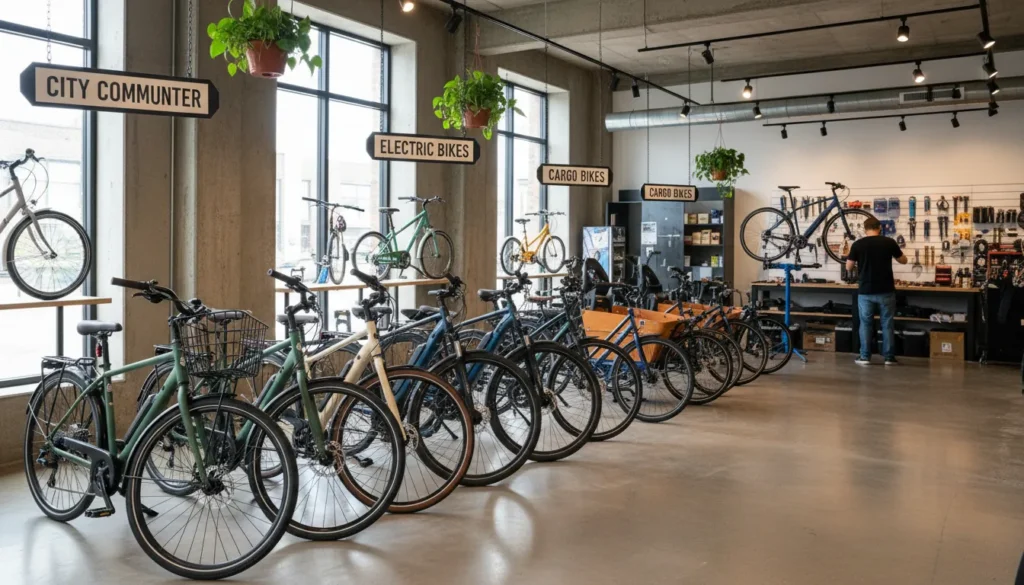
Walking into a bike shop can feel like stepping into a “choose-your-own-adventure” wall of frames, tires, and jargon. You might be thinking: Do I need a commuter, a cargo bike, or an ebike that can do both? And with so many bike shop bikes—new, used, and electric—it’s easy to buy the wrong thing fast. This guide breaks down how bike shops organize bikes, what to look for, and how to get the best value (especially if you’re considering an ebike).

What “Bike Shop Bikes” Really Means (and Why It Matters)
“Bike shop bikes” usually refers to bikes sold through local bike shops (LBS) or shop partners—often with professional assembly, fit help, and service support. That’s different from big-box bikes or unknown online sellers where setup quality can vary a lot. In my experience helping friends buy their first “serious” bike, the biggest difference wasn’t the brand—it was whether the bike was correctly assembled, adjusted, and supported after the sale.
Bike shops also tend to curate models that are easier to maintain and safer at speed. That matters even more with ebikes, where higher average speeds and heavier frames put extra stress on brakes, tires, and spokes.
Bike shop vs online: the real trade-off
You’re usually balancing:
- Price (online can be lower)
- Confidence (shops reduce risk with fit + service)
- Speed to ride (shops can hand you a ready-to-go bike)
- Long-term cost (good setup prevents premature wear)
The Main Types of Bike Shop Bikes (Quick Match Guide)
Most bike shop bikes fall into a few “use-case buckets.” If you start with your top two rides (commute, errands, trails, kid hauling), the right category becomes obvious.
1) City & commuter bikes
These are built for comfort, visibility, and predictable handling on pavement. If you ride to work or to class, prioritize fender/rack compatibility and stable steering.
If you’re leaning electric, browse options like Electric City & Commuter Bikes to compare commuter-focused geometry and practical add-ons.
2) Cargo & utility bikes
Cargo bikes are “car replacers.” They’re designed for weight, mounts, and control under load—think groceries, gear, or kid seats. I tried a cargo ebike for weekly errands and found the biggest win wasn’t speed—it was not needing to hunt for parking and still carrying a full haul.
For hauling-focused ebikes, see Electric Cargo & Utility Bikes.
3) Off-road and all-terrain bikes
Trail-capable bikes emphasize traction, braking, and stability. If your routes include gravel, packed dirt, or rough pavement, this category can be a better “one bike” solution than a pure road commuter.
4) Fat and mid-fat tire bikes
These are popular in bike shops where weather and surfaces change fast—sand, snow, loose gravel, potholes. Wider tires can add comfort and confidence, especially for newer riders.
If you want extra grip and a smoother ride, compare Fat & Mid-Fat Tire Electric Bikes.
Why More Shoppers Are Asking for Ebikes at Bike Shops
Ebikes have shifted from “niche” to mainstream because they solve real problems: hills, headwinds, long commutes, and arriving sweaty. Rad Power Bikes is a good example of where the market is going—direct-to-consumer pricing paired with a nationwide network of local bike shop partners for test rides and service. That hybrid model addresses the #1 ebike fear I hear: “What happens when it needs service?”
What to expect when shopping ebikes in a bike shop:
- Heavier frames → you’ll care more about stable handling and strong brakes
- Battery and motor system → you’ll want clear warranty and support
- More frequent wear items (brake pads, chains) → service access matters

A Simple Checklist for Buying Bike Shop Bikes (New or Used)
Bring this list into the shop. It keeps the conversation practical and helps you compare bikes apples-to-apples.
Fit and comfort (the non-negotiables)
- Stand-over clearance: you should be able to stop safely without tiptoeing
- Reach: you shouldn’t feel stretched or cramped
- Saddle comfort: you can swap saddles, but a good baseline matters
- Handlebar position: upright for comfort, lower for speed
If you want to do quick homework before you go, basic fit concepts like saddle height and reach are worth understanding (most shops will still fine-tune it for you).
Components that change your ownership cost
- Brakes: hydraulic disc brakes often feel more consistent, especially in wet conditions
- Gearing: hills and cargo loads demand easier gears (or ebike assist)
- Tires: puncture protection matters more than people think
- Mounts: rack/fender mounts save money versus custom solutions
For ebikes: ask these questions
- What’s the real-world range for my terrain and weight?
- How is the battery stored, charged, and replaced?
- Who services the electronics—shop, brand partner, or both?
- What’s covered under warranty, and for how long?
| Bike Type | Best For | Key Features to Look For | Common Mistakes | Ideal Add-Ons |
|---|---|---|---|---|
| City/Commuter | Daily commuting, errands, mixed pavement | Upright geometry, fenders/rack mounts, puncture-resistant tires, reliable brakes, lights | Buying wrong size, skipping fenders/lights, underestimating tire quality | Full fenders, rear rack, integrated lights, lock, bell |
| Cargo/Utility | Hauling kids/groceries, heavy loads, car replacement | High payload rating, stable frame/stand, strong brakes, durable wheels, accessory ecosystem | Overloading, ignoring parking/storage space, choosing weak brakes | Cargo bags/box, child seats, running boards, heavy-duty lock |
| Fat Tire | Sand/snow, loose terrain, comfort-focused riding | 4″+ tires, wide rims, low gearing, sealed bearings, frame clearance, corrosion resistance | Running tires at too high PSI, buying heavy budget wheels, wrong gearing | Wide-platform pedals, tubeless setup, frame bag, mudguards |
| Off-Road/All-Terrain | Trails, gravel, mixed surfaces | Appropriate suspension (or rigid), tire clearance, strong drivetrain range, disc brakes, geometry fit | Overspending on suspension for mild trails, wrong tire choice, poor fit | Dropper post, tubeless tires, helmet, multi-tool/spares |
| Folding/Compact | Public transit combos, small apartments, travel | Secure folding latch, rolled size/weight, wheel size trade-offs, adjustability, carrying ease | Choosing flimsy hinges, ignoring folded dimensions, poor riding position | Carry bag, quick-release pedals, compact pump, travel lock |
| Electric Trike | Stability needs, low-speed errands, longer rides | Stable frame, differential/drive type, motor torque, battery capacity, low step-through, strong brakes | Underestimating width/turning radius, buying low-quality battery, ignoring service support | Rear basket, mirrors, flag/light, upgraded seat, weather cover |
Common Mistakes People Make with Bike Shop Bikes (and How to Avoid Them)
Even good bikes feel “wrong” when the setup is off. I’ve seen riders blame a bike when the real issue was tire pressure, saddle height, or brake bed-in.
The most fixable errors
- Buying for speed when you actually need comfort and stability
- Skipping a test ride (or only riding in the parking lot)
- Ignoring service intervals—especially on ebikes
- Underbuying locks and lights, then losing the bike or avoiding night rides
Quick solutions that bike shops do well
- Proper assembly torque and safety checks
- Brake and derailleur tuning after a short break-in period
- Tire selection for your local roads and weather
- Accessory setup (racks, child seats, baskets) that fits correctly
Getting the Best Value: What to Buy at the Shop vs What to Buy Later
A smart strategy is to buy the right bike first, then upgrade accessories based on real riding.
Start with:
- Helmet + front/rear lights
- Lock matched to your parking risk
- Flat kit (tube, levers, pump/CO₂)
- Rack/bag if you commute
Add later (after 2–4 weeks of riding):
- Different saddle or grips
- Better tires for puncture resistance
- Cargo accessories (panniers, baskets, seat pads)
Where Rad Power Bikes Fits in the “Bike Shop Bikes” Conversation
Rad Power Bikes has built a large rider community (680,000+ riders) by focusing on practical ebikes—commuters, cargo, off-road, folding, trikes, and step-thru options—while keeping buying simple. The key detail for bike shop buyers is the service ecosystem: direct-to-consumer convenience paired with local bike shop partner support for test rides and ongoing maintenance.
If you want the “bike shop experience” (test ride, questions answered, service plan) without losing the advantages of a modern ebike brand, that model is worth considering.
Before You Buy an eBike: The Ultimate Buyers Guide!

Conclusion: Buy Bike Shop Bikes Like You’re Buying Years of Riding
Bike shop bikes aren’t just products on a floor—they’re a plan for how you’ll ride, maintain, and enjoy cycling over time. When you choose the right category, confirm fit, and prioritize service support, you end up riding more and worrying less. If you’re considering an ebike, look for a brand-and-shop setup that makes test rides and repairs easy—because the best bike is the one that stays on the road.
FAQ: Bike Shop Bikes
1) Are bike shop bikes better than big-box store bikes?
Often, yes—mainly due to better assembly quality, more reliable components, and access to professional service and fit help.
2) What should I ask when test riding bike shop bikes?
Ask about fit adjustments, brake feel, comfort over bumps, gearing on hills, and what service is included after purchase.
3) Is it worth buying an ebike from a bike shop?
If you value support, absolutely. Ebikes benefit from correct setup and easy access to service for wear items and electronics.
4) How do I know what size bike to buy at a bike shop?
Start with the shop’s sizing guidance, then confirm with a test ride focusing on reach, stand-over clearance, and stable handling.
5) Should I buy a commuter bike or a cargo bike?
Choose a commuter if your main goal is speed and simplicity. Choose a cargo bike if you regularly carry groceries, kids, or gear.
6) What maintenance should I expect with bike shop bikes?
Plan for tire pressure checks weekly, chain care monthly, and a tune-up after the first few weeks—more often if you ride an ebike or haul cargo.
7) What’s the best way to get a good deal on bike shop bikes?
Ask about last-year models, trade-ins, certified used bikes, seasonal promotions, and whether service packages are bundled.