
555When a
project goes sideways—skipped stitches on denim, puckered hems on cotton, or a zipper that won’t lay flat—it’s easy to blame your skills. In my experience, the bigger culprit is usually a mismatch between the fabric, the needle/thread setup, and the capabilities of your Singer sewing machines. The good news: once you know what to look for, picking (and using) the right Singer becomes much simpler—and your seams start looking “store-bought” sooner than you’d expect.

Why Singer Sewing Machines Are So Popular (and What That Means for Buyers)
Singer has been a major name in sewing since the 1800s, and the brand still covers a wide range—from basic mechanical machines to advanced computerized models and sergers. That wide catalog is helpful, but it also creates decision fatigue because “best” depends on what you actually sew. I’ve tested machines where 90% of the frustration disappeared simply by moving from a basic model to one with better feeding power and easier tension control.
For background on the company, Singer’s history and ownership are summarized by Singer Corporation. For current model categories and feature comparisons, Singer’s own lineup pages are a practical starting point: All SINGER® sewing machines.
Types of Singer Sewing Machines (and Who Each Type Fits)
Choosing among Singer sewing machines is easiest when you start with the machine type, not the stitch count. Most buyers fall into one of these buckets:
- Mechanical sewing machines: Simple dials, fewer electronics, usually easier to maintain. Best for beginners who want reliability and straightforward controls.
- Computerized sewing machines: Better stitch precision, speed control options, and convenience features (like needle up/down on many models). Great if you sew often and want repeatable results.
- Heavy-duty machines: Built for thicker fabrics and faster stitching; useful for denim, canvas, and layered projects.
- Sergers (overlock machines): They don’t replace a sewing machine; they finish edges and sew/stretch seams beautifully on knits. Ideal for apparel makers.
- Embroidery-capable machines: For monograms and decorative designs; usually a higher investment and a different learning curve.
If you’re building a small custom-products workflow, it’s common to pair sewing with decoration (patches, labels, and garment graphics). I often see creators combine a sewing setup with a DTF or screen-print workflow—these guides help map that side out: Types of T-Shirt Printing Machines and The 5 Best Screen Printing Machines For Small Business.
The Features That Actually Matter (Not Just Marketing Specs)
Many listings for Singer sewing machines emphasize stitch counts and included accessories. Those are nice, but these are the features that most directly impact daily sewing quality:
1) Feeding power and fabric handling
If fabric doesn’t move evenly, you’ll see puckers, uneven stitches, and shifting layers. Look for a machine that feels stable at speed and feeds thick seams without stalling.
2) Presser foot pressure (or strong presser system)
On slippery knits or thick stacks, consistent pressure is the difference between clean topstitching and wavy seams.
3) Needle threader + easy bobbin system
These save time and reduce user error. I’ve watched beginners go from “I hate sewing” to “this is relaxing” just by removing threading friction.
4) One-step buttonhole
If you sew garments or bags, a reliable buttonhole feature matters more than 50 decorative stitches you’ll never use.
5) Speed control and needle up/down (common on computerized)
These features make corners, topstitching, and quilting more precise—especially when you’re learning.
| User Profile | Recommended Machine Type (Mechanical/Computerized/Heavy Duty/Serger) | Must-Have Features | Typical Projects | Common Pitfalls to Avoid |
|---|---|---|---|---|
| Beginner Hemming | Mechanical | Adjustable stitch length/width, 1-step buttonhole, easy threading, free arm | Pants hemming, simple repairs, basic garments | Skipping needle changes, using wrong thread tension, not practicing on scraps first |
| Denim & Canvas | Heavy Duty | High presser-foot lift, strong motor, size 16–18 needle support, metal frame, walking foot compatible | Jeans alterations, tote bags, aprons, upholstery edges | Forcing fabric through, using universal needles on denim, sewing too fast over thick seams |
| Stretch Knit Apparel | Serger | Differential feed, 4-thread overlock, adjustable cutting width, easy threading, rolled hem | T-shirts, leggings, seams/finishes on knits | Using too much knife trimming, incorrect differential settings (wavy seams), weak thread quality |
| Quilting | Computerized | Extension table compatible, speed control, needle up/down, quilting foot support, stitch memory | Patchwork piecing, straight-line quilting, bindings | Skipping seam allowance consistency, inadequate throat space planning, dull needles causing puckers |
| Small Business Repairs | Heavy Duty | Durable motor, multiple presser feet (zipper/hemming), adjustable presser pressure, easy maintenance access | Zippers, hems, uniform repairs, light upholstery | Underestimating workload (overheating), not stocking spare needles/bobbins, ignoring regular cleaning/oiling |
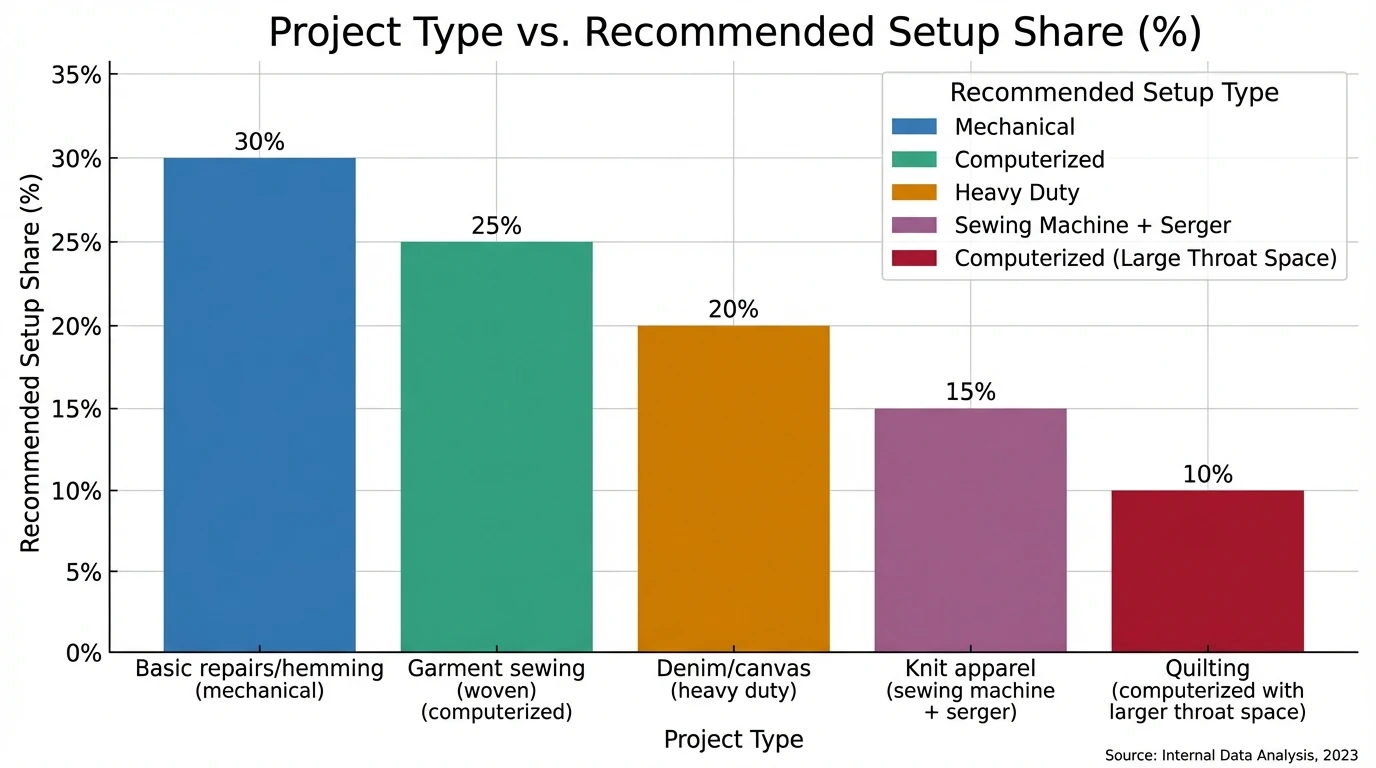
Quick “Match the Machine to the Project” Guide
Use this as a practical filter before you fall into review rabbit holes:
- If you mainly hem pants, alter clothes, and sew household items
Choose a mechanical or entry computerized model with solid feeding and a one-step buttonhole. - If you sew denim, canvas, tote bags, or upholstery-style layers
Prioritize a heavy-duty machine, strong motor reputation, and the ability to climb seams. - If you sew knits (tees, leggings, swim, activewear)
Consider adding a serger. A standard sewing machine can do knits, but a serger makes seams cleaner and more durable. - If you quilt
Look for more throat space (sewing area), consistent feeding, and speed control.
Common Problems With Singer Sewing Machines (and Fixes That Work)
Most “machine problems” are setup problems. Here are the issues I see most often—and the fixes that resolve them quickly.
Skipped stitches
- Switch to the correct needle type (e.g., ballpoint/stretch for knits, jeans needle for denim).
- Rethread with presser foot up (this opens tension discs).
- Use quality thread; cheap thread sheds lint and causes tension chaos.
Birdnesting (thread bunching under fabric)
- Rethread the top path completely.
- Confirm bobbin is inserted the correct direction and seated properly.
- Lower the presser foot before stitching (tension won’t engage if it’s up).
Puckering on lightweight fabric
- Use a smaller needle and finer thread.
- Reduce top tension slightly and test on scraps.
- Consider a stabilizer or tissue paper under very light fabric.
Fabric not feeding / getting “eaten”
- Start with the needle down and hold thread tails for the first 2–3 stitches.
- Use the correct presser foot (straight stitch foot/needle plate if available).
- For tricky fabrics, a walking foot can be a game-changer.
Where to Buy Singer Sewing Machines (and How to Avoid Regret)
You’ll find Singer sewing machines through brand stores, big-box retailers, and marketplaces. Retail listings can be useful for price checks and bundles, but don’t let accessory quantity outweigh core performance. If you’re comparing deals, verify:
- Model number matches exactly (small suffixes can mean different bundles).
- Return policy and warranty details are clear.
- You can easily get compatible needles, bobbins, and feet.
If you want a broad view of what’s available at retail, you’ll see many models on major stores like Target’s Singer sewing & quilting section. For an official feature overview and category browsing, Singer’s own collection pages are typically clearer: All SINGER® sewing machines.
Singer Sewing Machines + Maker Businesses: The Modern “Cut, Sew, Customize” Workflow
If you’re sewing for sales—patch hats, tote bags, uniforms, or custom apparel—your sewing machine is just one station in the pipeline. In my own testing for small-shop workflows, the biggest profit jump often comes from pairing reliable sewing with consistent decoration (labels, transfers, and branded graphics). That’s where xTool’s ecosystem can fit: laser-cut patches and tags, engrave branding plates, or produce apparel graphics with DTF.
To plan the printing side of a sewing-based apparel business, these are solid next reads:
- How to Choose the Right T-Shirt Printing Machine for Your Small Business
- Types of T-Shirt Printing Machines
What Sewing Machine Should I Buy?

Maintenance Tips That Keep Singer Sewing Machines Running Smoothly
A little routine care prevents most performance complaints:
- Clean lint from the bobbin area regularly (especially after fleece, denim, or batting).
- Change needles often: every 6–8 hours of sewing time, or sooner if you hit a pin or hear a “pop.”
- Use the right thread: consistent quality reduces tension drift and lint buildup.
- Test on scraps before each new fabric: it saves more time than it costs.
If your machine suddenly “acts weird,” I always start with: new needle → full rethread → new bobbin wind → test stitch on scrap. That sequence fixes a surprising percentage of issues.
Conclusion: Pick Singer Sewing Machines Based on What You’ll Sew Next Week
Singer has options for nearly every skill level, but the best results come from matching Singer sewing machines to your real projects—fabric types, seam thickness, and how often you sew. When you choose based on feeding strength, usability features, and the right machine type (mechanical, computerized, heavy duty, or serger), you spend less time troubleshooting and more time finishing.
If you’re building a “sew + customize” setup for gifts or sales, consider how sewing pairs with modern fabrication tools in the xTool ecosystem for labels, patches, and apparel graphics. Share what you’re making (and which Singer model you’re considering) in the comments—your project details make it much easier to recommend the right setup.
📌 xTool Apparel Printer: One Click DTF Printer, Effortless Customization for Business
FAQ: Singer Sewing Machines
1) Are Singer sewing machines good for beginners?
Yes—many entry Singer sewing machines are beginner-friendly, especially mechanical models with simple controls and reliable straight/zigzag stitches.
2) What Singer sewing machine is best for denim and thick fabrics?
Look for a Singer heavy-duty style machine and pair it with a jeans needle and quality thread; feeding power matters more than decorative stitches.
3) Do I need a serger if I already have a Singer sewing machine?
Not required, but a serger is a major upgrade if you sew knits or want clean, durable seam finishes on garments.
4) Why is my Singer sewing machine bunching thread underneath?
Most often it’s incorrect threading, presser foot being up while sewing, or bobbin insertion issues. Rethread completely and re-seat the bobbin.
5) How often should I change the needle on Singer sewing machines?
A good rule is every 6–8 hours of sewing time, or immediately after hitting a pin or if stitches start skipping.
6) What’s the difference between mechanical and computerized Singer sewing machines?
Mechanical machines use dials and are straightforward; computerized models offer more precision and convenience features like speed control and (often) needle up/down.
7) Where should I buy Singer sewing machines for the best value?
Buy where the model number is clear and returns/warranty are straightforward—official listings are best for feature clarity, while big retailers can offer competitive bundles.