
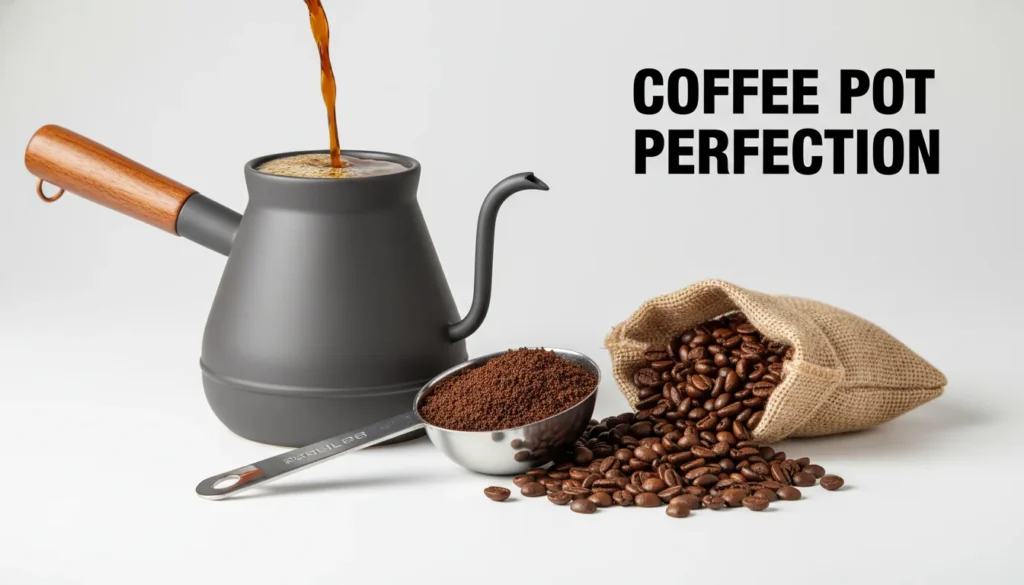
A coffee pot is a quiet workhorse. It shows up every morning, asks for very little, and still gets blamed when the pot tastes weak, bitter, or “just off.” If you’ve ever stared at the basket wondering what coffee for coffee pot actually means—fine vs. coarse, light vs. dark, scoop sizes, filters—you’re not alone. I’ve dialed in hundreds of drip pots (home and office), and the biggest improvements usually come from three basics: freshness, grind size, and a repeatable ratio.
This guide breaks down exactly how to pick coffee for coffee pot brewing, how much to use, how to avoid common mistakes, and how to keep that pot tasting great from first cup to last.

What “Coffee for Coffee Pot” Really Means (and What It Doesn’t)
When most people search coffee for coffee pot, they’re usually talking about drip coffee makers (standard countertop machines that brew into a carafe). The ideal coffee here is medium grind—think granulated sugar—so water flows evenly through the grounds without over- or under-extracting.
A few quick clarifiers that prevent bad pots:
- Instant coffee isn’t for the filter basket. Instant dissolves in water; it’s meant for mixing, not brewing through grounds. (This confusion comes up a lot for first-time coffee maker owners.)
- Espresso grind is usually too fine for a drip basket and can create bitterness and slow flow.
- Percolator coffee is typically coarser than drip. If you’re using a percolator coffee pot, skip ahead to the percolator notes below.
The Best Coffee Types for a Coffee Pot (Roast, Format, and Freshness)
Choosing coffee for coffee pot is less about “best brand” and more about matching the coffee to the brewer.
Roast level: what works best in a full pot
- Medium roast: Most consistent for drip pots—balanced sweetness, body, and clarity.
- Light roast: Brighter and more aromatic, but can taste sour if your machine runs cool or you under-dose.
- Dark roast: Bold and roasty; can turn ashy if over-extracted or kept on a hot plate too long.
In my own testing, medium roast is the safest “crowd-pleaser” for an entire carafe because it holds up across temperature swings and different cup sizes.
Whole bean vs. pre-ground (what I’d choose)
- Whole bean + grinder: Best flavor and easiest way to fix “flat” coffee. If you can do one upgrade, this is it.
- Pre-ground labeled for drip: Totally workable—just buy smaller bags more often and store them well.
Pro tip: If your pot tastes fine on day one but dull by day seven, it’s usually the coffee aging, not the machine.
Coffee-to-Water Ratio for a Coffee Pot (Simple, Repeatable, Accurate)
If you want consistently good coffee for coffee pot, use a ratio you can repeat. The widely used starting point is:
- 1:16 coffee to water (by weight)
That means:
- 60 g coffee per 1 liter water
- Or roughly 2 tablespoons per 6 ounces (less precise, but workable)
Quick ratio guide (drip coffee pot)
- Start at 1:16 for balanced coffee.
- If it tastes weak/watery, move to 1:15 (slightly more coffee).
- If it tastes bitter/harsh, move to 1:17 (slightly less coffee) or grind a touch coarser.

Grind Size: The Fastest Fix for Bitter or Sour Pots
Grind size controls how quickly flavor extracts. For coffee for coffee pot drip machines:
- Too fine → slow flow, over-extraction → bitter, drying finish
- Too coarse → fast flow, under-extraction → sour, thin, salty
A practical grind target
- Drip coffee pot: medium grind
- Cone filter brewers: slightly finer medium
- Flat-bottom baskets: slightly coarser medium
If you’re buying pre-ground, look for bags that explicitly say “drip” or “medium grind.”
Filters and Water: Small Changes That Make a Big Difference
Even the right coffee for coffee pot can taste off if water and filters are working against you.
Filter choice
- Paper filters: Cleaner cup, less sediment. Great for clarity.
- Metal filters: More oils and body, sometimes more grit.
Water quality (often the hidden culprit)
- If your tap water smells like chlorine or tastes metallic, your coffee will too.
- Use filtered water for a noticeable upgrade.
Common Coffee Pot Problems (and the Fixes That Actually Work)
| Problem | Likely Cause | Quick Fix | Long-Term Fix |
|---|---|---|---|
| Bitter/astringent | Grind too fine; too much coffee; hot plate cooks it | Use coarser grind; reduce dose; pour into thermal carafe ASAP | Dial in ratio/grind; brew then remove from heat; consider thermal carafe model |
| Sour/weak | Grind too coarse; too little coffee; brew temp too cool | Use finer grind; increase dose; preheat machine/carafe | Descale regularly; verify water heats properly; use fresh, properly stored beans |
| Tastes stale | Old grounds/beans; dirty carafe/basket | Use fresh coffee; wash carafe, basket, lid thoroughly | Store beans airtight; deep-clean weekly; replace worn carafe/basket parts |
| Watery | Wrong coffee-to-water ratio; short brew cycle (interrupted) | Measure coffee and water; rerun full brew cycle | Use a scale for consistent ratio; avoid opening lid mid-brew; service auto-stop issues |
| Sludgy | Grind too fine; metal filter lets fines through | Coarsen grind; rinse filter; let grounds settle before pouring | Switch to paper filter; use higher-quality burr grinder; replace warped filter |
| Plastic/metal taste | Unclean new/old parts; poor-tasting water | Run 2–3 water-only cycles; use filtered water | Vinegar/descale cycle monthly; replace old tubing/seals if needed; use charcoal filter |
My “office pot” triage checklist (fastest wins first)
- Clean the basket and carafe (old oils ruin new coffee).
- Change the ratio to 1:16 using a kitchen scale.
- Adjust grind one step coarser or finer.
- Use filtered water.
- Stop cooking the pot on a hot plate—transfer to an insulated cup or carafe.
For keeping coffee hot without turning it burnt, Corkcicle has a helpful guide on How to Keep Coffee Hot All Day.
Coffee for Different “Coffee Pots”: Drip vs. Percolator vs. French Press
Not all coffee pots brew the same way, so coffee for coffee pot should match your device.
Drip coffee maker (most common)
- Best coffee: medium grind, medium roast
- Ratio: 1:16 starting point
Percolator coffee pot
Percolators recirculate hot water through the grounds, so they’re more prone to over-extraction.
- Best coffee: coarse grind
- Tip I learned the hard way: don’t use drip grind in a percolator unless you want bitterness and sludge.
French press (also “coffee pot” for some households)
- Best coffee: coarse grind
- Steep time matters more than flow rate
How to Keep a Full Pot Tasting Fresh (Without Sacrificing Heat)
A great pot can degrade quickly if it sits on heat. If you want the last cup to taste like the first:
- Brew into a pre-warmed vessel when possible.
- Avoid leaving coffee on a hot plate for long stretches; it “cooks” and turns harsh.
- Pour into an insulated mug for better flavor retention on the go—this pairs well with commute routines described in How to Keep Hot Drinks Warm on Your Commute.
For stainless drinkware maintenance, I also reference How to Clean Stainless Steel Coffee Mugs because lingering oils can make even premium coffee taste stale.

A Practical Buying Checklist: What to Look for on the Bag
When you’re shopping for coffee for coffee pot, use this quick label scan:
- Grind: “Medium” or “Drip”
- Roast: Medium for balance; dark if you like bold (but watch hot-plate time)
- Roasted-on date: Fresher is better
- Bag size: Buy smaller if you brew occasionally
If you’re unsure, start with a medium roast, medium grind and dial in ratio before changing anything else.
Coffee Grind Sizes For Popular Brew Methods | Stay Roasted
Conclusion: Make Your Coffee Pot a Reliable Morning Teammate
A coffee pot doesn’t need fancy settings to make excellent coffee—it needs the right coffee for coffee pot basics: a consistent ratio, the correct grind, decent water, and a clean brew path. Once you lock those in, you’ll stop chasing “stronger” or “less bitter” and start getting the same satisfying pot every day. I’ve found that the moment people switch to a measured ratio and a better-matched grind, their coffee tastes like it came from a café—without changing the machine.
If you try the ratio steps above, share what coffee and settings you used—and what changed in the cup.
FAQ: Coffee for Coffee Pot
1) How much coffee should I use for a 12-cup coffee pot?
Start with 1:16 by weight. Many “12-cup” pots hold about 60 oz (varies), which is roughly 1060 g water, so start near 66 g coffee, then adjust to taste.
2) What grind is best coffee for coffee pot drip machines?
Medium grind is best for most drip coffee makers. Too fine gets bitter; too coarse gets sour and weak.
3) Can I use espresso ground coffee in a coffee pot?
You can, but it’s usually too fine for drip and often tastes bitter or brews too slowly. If you must, reduce dose slightly and watch flow.
4) Is dark roast better for making a whole pot?
Not automatically. Dark roast can taste great, but it can also turn ashy if it sits on a hot plate. Medium roast is more forgiving for full pots.
5) Why does my coffee pot coffee taste bitter?
Common causes: grind too fine, too much coffee, dirty equipment, or coffee sitting hot too long. Fix by grinding coarser, lowering dose, cleaning, and moving coffee off heat sooner.
6) What’s the best pre-ground coffee for coffee pot brewing?
Look for “drip” or “medium grind”, a recent roast date, and a roast level you enjoy (medium is a safe start). Buy smaller bags more often for freshness.
7) Should I use filtered water in my coffee pot?
Yes. Filtered water often makes the biggest difference after ratio and grind—especially if your tap water has chlorine or mineral taste.