
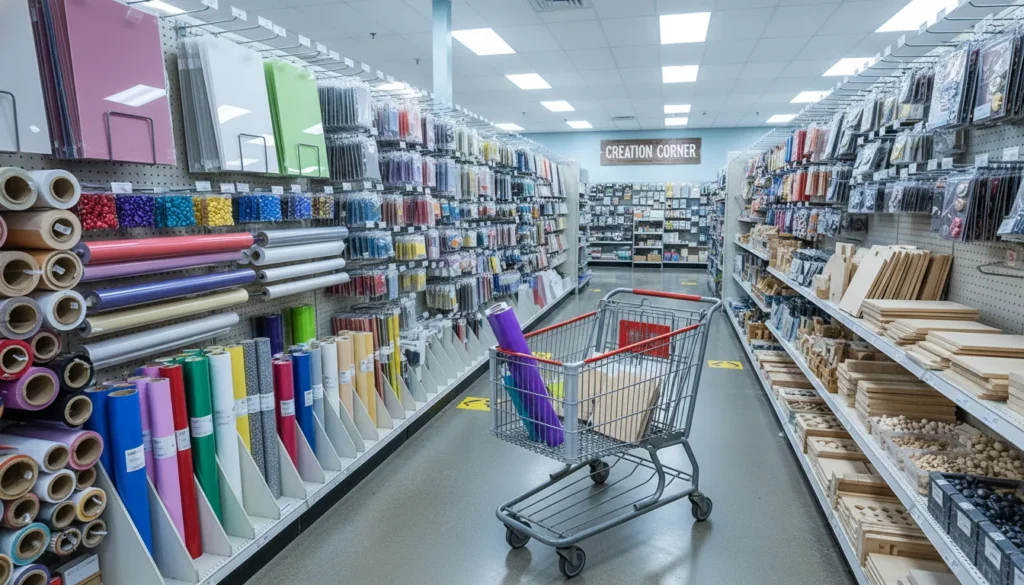
Crafts stores are a little like a creative pantry: you walk in for glue and walk out with a new hobby. If you’ve ever stood in an aisle wondering which vinyl, paper weight, paint, or wood blank will actually work, you’re not alone. I’ve built projects with “close enough” materials from a crafts store—only to redo them later when the finish cracked, the adhesive failed, or the cut edges burned. This guide breaks down how to choose the right crafts stores (online and local), what to buy where, and how to turn supplies into polished, sellable products—especially when digital fabrication is part of your workflow.

Why crafts stores still matter (even if you shop online)
Crafts stores solve three problems fast: try-before-you-buy, instant project starts, and in-person inspiration. When you need the exact shade of cardstock, the right brush stiffness, or a wood board that’s actually flat, seeing it in person saves time and waste. Many crafts stores also offer coupons, seasonal promos, and clearance sections that can beat online pricing—if you shop strategically.
They’re also a learning hub. Big chains often run classes and demos, and specialty shops (fine art, paper craft, fabric) typically have staff who know the difference between “works” and “works well.” For creators building products, that advice can prevent expensive trial-and-error.
Types of crafts stores (and what each is best for)
Not all crafts stores are built the same. The best choice depends on whether you’re doing kids crafts, fine art, home décor, paper crafting, or product-making.
1) Big-box crafts stores (broad selection, strong seasonal)
These are your one-stop shops for basics: adhesives, paints, yarn, frames, décor blanks, and seasonal items. They’re great when you want to start today and don’t need niche brands.
Best buys:
- Seasonal décor blanks (ornaments, wreath forms, signage bases)
- General adhesives, foam brushes, basic acrylic paint
- Frames and pre-cut mats (especially during promos)
Watch-outs:
- Quality can vary by brand and batch
- “Beginner kits” can be overpriced for what you get
2) Specialty art supply stores (best quality, pro-grade materials)
Fine art stores shine for pigments, papers, brushes, and archival supplies. If you sell art or want pieces to last, this is where you’ll find better lightfastness, paper sizing, and consistent tools.
Best buys:
- Artist-grade paints and mediums
- Archival paper, canvas, and varnishes
- Professional brush sets and cutting tools
Good example to explore: Blick Art Materials for broad art categories and pro-level options.
3) Paper craft & scrapbooking stores (precision tools, paper ecosystems)
If your projects involve cardmaking, scrapbooking, stamping, or die cutting, paper-focused crafts stores often carry coordinated collections (paper + stickers + stamps). That matching ecosystem saves time.
Best buys:
- Coordinated paper packs and embellishments
- Stamps, dies, and specialty inks
- Cardstock in consistent weights and textures
Browse inspiration and releases at CraftDirect.
4) Wholesale-style craft supply stores (best unit economics)
If you make wreaths, event décor, or seasonal home décor at scale, wholesale craft suppliers can dramatically lower your cost per item. These shops often focus on ribbons, mesh, picks, and signage components.
Best buys:
- Wired ribbon, deco mesh, floral picks
- Bulk décor components for seasonal lines
A common destination in this category is CraftOutlet.
5) Budget/dollar craft sections (great for prototypes)
Discount craft aisles are perfect for testing ideas, kids projects, and quick party décor. For product sellers, they’re useful for mockups—not always final goods.
Best buys:
- Test blanks, cheap frames for prototypes
- Simple party décor and craft foam
Watch-outs:
- Inconsistent sizing and material composition (important for cutting/engraving)
A practical shopping strategy that saves money (and mistakes)
Crafts stores can be a bargain—or a budget leak. The difference is having a plan.
Build a “materials map” for your projects
Before you buy, write down:
- Surface type (wood, acrylic, fabric, paper, metal)
- Finish goal (matte, gloss, outdoor-safe, washable)
- Tool method (hand-cut, blade cutting, laser cutting/engraving, printing)
That map tells you what matters: thickness tolerance, adhesive chemistry, heat resistance, and colorfastness.
Use this 3-step rule for every haul
- Buy one of any unfamiliar material (test first).
- Record the result (settings, glue used, drying time, finish).
- Scale up only after a repeatable outcome.
I do this even when a material looks “standard,” because two “birch plywood” sheets from different suppliers can behave very differently under a laser.
What to buy at crafts stores vs. buy from maker-grade suppliers
Crafts stores are excellent for many essentials, but advanced tools and consistent materials often come from maker-focused ecosystems.
| Item Category | Best Place to Buy (Crafts Stores vs Maker Supplier vs Online Marketplace) | Why It Matters | Pro Tip |
|---|---|---|---|
| Plywood / wood blanks | Maker Supplier | Consistent thickness, flatter sheets, known core/grade for cleaner cuts and less warping | Buy “laser/CNC grade” Baltic birch and store flat with weights to prevent bowing |
| Acrylic sheets | Maker Supplier | Cast vs extruded affects engraving quality and edge finish; better protective masking | Choose cast acrylic for crisp engraving; keep paper mask on until final cleanup |
| Vinyl (HTV / adhesive) | Crafts Stores | Easy color matching, small rolls for testing, frequent coupons/promos | Check liner thickness and do a quick test cut; keep a swatch ring with cut settings notes |
| Adhesives (CA, epoxy, wood glue, tapes) | Maker Supplier | Better bond strength and specialty options (laser-safe, heat resistant, thin CA) reduce failures | Match adhesive to material + environment (heat, water); use accelerator sparingly to avoid blooming |
| Paint / finishes | Online Marketplace | Wider range of specialty finishes (sprays, UV resin, 2K clears, dyes) and bulk pricing | Verify cure time and compatibility; do a scrap test to avoid reactions (fish-eyes, wrinkling) |
| Fabric blanks (totes, shirts, patches) | Online Marketplace | Better size/style variety and bulk packs; consistent blanks for repeat orders | Order one sample first; confirm fabric content (100% cotton vs blends) for HTV/ink adhesion |
| Engraving metals (anodized aluminum, brass, coated tags) | Maker Supplier | Coatings and alloy consistency drive engraving contrast and depth; less rejects | Request/choose the same coating series/lot for uniform results across batches |
| Safety gear (goggles, respirators, gloves) | Online Marketplace | Certified ratings and fit options matter for real protection and compliance | Look for ANSI Z87.1 eyewear and NIOSH-rated respirators; replace filters on schedule |
| Replacement blades / bits | Maker Supplier | Sharper, properly spec’d tooling reduces tear-out and improves cut accuracy | Keep spares and track tool life; match bit geometry (O-flute, compression) to material and machine |
Quick recommendations (high impact)
- Adhesives & consumables: crafts stores win for convenience and variety.
- Paper & cardstock: paper-focused crafts stores win for coordinated sets and specialty finishes.
- Acrylic/wood for laser work: prioritize consistent thickness and masking; maker-grade suppliers often reduce failed cuts.
- Safety gear: buy reputable respirators, eye protection, and ventilation accessories—don’t bargain-shop critical safety.
How xTool fits into the “crafts stores” workflow (from hobby to product)
Crafts stores supply the blanks; xTool helps you transform them into finished goods. If you’re moving beyond simple DIY into personalization, small-batch production, or classroom labs, digital fabrication becomes the difference between “cute” and “consistent.”
Where I’ve seen the biggest upgrade in results
When I switched from hand-cutting and generic settings to tested presets and repeatable workflows, my scrap rate dropped fast. The biggest wins came from:
- Laser cutting/engraving for crisp edges, fine detail, and fast repeats
- Apparel printing for high-definition customization on shirts and totes
- Metal fabrication/marking for durable tags, tools, and premium product lines
xTool’s ecosystem (machines + accessories + material presets + community) is built for that repeatability—especially if you’re selling or teaching and need predictable outcomes.
The most common crafts store pain points (and how to fix them)
Even the best crafts stores can create friction: too many choices, unclear labeling, and materials that behave differently than expected.
Fixes that work in real projects
-
Problem: “This wood burns or chars.”
Solution: Use masking, test lower power/higher speed, and choose laser-grade materials when possible. -
Problem: “My vinyl peels or bubbles.”
Solution: Match vinyl type to surface (permanent vs removable), clean with isopropyl alcohol, and use proper squeegee pressure. -
Problem: “Paint looks streaky.”
Solution: Prime first, use the right brush/roller, and apply two thin coats instead of one thick coat. -
Problem: “My design isn’t consistent across batches.”
Solution: Standardize blanks (same supplier/lot when possible) and document settings, humidity, and finishing steps.

Online vs. local crafts stores: how to choose fast
If you’re deciding where to shop today, use these criteria.
Choose local crafts stores when you need:
- Exact color matching (paper, paint, thread)
- Same-day project starts
- Hands-on inspection (warping, texture, thickness)
- Quick returns
Choose online crafts stores when you need:
- Niche brands and specialty tools
- Bulk pricing and consistent restocks
- Reviews from other makers
- Time to compare specs
A hybrid approach often wins: buy test quantities locally, then reorder in bulk online once you’ve validated results.
Turning crafts store supplies into products you can sell
Crafts stores are full of “blank canvases” for personalization: ornaments, tumblers, signs, tote bags, and acrylic sheets. The key is choosing items that look good, ship well, and can be produced consistently.
Strong product categories:
- Personalized home décor (door signs, name plaques, table décor)
- Event items (place cards, favors, cake toppers)
- Giftables (ornaments, keychains, photo frames)
- Branded small business items (logo tags, packaging inserts)
If you want a structured path from idea to revenue, these guides help:
- 20 Profitable Crafts To Make And Sell
- How to Sell Crafts Online in 6 Steps
- Where to Sell Crafts Online (Top 30 Websites)
Where To Source Laser Engraving Supplies
A simple “first trip” checklist for crafts stores
Bring this list on your next run to avoid impulse buys that don’t fit your projects.
- Measure your target sizes (frame openings, sign blanks, acrylic thickness).
- Check labels for material type (solid wood vs MDF, acrylic vs polystyrene).
- Buy sample quantities of anything new.
- Grab finishing essentials:
- Masking tape, sandpaper assortment, lint-free cloths
- Primer/sealer appropriate for your surface
- Packaging basics if you sell (kraft boxes, bubble mailers, tissue)
FAQ about crafts stores
1) What are the best crafts stores for beginners?
Big-box crafts stores are easiest for beginners because they stock starter tools, kits, and basic materials in one place. Pair that with one specialty store (paper or fine art) when you want higher quality.
2) Are online crafts stores cheaper than local stores?
Often yes for bulk orders, but local crafts stores can win with coupons, clearance, and avoiding shipping. Compare total cost, including waste from inconsistent materials.
3) What should I avoid buying at crafts stores?
Avoid unknown “mystery materials” when you need precision (like laser cutting) and avoid bargain safety gear. For critical consistency, buy maker-grade materials.
4) How do I know if wood blanks are good quality?
Look for flatness, consistent thickness, minimal knots, and clean edges. If you’re cutting/engraving, test one piece before buying a stack.
5) What are the best crafts store items to personalize and sell?
Ornaments, name signs, acrylic keychains, wedding place cards, and branded packaging inserts are reliable sellers because they’re lightweight and repeatable.
6) How can I reduce waste when testing new craft materials?
Test small samples, document settings and results, and standardize suppliers once you find a material that behaves predictably.
7) Do crafts stores carry materials compatible with laser cutters and engravers?
Many do (wood blanks, acrylic, leather, paper), but labeling isn’t always specific enough for precision work. When in doubt, test first or use materials designed for digital fabrication.
Conclusion: Make crafts stores work for you—not the other way around
Crafts stores can be your fastest path from idea to finished project—if you shop with intention. When you combine smart sourcing (the right blanks, adhesives, and finishes) with consistent making tools, you get cleaner results, fewer do-overs, and projects you’re proud to gift or sell. If you’re building a product line, consider using crafts stores for discovery and rapid prototyping, then standardize your materials and process for repeatable output.