
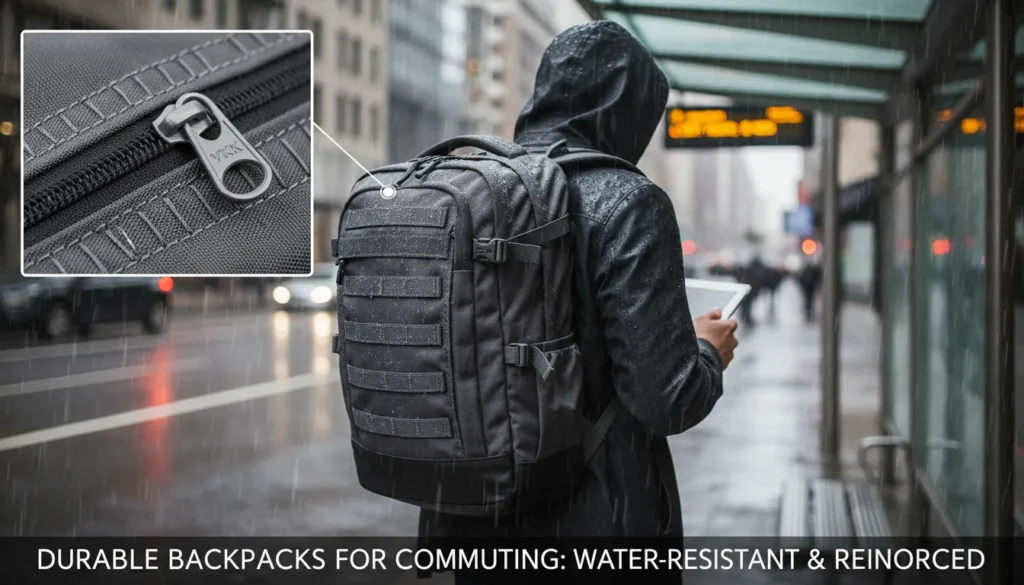
A backpack shouldn’t feel like a “temporary container” for your life. Yet most of us have had one fail at the worst time: a zipper splits before a flight, a strap seam pops on a commute, or the bottom panel wears through after one rainy season. If you’re shopping for durable backpacks, the goal is simple—buy once, carry for years, and protect what matters (laptop, lunch, water, and gear) every day.
In this guide, I’ll break down what durability really means, how to spot it fast, and how to match a tough pack to your routine—whether you’re commuting with a laptop, heading to class, or packing for a weekend outside. I’ll also share what I’ve learned from testing packs in real life (overloaded grocery runs included).

What “Durable Backpacks” Really Means (Not Just Thick Fabric)
When people say durable backpacks, they often mean “it feels tough.” In practice, durability is a system: fabric + stitching + zippers + hardware + design. A pack can use strong fabric but still fail early if stress points aren’t reinforced or if the zipper coil is low quality.
From my own use, the first failures usually show up in predictable places:
- Zipper tracks (especially on overstuffed main compartments)
- Shoulder strap anchors (where straps meet the bag body)
- Bottom panel (abrasion from concrete, office floors, and trail rocks)
- Lining and pocket seams (thin materials + sharp items like chargers)
A durable backpack is one that’s engineered for these stress points, not one that simply looks rugged.
The 7 Build Features That Make a Backpack Last Longer
1) Fabric: Nylon, Polyester, and the “Denier” Clue
The quickest durability hint is material and weave. Many long-lasting packs use high-tenacity nylon (often 420D–1000D ranges) or ballistic-style weaves designed to resist abrasion.
Look for:
- High-denier nylon for abrasion resistance
- Ripstop grids to reduce tear spread
- Coated fabrics (PU or similar) for weather resistance
Higher denier isn’t automatically better, but ultra-thin fabrics are more likely to scuff, snag, and puncture in daily use.
2) Zippers: The Most Common Failure Point
If you want durable backpacks, prioritize zipper quality. In product testing and reviews across the industry, zippers are a frequent weak link—especially on laptop and travel packs.
What to check:
- Brand-name zippers (YKK is a common benchmark)
- Larger zipper sizes on main compartments
- Zipper garages or storm flaps to reduce grit and moisture
3) Stitching and Reinforcement: Bar Tacks Matter
Turn the bag over and look closely at seams. The best packs reinforce high-stress areas with bar tacks (dense zig-zag stitches) and clean seam binding.
Key areas to inspect:
- Strap attachment points
- Grab handle base
- Compression strap anchors
- Bottom corners
4) Bottom Panel: Where Real Life Happens
The bottom takes constant abrasion. A durable backpack often uses:
- Heavier fabric on the base
- Double-layer panels
- A structured base to prevent sagging and corner wear
5) Hardware: Buckles and Adjusters Shouldn’t “Creak”
Buckles and strap adjusters should feel solid and glide without grinding. Cheap plastic hardware becomes brittle, especially in cold weather or heavy UV exposure.
6) Frame/Back Panel: Durability Includes Comfort Over Time
A pack that “lasts” but hurts to wear isn’t a win. Look for:
- Padded, supportive shoulder straps
- Breathable back panel
- Stable load control (sternum strap helps a lot)
7) Warranty and Repairability: The Quiet Durability Multiplier
A strong warranty signals confidence, but repairability is the real advantage. Replaceable zipper pulls, accessible seams, and common hardware sizes make a pack easier to keep alive for years.
| Feature | What to Look For | Why It Matters | Quick At-Home Test |
|---|---|---|---|
| Fabric | 500D–1000D Cordura/ballistic nylon; tight weave; reinforced high-wear areas | Resists abrasion/tears and holds shape under load | Rub a rough sponge/brush on a hidden area; check for fuzzing, pulls, or thinning |
| Zippers | YKK (e.g., #8/#10); smooth glide; zipper garage; storm flap on main compartments | Zippers are common failure points; strong ones prevent blowouts | Zip/unzip repeatedly under slight tension; ensure no snagging or tooth separation |
| Stitching | Even stitches; bar-tacks at stress points; double stitching on straps/handles | Prevents seam blowouts and strap detachment | Tug firmly on straps/handles; inspect for skipped stitches or seam gaps |
| Bottom Panel | Double-layer fabric; coated or rubberized base; corner reinforcement | Bottom takes most abrasion and moisture; reinforcement boosts life | Set a loaded pack on rough concrete; look for immediate scuffing or abrasion |
| Hardware | Duraflex/ITW buckles; metal D-rings where needed; thick webbing | Cheap buckles crack; solid hardware handles load and impact | Flex buckles and clip/unclip 20x; check for stress whitening, cracks, or slips |
| Water Resistance | DWR-treated fabric; PU-coated lining; taped seams (or rain cover included) | Protects gear in rain and reduces fabric saturation | Sprinkle/briefly shower-test; see if water beads and whether interior stays dry |
| Warranty/Repairs | Lifetime/long warranty; clear repair policy; available spare parts | Repairs extend lifespan and reduce total cost | Search the brand’s repair page; email support and note response time/clarity |
Choosing Durable Backpacks by Use Case (So You Don’t Overbuy)
Durable Backpacks for Work and Commuting
Commuters need durability plus organization. Laptop protection and zipper reliability matter more than ultralight materials.
Prioritize:
- Padded laptop sleeve (ideally suspended)
- Water-resistant fabric and covered zippers
- Stand-up structure (helps daily access)
- External pockets that don’t stretch out fast
If you carry food daily, pairing a tough pack with a dedicated lunch solution helps prevent spills and odor buildup. Hydro Flask’s guide on which lunch bag is right for you is a practical starting point for choosing the right size and insulation level.
Durable Backpacks for School (Heavy Books + Daily Abuse)
School use is hard on seams and zippers because loads are dense and repetitive. In my experience, students also tend to yank zippers and overpack—so overbuild is good here.
Look for:
- Oversized main zipper
- Reinforced base
- Comfortable straps for heavier loads
- Simple internal layout (fewer seams to fail)
Durable Backpacks for Travel
Travel durability is about handling: overhead bins, taxi trunks, rough sidewalks, and baggage carousel scrapes. Packs tested by gear review outlets often emphasize harness comfort, zipper security, and fabric abrasion resistance for this category. For broader travel-pack evaluation criteria, see OutdoorGearLab’s backpack testing approach for how reviewers weigh comfort, build quality, and usability.
Durable Backpacks for Hiking and Outdoor Use
For outdoors, durability also means weather management. You want abrasion resistance, water resistance, and smart compression so the load doesn’t swing.
Consider:
- Coated fabrics + DWR treatments
- Drainage grommets (for wet gear pockets)
- Lash points that are stitched cleanly (not just glued)

A Quick “Durability Check” You Can Do in 90 Seconds (In-Store or at Home)
When I’m evaluating durable backpacks, I do a simple routine that catches most weak builds fast. It’s not scientific, but it’s practical.
- Zip test: Open/close the main zipper 10 times, including around corners. It should glide without snagging.
- Strap anchor check: Pull firmly on each shoulder strap where it meets the bag body. Look for shifting stitches.
- Bottom panel check: Press and rub the base—does it feel thin or papery compared to the body fabric?
- Grab handle lift: Lift the pack by the top handle (even empty). The handle base should feel reinforced and stable.
- Pocket stress: Tug lightly on external pockets. Loose stitching here becomes a long-term failure.
Making the Guardian Backpack Part 1 – Materials & Prepwork
How to Make a Durable Backpack Last Even Longer (Simple Maintenance)
Even the best durable backpacks wear faster when grit and moisture live in the seams. A little upkeep goes a long way.
- Clean zippers: Brush out dust and sand; it reduces coil wear.
- Don’t store wet: Dry the bag fully to prevent odor and coating breakdown.
- Use pouches: Put chargers and sharp items in organizers to protect lining.
- Rotate carry points: Don’t always lift by one strap; use the grab handle.
If you’re pairing your pack with hydration and food carry, choose accessories that are built for daily use. Hydro Flask’s focus on durable finishes and outdoor-ready design is a good match for a “carry system” mindset—bottle + lunch + pack working together instead of fighting each other.
Brands, Reviews, and How to Avoid “Drop-Ship Durable” Claims
A lot of packs look rugged online. The difference is whether a brand has a track record of real testing and consistent construction.
Helpful third-party review sources include:
- Wirecutter’s laptop backpack picks for long-term everyday carry perspectives
- Pack Hacker’s backpack brand testing for broader brand reliability patterns
Use reviews to confirm the details that matter: zipper quality, strap comfort over time, and how the bag performs after months—not just day one.
The Bottom Line: Durable Backpacks Should Reduce Stress, Not Add It
A truly durable backpack is the one you stop thinking about—because it doesn’t fail, doesn’t soak through in light weather, and doesn’t punish your shoulders. When you focus on the core build features (zippers, reinforcement, bottom panel, and smart fabric), you’ll avoid most “looks tough, wears out fast” traps.
If you’ve had a bag fail in a specific way—zipper blowout, strap tear, or bottom wear—share what happened in the comments. It helps others choose smarter, and I’m happy to suggest what feature would prevent that failure next time.
FAQ: Durable Backpacks
1) What material is best for durable backpacks?
High-tenacity nylon (often in mid-to-high denier ranges) and abrasion-resistant weaves are common choices. The best option depends on your use—commuting and travel usually benefit from tougher fabrics than ultralight hiking.
2) Are YKK zippers necessary for a durable backpack?
Not strictly necessary, but reputable zippers are a strong signal of quality. Zippers are a top failure point, so proven components reduce risk.
3) How do I know if stitching is strong enough?
Look for reinforced stitching (bar tacks) at strap anchors and handles, clean seam binding, and no loose threads. Tug tests at stress points can reveal weak construction.
4) What’s the most common failure point in durable backpacks?
Main compartment zippers and shoulder strap attachment seams are common. Bottom panel wear is also frequent if the bag is set down on rough surfaces daily.
5) Are waterproof backpacks more durable?
Waterproofing and durability overlap but aren’t the same. Waterproof materials can be tough, but durability still depends on seams, zippers, and reinforcement.
6) How long should a durable backpack last?
With solid construction and basic care, many people get several years of daily use. Heavy loads, rough handling, and grit in zippers can shorten lifespan.
7) Should I buy a larger backpack for durability?
Not necessarily. Oversizing often leads to overpacking, which stresses zippers and seams. Choose the smallest pack that fits your daily load comfortably.