
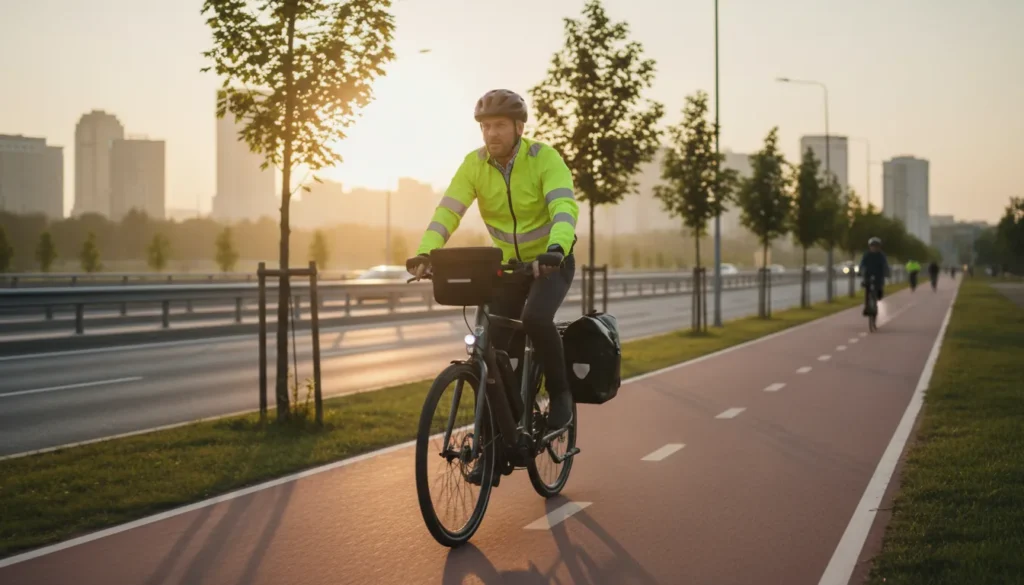
It’s 7:42 a.m., your calendar is full, and traffic is already “red everywhere.” I’ve been there—staring at a parking app, doing mental math on gas, and wondering if my commute has to feel like a daily penalty. An e-bike for commuting flips that script by turning dead time into movement you can control. The real question isn’t “Should I try it?”—it’s which setup will make your ride reliable, safe, and easy to repeat five days a week.
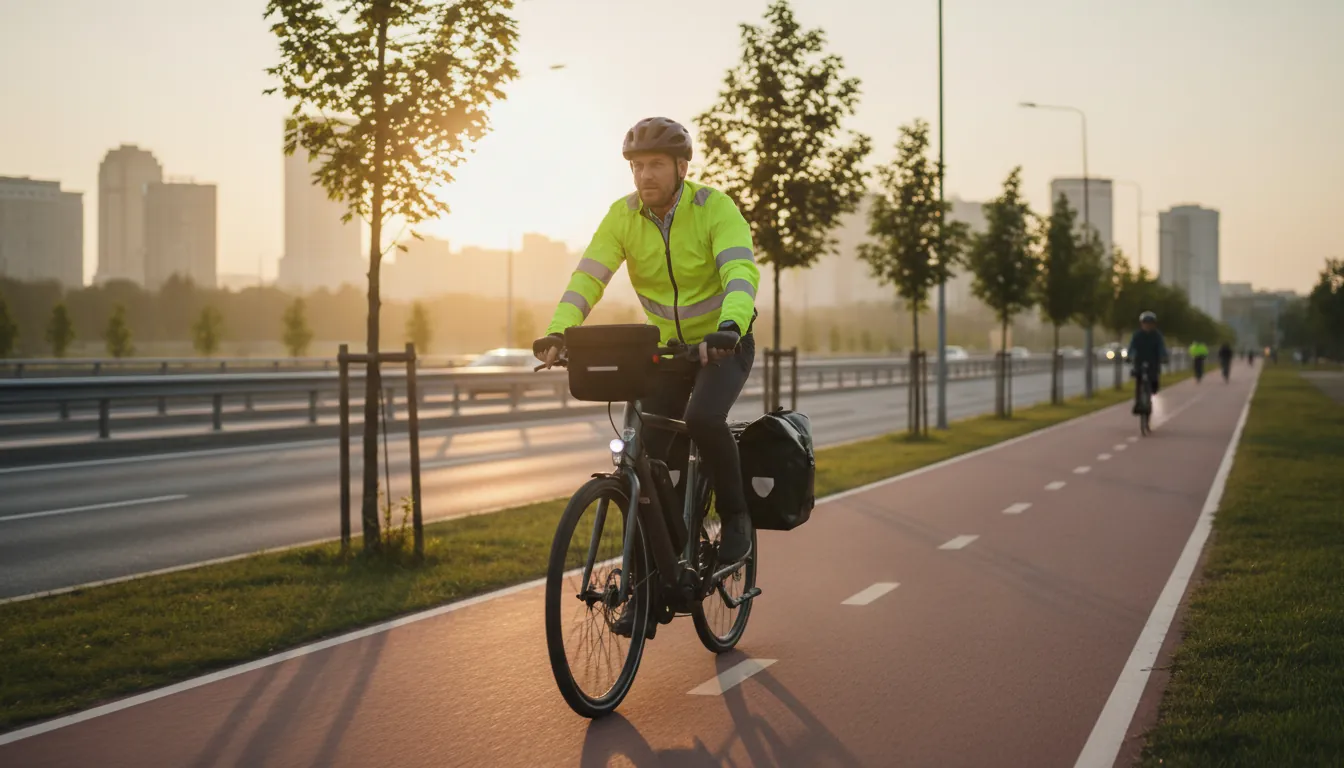
Why an e-bike for commuting beats “car vs. transit” in the real world
A commuter e-bike solves the two biggest blockers of bike commuting: time and sweat. Pedal assist (and, on many models, a throttle) smooths out hills, headwinds, and stop-and-go intersections so your pace stays consistent. In my own commute testing, the biggest win wasn’t top speed—it was arriving predictably, without needing a shower.
Beyond convenience, you’re also buying back attention. Instead of scanning for parking or watching a delay board, you’re moving under your own power with just enough assist to keep things comfortable. Over weeks, that consistency is what makes an e-bike for commuting “stick” as a habit.
What to look for in a commuter e-bike (the checklist that actually matters)
Most “best commuter e-bike” lists focus on specs in isolation; commuting is a system. The best e-bike for commuting is the one that matches your distance, storage, weather, and road surface—without becoming a maintenance project.
1) Range: size the battery to your round trip, not your best day
Aim to cover your commute with a buffer for cold weather, headwinds, and battery aging. Many city-focused e-bikes are designed for up to 50+ miles per charge under ideal conditions, but real-world range varies with rider weight, hills, speed, and assist level.
Practical range planning:
- If your round trip is under ~10 miles, almost any commuter-ready e-bike works with smart charging habits.
- If it’s 10–25 miles, prioritize battery capacity and efficient tires.
- If it’s 25+ miles, focus on battery size, charging access at work, and drivetrain efficiency.
2) Speed class: decide whether you want “calm” or “quick”
Many commuter models are built around 20 mph assist, which fits most bike-lane riding and mixed paths. Faster “speed pedelec” style commuting can be great for longer suburban routes, but it may come with more legal and safety considerations depending on your area. For regulations in the U.S., check your state’s e-bike definitions via PeopleForBikes’ state-by-state e-bike law resources.
3) Comfort + control: you’re not training—you’re repeating
Commuting punishes uncomfortable bikes because you ride them often. Look for:
- Upright geometry (better visibility in traffic)
- Grippy tires matched to your roads (slicks for smooth pavement; wider for rough streets)
- Quality brakes for wet conditions and quick stops
For daily reliability, I prefer hydraulic disc brakes when possible—they feel more consistent in rain and require less hand effort.
4) Built-in commuting gear: lights, fenders, and a rack aren’t “extras”
If you’ll ride before sunrise or after sunset, integrated lights and reflective details matter. Fenders keep road spray off work clothes, and a rear rack moves weight off your back (less sweaty, more stable).
Commuter essentials that pay off immediately:
- Front + rear lights (preferably wired into the main battery)
- Full-coverage fenders
- Rear rack + panniers or a basket
- Bell and mirrors (optional, but useful)
| Commute Type | Typical Distance (Round Trip) | Recommended Features | Best Fit Category | Notes |
|---|---|---|---|---|
| Short urban | 2–8 mi | Upright geometry, fenders, integrated lights, rear rack mounts, moderate assist | City/commuter e-bike | Prioritize maneuverability and easy parking/storage |
| Mid-range city | 8–20 mi | 500–700 Wh battery, hydraulic disc brakes, puncture-resistant tires, comfort saddle | Commuter/trekking e-bike | Look for 28–35 mph traffic compatibility based on local regulations |
| Long suburban | 20–35 mi | 700+ Wh battery (or dual), efficient motor, ergonomic grips, fast charger option | Speed pedelec / high-range commuter | Consider a spare charger at work and a more aerodynamic riding позиtion |
| Mixed surface | 10–30 mi | Wider tires (45–60 mm), suspension fork or seatpost, robust rims, strong motor torque | Gravel/adventure e-bike | Ensure tire clearance and frame protection for debris and mud |
| Multimodal (train + bike) | 3–15 mi | Lightweight or folding frame, quick-remove battery, compact size, easy carry handle | Folding/compact commuter e-bike | Check transit rules for battery limits and folding dimensions |
Rad Power Bikes commuter options (and how to match them to your routine)
Rad Power Bikes has focused on practical transportation since 2005, and the “commuter-first” design shows in the ecosystem: direct-to-consumer pricing, accessories that fit, and a nationwide service partner network. If you’re shopping specifically for an e-bike for commuting, start with Rad’s city lineup and then tailor it for your route.
Best starting points:
- Browse Electric City & Commuter Bikes to compare frame styles (step-thru, mid-step, high-step) and commute-friendly configurations.
- If you want a purpose-built commuter model with a road-ready feel, look at the Radster™ Road Electric Commuter Bike.
- If you already know you’ll carry more (laptop + gym bag + groceries), consider whether a cargo-capable setup will reduce car trips. (This is often the “secret” to actually replacing a vehicle.)
I’ve found that riders who commit long-term usually do two things early: they choose the frame that’s easiest to mount in work clothes, and they set the bike up to carry stuff from day one. That’s where a commuter e-bike becomes transportation instead of a hobby.
Real commuting costs: what you save (and what you’ll still spend)
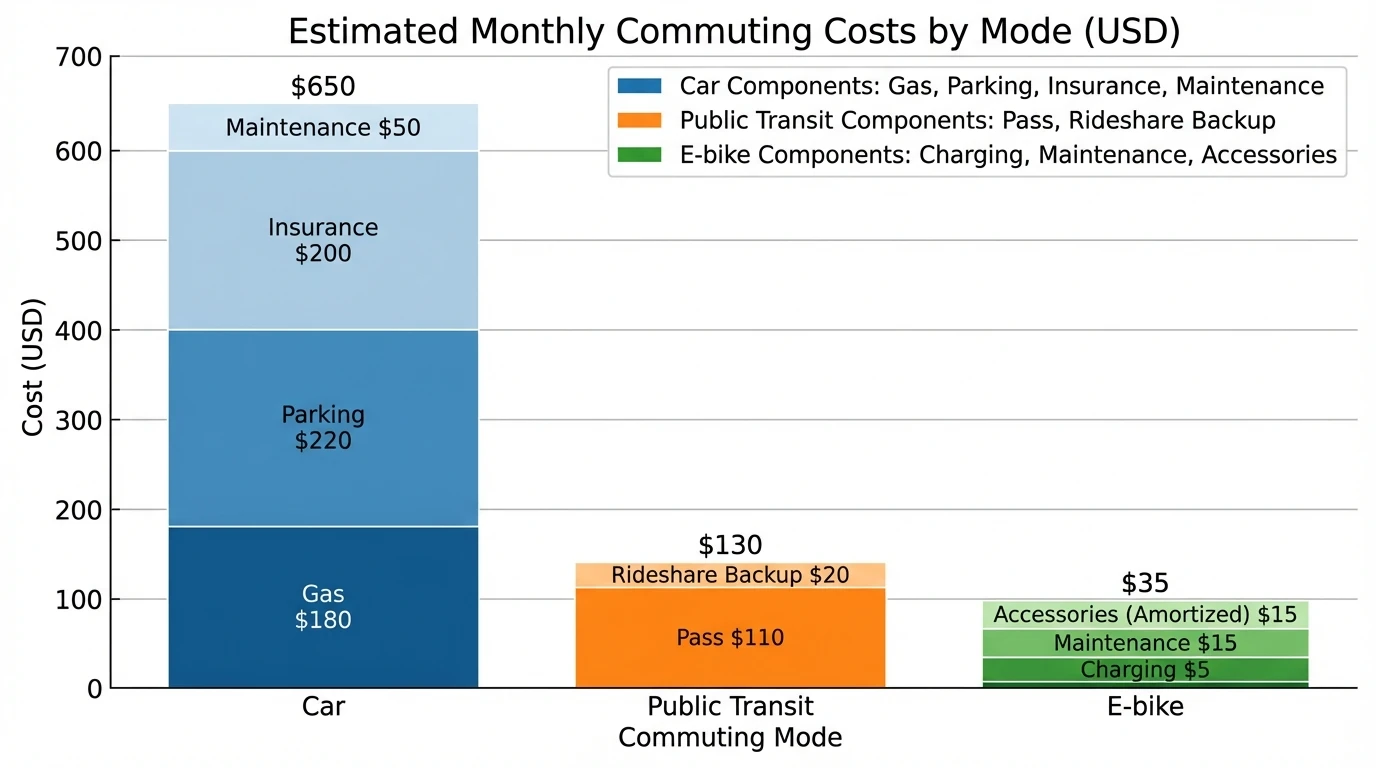
The math is rarely perfect, but the direction is clear: an e-bike for commuting can reduce or eliminate recurring costs like gas, parking, and transit passes. You’ll still spend on charging (usually minimal), consumables (tires, brake pads), and security.
What to budget monthly:
- Charging: typically low, even with daily riding
- Maintenance: tires/tubes, brake pads, chain wear
- Security: a high-quality lock and possibly insurance
For an independent view on safety standards and certification, look for brands and systems aligned with UL Solutions e-mobility safety and certification information.
A simple “commute-ready” setup you can copy
If you want your commuter e-bike to feel effortless, copy the same framework fleet managers use: visibility, cargo, weather protection, and redundancy.
My go-to commuter kit (works for most riders)
- Helmet + bright/reflective layer (be seen from every angle)
- Two lights (one main, one backup)
- Rack + pannier (keeps your back cool and your bike stable)
- Flat repair basics (tube, levers, mini pump/CO₂)
- Lock strategy: one primary lock + smart parking habits
If you’re building out a Rad commuting setup, start by matching accessories to your exact bike model so mounting is clean and rattle-free. Rad’s accessory ecosystem is designed for that “just fits” experience.
Accessories for a Commuter Style Electric Bike (Ride1Up 500 Series)
Common commuter e-bike mistakes (and how to avoid them)
Most problems blamed on “the bike” are actually setup issues. I’ve made a few of these myself—especially underestimating how much a good lock and proper cargo mounting improve daily confidence.
Mistake 1: Buying for weekend fun instead of weekday function
Solution: prioritize fenders, lights, rack compatibility, and upright comfort.
Mistake 2: Overestimating range and underestimating wind
Solution: plan for real-world conditions and keep a charging routine.
Mistake 3: Carrying everything on your back
Solution: move weight to the bike—panniers are a commuting cheat code.
Mistake 4: Skipping a safety check cadence
Solution: do a 60-second pre-ride check (tires, brakes, lights) and a monthly bolt check. For maintenance best practices, REI’s bike maintenance basics are a solid refresher.
How to start commuting by e-bike (without overthinking it)
Start small, prove the route, then upgrade the routine. The goal is to make your e-bike for commuting feel like the easiest option—not the bravest option.
- Pick a low-stress route (protected lanes, calmer streets, or a longer but safer path).
- Do a weekend “dress rehearsal” ride at commute time.
- Set up your carry system (rack + pannier/basket) before day one.
- Commit to 2 days per week for the first month, then scale up.
- Track what annoyed you (cold hands, dark streets, storage) and fix one thing at a time.
For a first-hand perspective that aligns with this ramp-up approach, see Commuting By Ebike: What I Learned.
Conclusion: make your commute a part of your life you don’t dread
If your commute has been eating your time, patience, and budget, an e-bike for commuting is one of the rare upgrades that can make mornings feel lighter instead of tighter. I’ve tried commuting in the “just tough it out” mode, and I’ve tried it with electric assist—the difference is that the e-bike makes consistency realistic. When the ride is easy to repeat, it stops being a challenge and starts being transportation.
If you’re ready to turn your route into a reliable routine, explore Rad’s Electric City & Commuter Bikes and pick a setup you’ll enjoy riding on your most tired weekday. Then share your commute distance and terrain in the comments—hills, rain, transit mix—and I’ll suggest a practical configuration that fits.
FAQ: e-bike for commuting
1) How far can an e-bike for commuting go on a single charge?
Range depends on battery size, rider weight, hills, wind, tire choice, and assist level. Plan around your round trip with buffer, not marketing max range.
2) Is an e-bike for commuting worth it if I only ride 3–5 miles?
Yes—short commutes are often where an e-bike replaces the car most easily because parking, traffic, and warm-up time dominate.
3) What features matter most on a commuter e-bike?
Lights, fenders, reliable brakes, a rack for cargo, and a comfortable riding position tend to matter more than peak motor power for daily commuting.
4) Do I need a throttle for commuting?
Not required, but it can help with quick starts at intersections or if you’re riding in work clothes. Check local rules for where throttles are allowed.
5) How do I keep an e-bike secure at work?
Use a high-quality lock, park in visible or controlled-access areas, remove valuables, and consider locking both frame and wheel. If possible, store indoors.
6) What’s the best e-bike for commuting in the rain?
Look for commuter-ready builds with full fenders, strong lights, grippy tires, and consistent braking (often hydraulic discs). Also prioritize visibility and layering.
7) Can I commute on an e-bike year-round?
In many regions, yes—if you adapt with weather-appropriate clothing, lights, and tires. Cold temperatures can reduce battery performance, so plan extra range.