
E-bikes are having a moment—and not just because they’re fun. They solve real problems: sweaty commutes, big hills, limited parking, and the “I’d ride more if…” barrier that stops many people from cycling. When I first switched to an e-bike for errands, I noticed something surprising: I rode more often because each trip felt easier to start, not harder to finish. If you’re curious about e-bikes, this guide breaks down how they work, what to look for, and how to pick the right style for your life.

What Are E-Bikes (and What Makes Them Different)?
E-bikes (electric bicycles) are bicycles with a motor that assists your pedaling or, in some models, can propel the bike with a throttle. The key word is assist: most e-bikes are designed to amplify your effort, not replace it. That’s why many riders describe e-bikes as “cycling, but more accessible.”
Most modern e-bikes share a few core parts:
- Motor (hub-drive or mid-drive) to provide assistance
- Battery (usually removable) that powers the motor
- Controller + display to select assist levels and show speed/range
- Sensors (cadence and/or torque) that determine how assistance is delivered
Because e-bikes add power and weight, components like brakes, tires, and frames matter more than they do on a non-electric bike.
Why So Many People Are Switching to E-Bikes
E-bikes make cycling practical in places and situations where standard bikes can feel limiting. They flatten hills, shorten “time cost,” and make carrying cargo realistic. In my experience helping friends choose their first e-bike, the biggest “aha” moment is realizing you can arrive not exhausted—and still get fresh air and movement.
Common reasons riders choose e-bikes:
- Commuting without arriving sweaty
- Replacing car trips for errands
- Keeping up with faster riders or groups
- Riding longer distances with less fatigue
- Hauling kids, groceries, or gear
For broader industry context and policy updates, PeopleForBikes’ electric bike resources are a solid starting point.
E-Bike Classes: The Rules You’ll See Most Often
In the U.S., e-bikes are commonly grouped into Class 1, 2, and 3. These classes affect where you can ride (bike paths vs. roads), how fast assistance goes, and whether a throttle is allowed. Rules vary by state and trail system, so it’s smart to verify local guidance before you buy.
Here’s the practical summary:
- Class 1: Pedal-assist only, up to 20 mph
- Class 2: Throttle + pedal-assist, up to 20 mph
- Class 3: Pedal-assist only (usually), up to 28 mph
If you want a plain-English breakdown, Rad Power Bikes has a helpful explainer on what different classes of electric bikes mean.
The 7 Things That Matter Most When Buying E-Bikes
Many listings focus on peak watts and top speed, but that’s rarely what determines daily satisfaction. The best e-bikes feel stable, stop well, fit your body, and match your typical routes. Use the checklist below to compare options without getting lost in specs.
1) Motor Type: Hub vs. Mid-Drive
Hub motors (in the wheel) are common on value-focused e-bikes and can feel smooth and straightforward. Mid-drive motors (at the crank) often feel more “bike-like” and can climb efficiently by using the bike’s gears, but they tend to cost more.
Choose based on your use:
- Hub-drive: great for commuting, mixed riding, and simpler maintenance
- Mid-drive: great for steep hills, performance riding, and efficiency
2) Battery Size and Real-World Range
Range depends on battery capacity, rider weight, tire pressure, hills, wind, temperature, and assist level. In real life, “max range” is usually a best-case scenario. I recommend planning for a comfortable buffer—especially if you’ll commute in colder months.
Practical range tips:
- Use a lower assist level on flats to extend miles
- Keep tires properly inflated
- Expect less range in cold weather
- Consider whether you can charge at work
3) Brakes: Don’t Compromise Here
E-bikes are heavier and faster than standard bikes, so braking performance matters. Hydraulic disc brakes are a common upgrade that many riders appreciate for control and reduced hand fatigue.
4) Fit and Frame Style
The “best” e-bike is the one you’ll ride often. Step-thru frames make mounting easier, especially with cargo or limited mobility. Step-over frames can feel stiffer for some riders.
5) Tires and Terrain Match
Tire width affects comfort, grip, and rolling resistance:
- City tires: faster, lighter feel on pavement
- All-terrain tires: versatile for mixed surfaces
- Fat tires: extra traction and float on sand/snow, but heavier
If you’re planning dirt roads, hunting/fishing access, or rough trails, start with purpose-built options like Off-Road & All-Terrain Electric Bikes.
6) Cargo Capacity and Mounting Points
If you’ll carry groceries, tools, or a child seat, look for:
- Rated rear rack capacity
- Frame stability under load
- Compatibility with baskets, panniers, and accessories
For heavy hauling, browse purpose-built Electric Cargo & Utility Bikes.
7) Service, Warranty, and Test Rides
This is where many buyers get burned. A great e-bike is only great if you can keep it running. Prioritize brands with clear warranty terms, available replacement parts, and a service network. Independent reviews can help set expectations; for example, Bicycling’s tested e-bike picks show how different categories perform in real-world use.
| Rider Goal | Best E-Bike Style | Key Features to Prioritize | Common Mistake to Avoid |
|---|---|---|---|
| Daily commuting | City/commuter e-bike | Fenders + lights, rack mounts, mid-drive or efficient hub, puncture-resistant tires, lockable battery | Buying a heavy bike with no mounts (rack/fenders) or inadequate lighting |
| Weekend recreation | Hybrid/comfort e-bike | Upright geometry, front suspension (optional), wider tires, moderate range (40–70 km), simple controls | Overbuying power/suspension and ending up with a sluggish, overbuilt bike |
| Off-road/adventure | E-mountain bike (hardtail/full-susp.) | Suspension travel, hydraulic disc brakes, wide tubeless-ready tires, torque sensor, robust motor cooling | Choosing a commuter tire setup or under-spec brakes for steep descents |
| Cargo/errands | Longtail or front-loader cargo e-bike | High payload rating, strong brakes, sturdy kickstand, integrated racks, low-speed stability, bigger battery | Ignoring payload/fit and later finding it wobbly or underpowered when loaded |
| Small apartment/portable storage | Folding e-bike | Low folded size, carry handle/rolling wheels, quick-fold hinges, removable battery, lighter weight | Picking a “folding” bike that’s still too bulky/heavy to carry or store |
| Stability needs (trike) | Electric trike (delta or tadpole) | Low step-through, differential/traction features, parking brake, stable cargo basket, low center of gravity | Assuming any trike is safe at speed—taking corners too fast or too tall load |
Picking the Right Type of E-Bike for Your Life
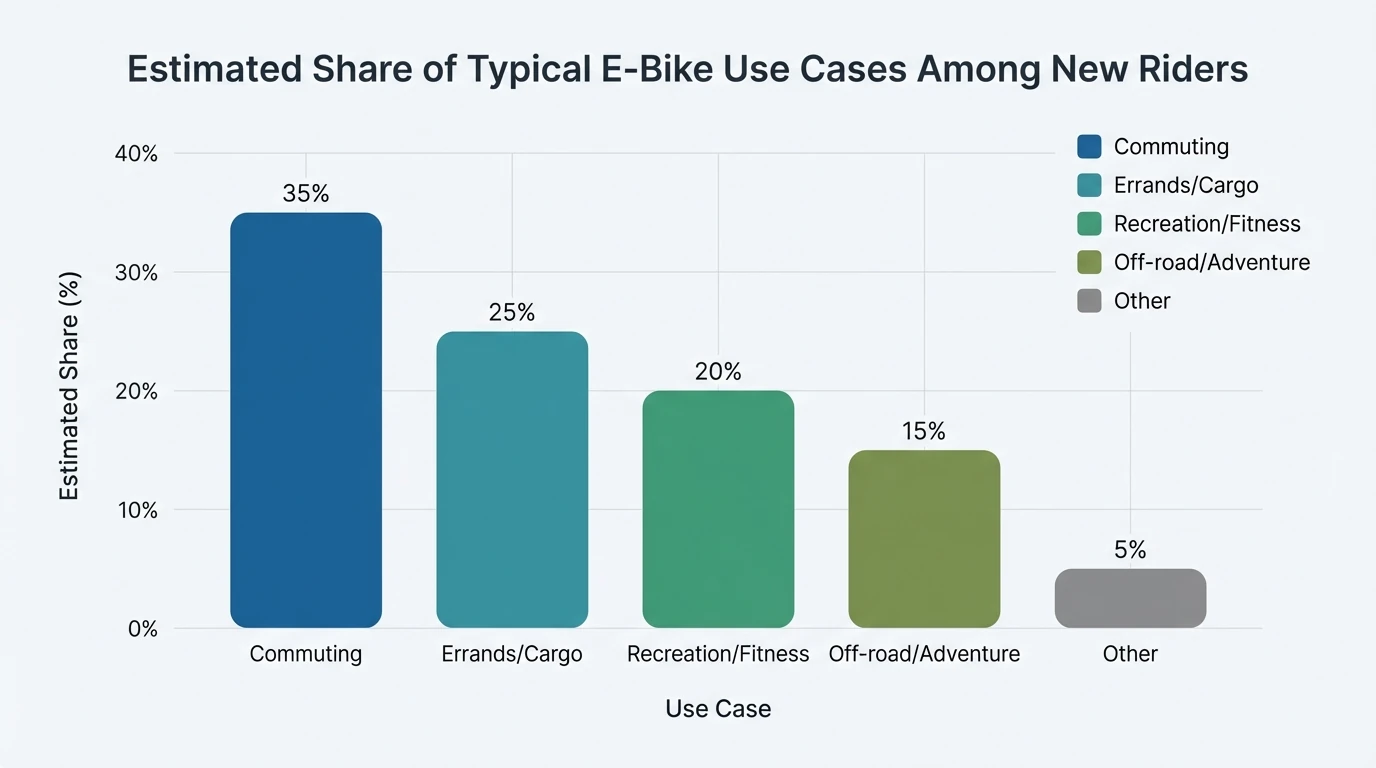
Instead of starting with specs, start with your weekly rides. The “right” e-bikes category is usually obvious once you define your route, storage, and cargo needs. I’ve found that riders who buy by lifestyle (commute, cargo, adventure) are happier than those who buy by motor wattage alone.
Best e-bikes for commuting
Commuter e-bikes should feel predictable at speed and be easy to lock up. Prioritize lights, fenders, rack options, and a comfortable riding position.
Best e-bikes for cargo and errands
Cargo e-bikes replace car trips when they’re stable under load. Look for strong racks, wide tires for stability, and easy mounting if you’ll stop often.
Best e-bikes for off-road and all-terrain
Adventure e-bikes need traction, confident brakes, and geometry that stays stable on loose surfaces. If your rides include gravel, forest roads, or camping access, choose an all-terrain build from the start.
Best e-bikes for small spaces (folding/lightweight)
If you live in an apartment, carry your bike upstairs, or store it in a trunk, folding or lightweight e-bikes can be a game-changer. The “best” one is the one you’ll actually bring along.
Cost of E-Bikes: What You’re Really Paying For
E-bikes range widely in price, and it’s not just brand markup. You’re paying for battery quality, braking components, drivetrain durability, frame design, and support infrastructure. In practice, a slightly higher upfront cost can mean fewer headaches later—especially if you ride often.
Where budget typically shows up:
- Lower-tier brakes and drivetrain parts
- Smaller batteries (or optimistic range claims)
- Limited service support or hard-to-find replacement parts
For ongoing research and category comparisons, many shoppers also reference roundups like Electric Bike Review’s “Best Electric Bikes” list, then narrow choices based on fit and service availability.
Safety and Maintenance: How to Keep E-Bikes Reliable
E-bikes are easy to ride, but they reward basic care. I recommend a quick weekly check—especially if you commute—because small issues (low tire pressure, loose bolts, worn brake pads) feel bigger on a heavier, faster bike.
Quick weekly checklist
- Check tire pressure (biggest “free range” upgrade)
- Test brakes for bite and noise
- Inspect chain and apply lube if dry
- Confirm battery mounts securely and clicks into place
- Verify lights and reflectors work
Battery best practices
- Avoid storing at 0% for long periods
- Charge in a dry, stable-temperature area
- Use the manufacturer-recommended charger
Before You Buy an eBike: Hub-Drive vs Mid-Drive Motors | Biktrix Electric Bikes
Why Rad Power Bikes Fits So Many Riders
Rad Power Bikes has focused for years on making e-bikes practical for everyday transportation—commuting, errands, and weekend exploring—without turning the buying process into a tech puzzle. With a direct-to-consumer model plus local bike shop partners, the brand aims to make test rides and service easier than “online-only” alternatives. That combination matters because the best e-bikes aren’t just bought—they’re maintained, fitted, and ridden for years.
Rad’s lineup covers common real-world needs, including city commuters, cargo/utility builds, folding options, and all-terrain models. If your goal is car-replacement errands or gear hauling, starting in a dedicated category (like cargo or off-road) usually leads to a better match than trying to “upgrade” a basic frame later.
Conclusion: Your Best E-Bikes Choice Is the One You’ll Ride Tomorrow
E-bikes aren’t just a trend—they’re a practical tool that makes riding easier to start and easier to stick with. Picture your next week: the commute you’d rather not drive, the grocery run you could turn into a quick ride, the trail you’ve been meaning to explore. The right e-bike turns those “maybe later” trips into “let’s go now.”
If you’re shopping, start by choosing your riding style (commute, cargo, adventure), then match motor type, battery, brakes, and service support to that reality. Share what kind of riding you want to do—and what’s holding you back—and you’ll get better recommendations faster.
FAQ About E-Bikes
1) Are e-bikes worth it for commuting?
Yes, e-bikes make commutes faster and less sweaty, especially with hills, wind, or longer distances. They also reduce parking hassles and can replace many short car trips.
2) How far can e-bikes go on one charge?
Range varies widely based on battery size, terrain, rider weight, and assist level. Plan for real-world conditions and leave a buffer instead of relying on maximum advertised miles.
3) What class of e-bikes should I buy?
Choose based on where you’ll ride and how fast you need assistance. Many riders pick Class 1 or 2 for path access, while Class 3 is popular for faster road commutes.
4) Do e-bikes work in the rain?
Most e-bikes are designed to handle wet conditions, but you should avoid deep water, store the battery properly, and keep electrical contacts clean and dry.
5) Are e-bikes good exercise?
Yes. You still pedal, and you can tune effort by changing assist levels. Many riders end up exercising more because they ride more often.
6) What maintenance do e-bikes need?
Similar to regular bikes—tires, brakes, chain—plus battery care and occasional checks of electrical connections. Because e-bikes are heavier, brake pads and chains may wear faster.
7) Should I buy a cargo e-bike instead of using a car for errands?
If your errands fit within local distances and you can carry typical loads safely, cargo e-bikes can replace many car trips. Look for strong racks, stable handling, and accessory compatibility.