
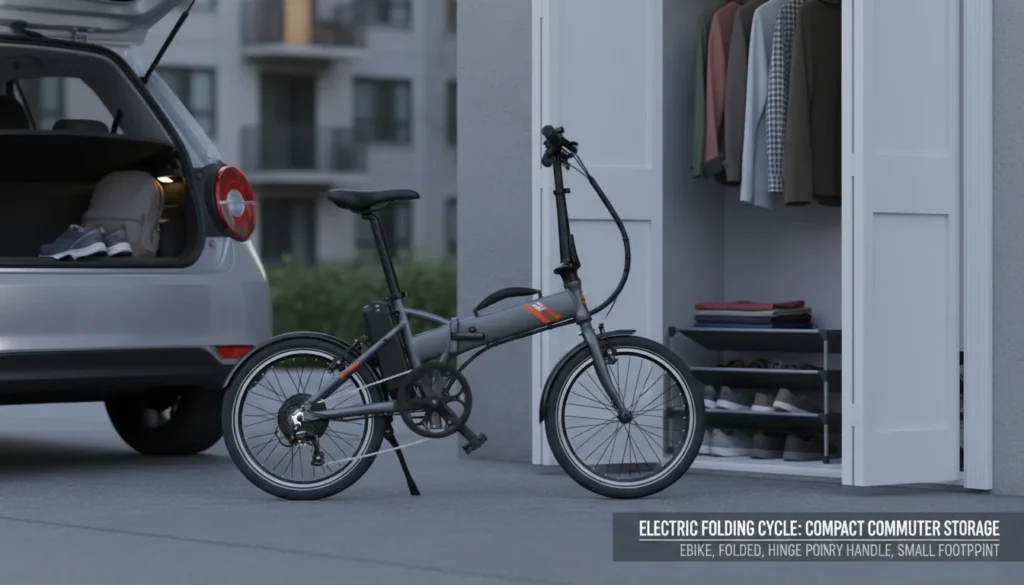
An electric folding cycle is the friend who shows up when space is tight and time is tighter. It slips into an apartment closet, rides in a trunk without a rack, and still gives you the push you want on hills and headwinds. If you’ve ever wondered, “Will a folding ebike feel stable?” or “Is it actually portable, or just smaller?” you’re asking the right questions. I’ve test-fit folders into real car trunks and RV bays, and the best ones aren’t just foldable—they’re useful.
What Is an Electric Folding Cycle (and What Makes It Different)?
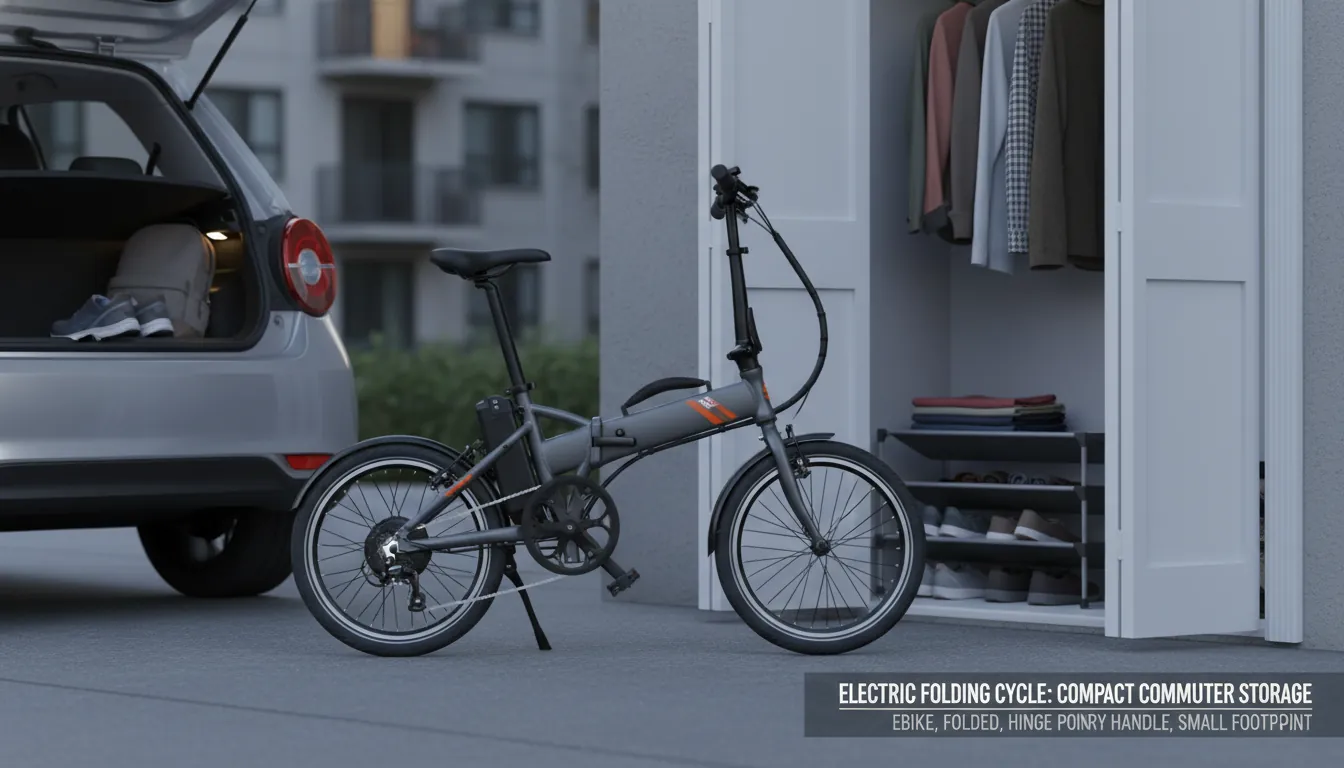
An electric folding cycle is a foldable electric bicycle with one or more hinges—commonly at the frame, handlebar stem, and pedals—so you can reduce its size for storage or transport. Compared with a standard ebike, the “win” isn’t speed; it’s convenience with fewer lifestyle compromises. The tradeoff is usually a bit more weight and complexity due to the folding mechanism.
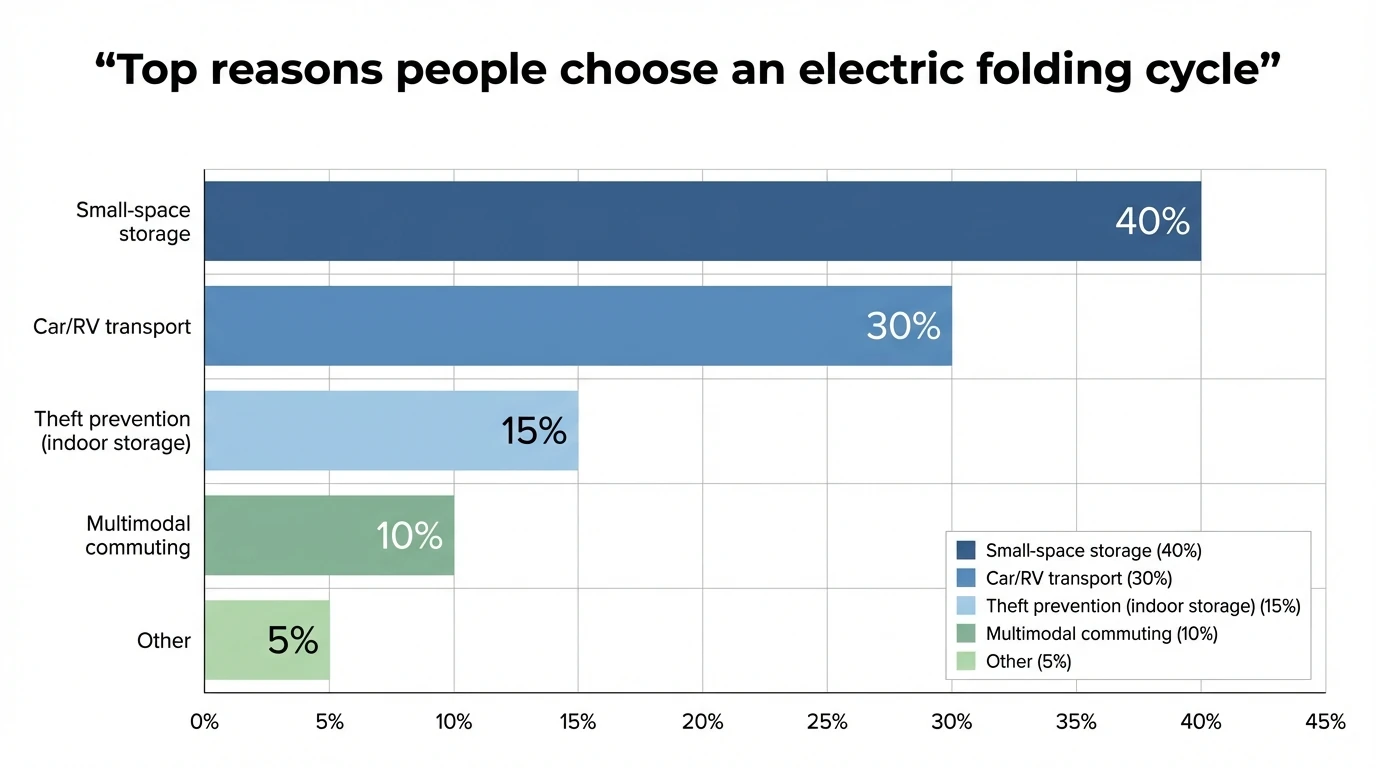
Most riders consider a folding electric bike for:
- Small homes or apartments with limited storage
- Commuting with mixed modes (car + bike, RV + bike)
- Keeping a bike inside for security (instead of on a rack)
Why Folding Ebikes Are Popular (and When They’re Not)
Folding ebikes moved from novelty to mainstream because they remove the “where do I put it?” problem. Reviewers and testers consistently highlight their versatility—especially for urban riders and travelers—without needing a large vehicle or dedicated rack.
That said, not every electric folding cycle is easy to carry. Many are foldable primarily for storage, not for lifting up stairs every day. If you have a walk-up apartment, weight and carry points matter as much as fold size.
Good fit if you:
- Want indoor storage to reduce theft risk
- Drive a smaller car and don’t want a rack
- Need one bike to do errands and leisure riding
Not ideal if you:
- Need a super-light bike for frequent stair carrying
- Prioritize high-speed performance over portability
- Hate maintenance—folding hinges add parts to inspect
The Key Specs That Actually Matter (Buyer’s Checklist)
When you compare an electric folding cycle, focus on the specs that change daily ownership—not just marketing range claims.
1) Fold Mechanism and Real-World Fold Time
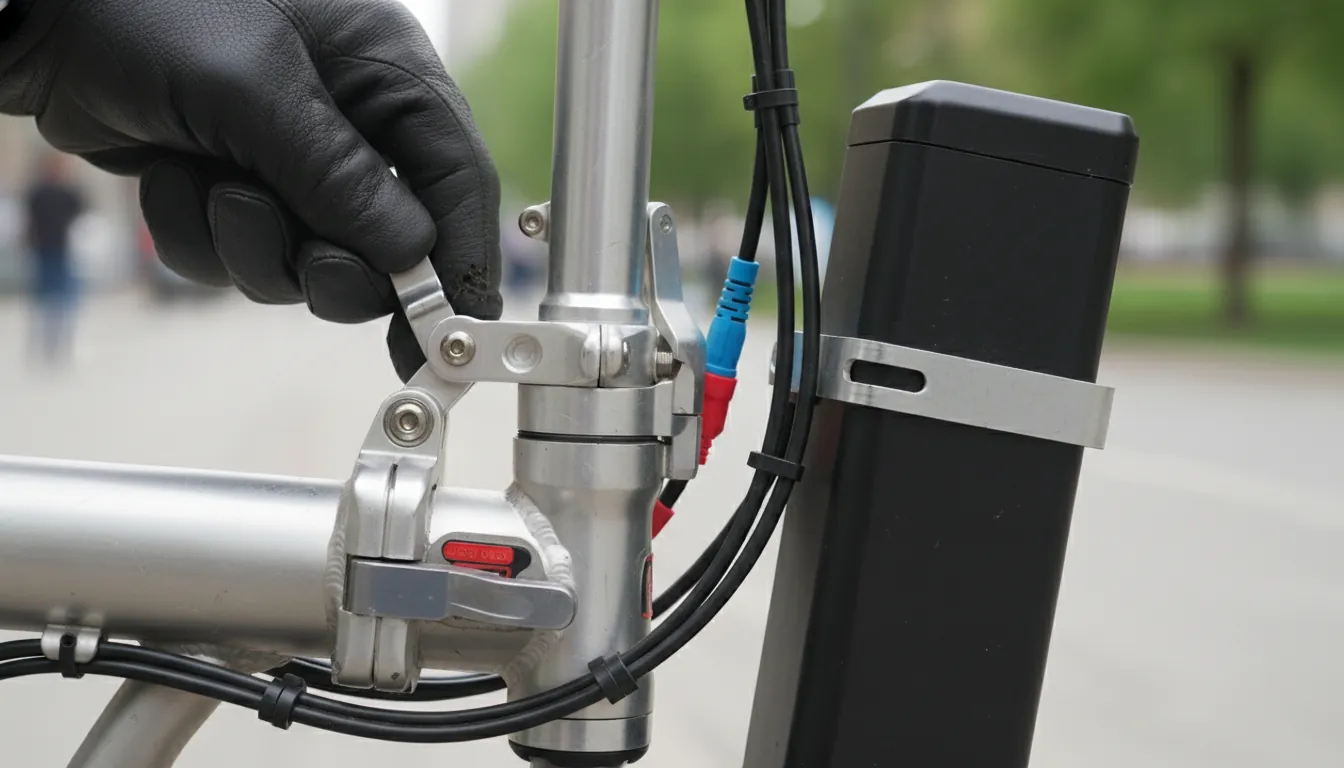
Look for solid latches, tight tolerances, and minimal “wiggle” at the hinge. In my experience, a good folder should become routine within a week: unfold → lock → ride, without fiddling.
Check:
- Hinge design (frame + stem) and how it locks
- Whether cables snag during folding
- Whether it stands or rolls when folded (huge for garages and RVs)
2) Weight and Carry Practicality
Folding doesn’t automatically mean portable. Many folding fat-tire ebikes are built for comfort and stability but can be heavy to lift.
Practical questions:
- Can you lift it into your trunk alone?
- Is there a balanced carry handle point?
- Can you remove the battery to reduce lift weight?
3) Tires: Comfort, Stability, and Where You Ride
Many folding electric cycles use 20″ wheels; they can feel nimble and compact. Wider tires (including fat tires) add comfort and stability on rough streets, gravel, and beach paths—at the cost of more bulk.
Choose based on:
- City pavement and curbs → comfort-focused tires help
- Mixed terrain → wider tires improve confidence
- Tight storage → slimmer tires may pack smaller
4) Motor and Torque: The “Hill Test”
Ignore “peak power” hype and focus on how it climbs with your weight and cargo. For commuters, consistent hill performance matters more than top speed.
A helpful mental model:
- Light rider + flat terrain → modest power feels fine
- Heavier loads or steep grades → prioritize torque and braking quality
5) Battery and Range: Plan for Reality
Real range depends on rider weight, tire pressure, terrain, wind, assist level, and stops. I recommend planning with a “realistic range” mindset: assume less than the best-case number and you’ll be happier.
Also check:
- Battery removability for indoor charging
- Weather protection and secure mounting
- Replacement availability and warranty terms
| Feature | Why It Matters | What to Look For | Common Mistake |
|---|---|---|---|
| Fold latch quality | Determines safety, stiffness, and long-term reliability; poor latches can loosen or slip | Metal-on-metal interfaces, minimal play when locked, secondary safety catch, proven hinge design, no creaks under load | Choosing based on “easy folding” only and ignoring hinge flex or latch wear |
| Weight / carry points | Affects how often you’ll actually fold/carry; awkward carry makes transit/stairs painful | Real-world weight (with battery), balanced carry handle/grab points, magnets/clip to keep bike closed, wheels/rollers when folded | Trusting claimed weight and forgetting the battery/locks/accessories add several pounds |
| Tire width | Impacts comfort, grip, and stability—especially on rough streets and wet surfaces | 2.0–2.4″ for comfort/urban potholes, puncture protection belt, clearance for fenders, common tire size availability | Buying ultra-narrow tires for speed, then hating the harsh ride and increased flats |
| Braking (mechanical vs hydraulic) | Controls stopping power, modulation, and maintenance needs | Hydraulic discs for strongest, consistent braking; mechanical discs for simpler field service; quality rotors/pads and lever feel | Assuming hydraulic is always “better” and overlooking service access, hose routing, or bleed support locally |
| Battery removal | Enables indoor charging, theft risk reduction, and easier transport/storage | Tool-free or single-key removal, secure lock, weather sealing, common connector type, easy availability of replacements | Buying a non-removable or proprietary battery and later struggling with charging or replacement costs |
| Rack / fender compatibility | Improves daily utility (commuting, groceries) and keeps you clean in wet weather | Standard mounting points, rated rear rack capacity, fender clearance with chosen tire width, compatible folding geometry | Adding aftermarket racks/fenders that interfere with folding or rub tires due to tight clearance |
| Service / support | Impacts downtime, warranty experience, and parts availability over years | Local dealer/partner network, clear warranty terms, readily available spares (battery, controller, hinge parts), responsive support | Picking an unknown brand with limited parts pipeline and no local service options |
Folding Ebike Use Cases: Where They Shine
An electric folding cycle isn’t only for commuting. It’s a “do more with less space” vehicle that fits into real routines.
Common high-value scenarios:
- RV/camper travel: store it inside, then ride at campgrounds or into town
- Apartment living: keep it indoors and charge the battery without outdoor exposure
- Last-mile commuting: drive or take transit partway, then ride the final miles
- Errands: add a rear rack or basket for grocery runs and daily tasks
For inspiration, Rad Power Bikes also highlights practical, unexpected scenarios in Five Surprising Uses for an Electric Folding Bike.
How Lectric Owner Folds & Packs His Lectric XP Ebike
The Tradeoffs vs Non-Folding Ebikes (Honest Pros and Cons)
You’re buying convenience, but it’s smart to know what you’re giving up.
Pros
- Compact storage (closets, offices, RV bays, trunks)
- Reduced need for a bike rack
- Often versatile for mixed terrain, especially with wider tires
Cons
- More moving parts to inspect (hinges, latches)
- Many models aren’t “light”—folding can still be bulky
- Slightly different ride feel vs rigid frames (varies by design)
How to Choose the Right Electric Folding Cycle for Your Lifestyle
Use this quick decision map to avoid buyer’s remorse.
- Start with storage reality: measure your trunk opening, closet depth, or RV bay height.
- Pick your priority:
- Comfort + stability → wider tires, more robust frame
- Portability + carrying → lighter build, easy roll-when-folded design
- Match accessories to your needs: racks, fenders, lights, and cargo capacity change the bike’s usefulness fast.
- Plan service: a strong support ecosystem is underrated. I’ve found that ownership satisfaction rises sharply when you can get local service quickly.
If you’re specifically shopping within Rad Power Bikes’ folding lineup, start with RadExpand Electric Folding Bikes to compare options built for compact storage and everyday riding.
Recommended Pick: Rad Power Bikes Folding Option (Why It Fits Real Life)
Rad Power Bikes has built a reputation for making ebikes practical—especially for riders who want transportation, not a hobby project. With a large rider community and a nationwide network of partner shops, the ownership experience tends to be smoother than “box-only” brands, particularly for assembly help and service.
If you want a single model page to evaluate specs and fit, review the RadExpand™ 5 Plus Electric Folding Bike. And if you already know you’ll use it for errands or commuting, browsing purpose-built add-ons at radexpand 5 plus electric folding bike accessories helps you budget realistically from day one.
Safety, Maintenance, and Folding-Hinge Checks (5-Minute Routine)
Folding bikes are safe when maintained, but you should treat the hinge like a critical component.
Before your first ride each week:
- Confirm hinge and stem latches are fully locked
- Check tire pressure (low pressure kills range and handling)
- Test brakes at walking speed
- Ensure battery is seated and secured
For broader safety guidance and standards, reference:
- PeopleForBikes—Ebike resources and advocacy
- NHTSA—Bicycle safety information
- UL Solutions—micromobility battery safety and standards
Conclusion: The Electric Folding Cycle That Fits Your Day Wins
An electric folding cycle works best when it quietly removes friction from your routine—parking hassles, storage stress, and “I don’t have time” excuses. I’ve found the right folding ebike isn’t the one with the flashiest spec sheet; it’s the one you’ll unfold and ride again tomorrow. If you’re ready to prioritize convenience without giving up real-world capability, start by measuring your space, choosing your terrain, and matching the bike to your daily errands and commute.
FAQ: Electric Folding Cycle Questions People Also Ask
1) Are electric folding cycles good for commuting?
Yes—especially for riders who need compact storage, indoor charging, or car/RV transport without a rack.
2) How heavy is a typical folding electric bike?
Many are heavier than expected due to hinges, battery, and motor. If you’ll carry it up stairs, prioritize weight and carry ergonomics.
3) Do folding ebikes feel stable?
Good designs are stable, but ride feel varies with tire width, frame stiffness, and wheel size. Wider tires often improve comfort and confidence.
4) How much range should I expect from an electric folding cycle?
Expect range to vary with assist level, rider weight, hills, wind, and tire pressure. Plan conservatively versus maximum-rated numbers.
5) Can I store a folding ebike in an apartment?
Yes—this is one of the biggest advantages. Measure your storage spot and confirm the folded dimensions fit comfortably.
6) What should I inspect on a folding ebike before riding?
Check hinge/stem locks, brake function, tire pressure, and battery security. A quick weekly check prevents most problems.
7) Is a folding ebike worth it over a non-folding ebike?
It’s worth it if storage and transport convenience are top priorities. If you have ample space and want the simplest frame, non-folding can be a better fit.