
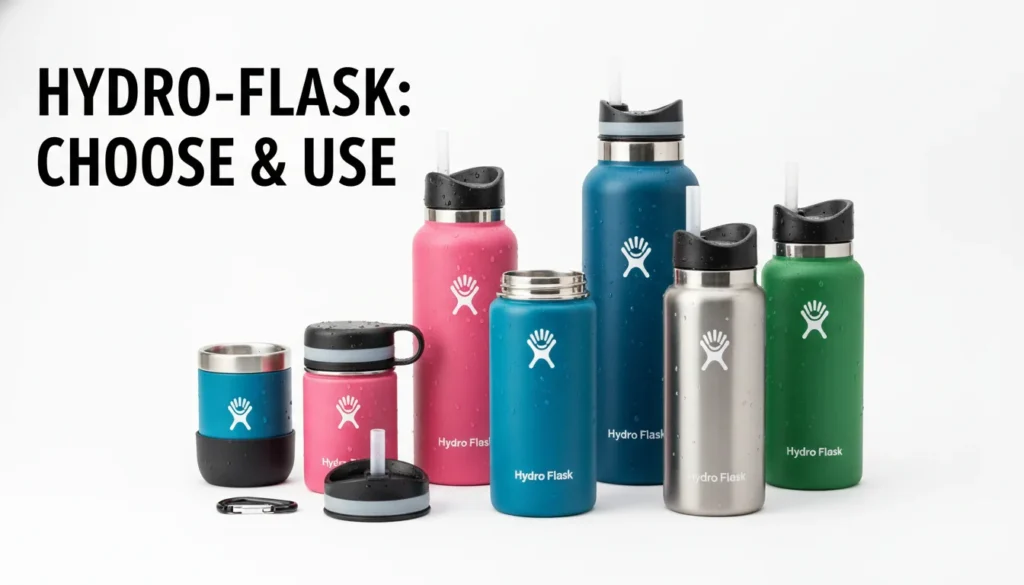
There’s a moment most people recognize: you take a sip expecting cold water, and it’s lukewarm—or your “hot” coffee is already flat. A hydro-flask is designed for the opposite experience: reliable temperature retention, fewer leaks, and a bottle you actually want to carry every day. I’ve rotated insulated bottles through commutes, gym bags, and trail days, and the difference usually comes down to insulation quality, lid choice, and how you maintain it. This guide breaks down how a hydro-flask works, which model fits your routine, and how to keep it tasting fresh for years.

What a Hydro-Flask Is (and Why People Buy One)
A hydro-flask is a vacuum-insulated stainless steel bottle (and a broader line of drinkware and coolers) built to slow heat transfer. Hydro Flask’s signature approach is double-wall vacuum insulation (TempShield™), paired with durable powder coat finishes and multiple lid styles for different use cases. The result is a bottle that’s meant to keep cold drinks cold and hot drinks hot—without the condensation and “sweaty bottle” problem common in single-wall designs.
Hydro Flask has also become a lifestyle staple because it’s durable, refillable, and easy to integrate into daily habits. For many buyers, the real value isn’t just temperature retention—it’s consistency. When your bottle performs the same way on day 3 as it does on day 300, you stop thinking about it and simply hydrate more.
Keyword variations you’ll see people search for:
- Hydro Flask bottle, insulated water bottle, vacuum insulated flask, stainless steel tumbler, reusable drinkware, TempShield insulation
How Hydro Flask TempShield™ Insulation Works (Simple Explanation)
Vacuum insulation is a proven engineering method: two stainless-steel walls with a vacuum gap between them. That vacuum reduces heat transfer through conduction and convection, which is why your ice lasts longer and your hot drinks stay hot. In practical terms, the biggest “performance killers” are usually not the bottle body—but the lid seal, user habits, and what you put inside.
From hands-on use, these factors matter most:
- Fill level: More liquid mass = more stable temperature.
- Ice strategy: Larger ice cubes melt slower than small chips.
- Pre-conditioning: Rinse with cold water (for cold drinks) or warm water (for hot drinks) before filling.
- Lid choice and seal: A great bottle with a poor seal underperforms.
For background on the brand’s history and product categories, see Hydro Flask on Wikipedia.
Choosing the Right Hydro-Flask: Size, Mouth Style, and Lid Type
Most “wrong bottle” purchases happen because people choose based on color first and function second. A hydro-flask should match how you drink: big gulps, quick sips, coffee, or all-day refills. Below is a straightforward way to decide.
1) Pick your size based on your day
If you’re mostly at a desk, a mid-size bottle can be plenty. If you’re on the move (campus, travel, long shifts), go larger to reduce refills. When I’m traveling, I favor a size that fits cup holders or side pockets—because “convenient carry” beats “bigger capacity” in real life.
2) Choose Wide Mouth vs Standard Mouth
- Wide Mouth: Easier to add ice, easier to clean, great for high-volume drinking.
- Standard Mouth: More controlled sipping, often less splash risk while walking.
3) Match the lid to your routine
Lids are not accessories; they’re performance components.
- Straw-style lids: Great for frequent sipping (gym, driving).
- Sip-style coffee lids: Better for hot drinks and controlled flow.
- Flex/handle lids: Better for carry and packability.
| Use Case | Recommended Size Range | Mouth Type (Wide/Standard) | Best Lid Style | Why It Works |
|---|---|---|---|---|
| Commuting | 18–24 oz | Standard | Flex Sip Lid (hot) / Flex Straw | Fits most cup holders, easy one-handed drinking, good balance of capacity. |
| Gym | 24–32 oz | Wide | Flex Straw Lid | Faster hydration between sets; wide mouth makes adding ice and cleaning easy. |
| Hiking | 32–40 oz | Wide | Flex Cap | Larger capacity for longer outings; secure, leak-resistant carry in a pack. |
| School | 18–32 oz | Standard | Flex Straw Lid | Easy sipping in class; less spill-prone; comfortable to carry all day. |
| Office coffee | 12–16 oz | Standard | Flex Sip Lid | Better for hot drinks; more controlled sipping; smaller size suits desks. |
| Family outings | 40 oz | Wide | Flex Straw Lid (or Flex Cap) | Big volume reduces refills; wide mouth handles ice; convenient for sharing. |
Temperature Retention in the Real World: What to Expect
People often ask, “Will it keep ice for 24 hours?” The honest answer: it depends on ambient heat, ice type, how often you open the lid, and whether the bottle sits in direct sun. In my testing across commutes and outdoor days, a well-sealed insulated bottle can keep drinks cold for a full day—but frequent opening and warm refills reduce that quickly.
The good news is you can improve results with small habits:
- Keep the bottle out of direct sunlight when possible.
- Use larger ice and fill the bottle more fully.
- Minimize lid openings if you’re trying to preserve temperature longer.

Cleaning and Care: Keep Your Hydro-Flask Tasting Fresh
The #1 complaint I hear isn’t about insulation—it’s “my bottle smells.” That’s almost always a cleaning routine issue, especially around lids, gaskets, and straw components. A hydro-flask is easy to maintain, but you have to clean the parts that trap residue.
A practical weekly routine:
- Wash the bottle body with warm, soapy water and a bottle brush.
- Disassemble the lid (where possible) and clean all contact surfaces.
- Air-dry fully with the cap off to prevent lingering odors.
For brand-specific guidance, these internal resources are the most useful:
- three ways to clean your hydroflask
- is your hydro flask dishwasher safe
- 4 ways to personalize your hydro flask bottle
Common Hydro-Flask Problems (and Fast Fixes)
Most issues are solvable without replacing the bottle. In my experience, leaks and “weird taste” come from lid seals, improper tightening, or residue in small parts.
- Leak in bag: Check gasket placement, inspect for cracks, and confirm the lid is aligned before tightening.
- Metallic or stale taste: Deep clean the lid and let all parts dry completely.
- Not staying cold: Confirm you’re using a compatible lid and that the seal is intact; pre-chill the bottle and use larger ice.
If you want more brand and product context, Hydro Flask’s official site is a good starting point for current lineups and specs: Hydro Flask official website.
Sustainability and Reusability: Why Hydro-Flask Fits Low-Waste Habits
A hydro-flask supports sustainability mainly through durability and reuse. The more days you carry a refillable bottle, the fewer single-use containers you cycle through. The “green” benefit isn’t abstract—it’s behavioral: a bottle you like becomes a bottle you actually use.
If you’re building a consistent hydration habit, pairing your bottle with better-tasting water helps. Adding fruit or herbs can make refills more appealing without added sugar. For ideas, see three infused water recipes to help you stay hydrated.
For broader consumer perspectives and common purchasing patterns, you can also review aggregated listings and feedback on major retailers like Amazon’s Hydro Flask bottle listings (note: reviews vary by seller, model, and listing).
My HONEST Review of Hydro Flask Standard Mouth Bottle!
Buying Checklist: How to Choose a Hydro-Flask You Won’t Regret
Before you pick a color, run through this short checklist. It’s the same decision filter I use when advising friends who want “one bottle that does it all.”
- Where will you carry it most? (cup holder, backpack pocket, tote)
- Do you prefer sipping or chugging? (straw vs wide mouth)
- What do you drink most? (ice water, coffee, electrolyte mixes)
- How often will you clean it? (simpler lids = easier maintenance)
- Do you need accessories? (boot, handle, extra lid)
Conclusion: Make Your Hydro-Flask Work Harder Than You Do
A hydro-flask isn’t just a trendy bottle—it’s a daily tool that protects temperature, reduces waste, and makes hydration easier to stick with. When you choose the right size and lid, and you keep the seals clean, it becomes the bottle you reach for without thinking. If you’re deciding between models or building a setup for work, school, or outdoors, start with function first—then pick the color you’ll be happy to carry everywhere.
FAQ: Hydro-Flask Questions People Ask Most
1) How long does a hydro-flask keep water cold?
It depends on ambient temperature and how often you open it, but vacuum insulation is designed for all-day cold retention, especially with larger ice and fewer lid openings.
2) Which hydro-flask size is best for everyday use?
Many people prefer a mid-size for portability, but everyday “best” depends on how often you can refill and whether it fits your bag or cup holder.
3) Is a hydro-flask dishwasher safe?
Some components may be dishwasher safe depending on model and finish—check this guide: is your hydro flask dishwasher safe.
4) Why does my hydro-flask smell even after rinsing?
Odors usually come from lid parts and seals. A deeper clean and thorough air-dry typically fixes it—see three ways to clean your hydroflask.
5) What’s the difference between Wide Mouth and Standard Mouth hydro-flask bottles?
Wide Mouth is easier for ice and cleaning; Standard Mouth offers more controlled sipping and can be less splash-prone while walking.
6) Can I put coffee or tea in a hydro-flask?
Yes—just use an appropriate lid for hot liquids, pre-warm the bottle, and clean promptly to prevent flavor carryover.
7) How can I personalize my hydro-flask without damaging it?
Use accessories or safe customization methods recommended here: 4 ways to personalize your hydro flask bottle.