
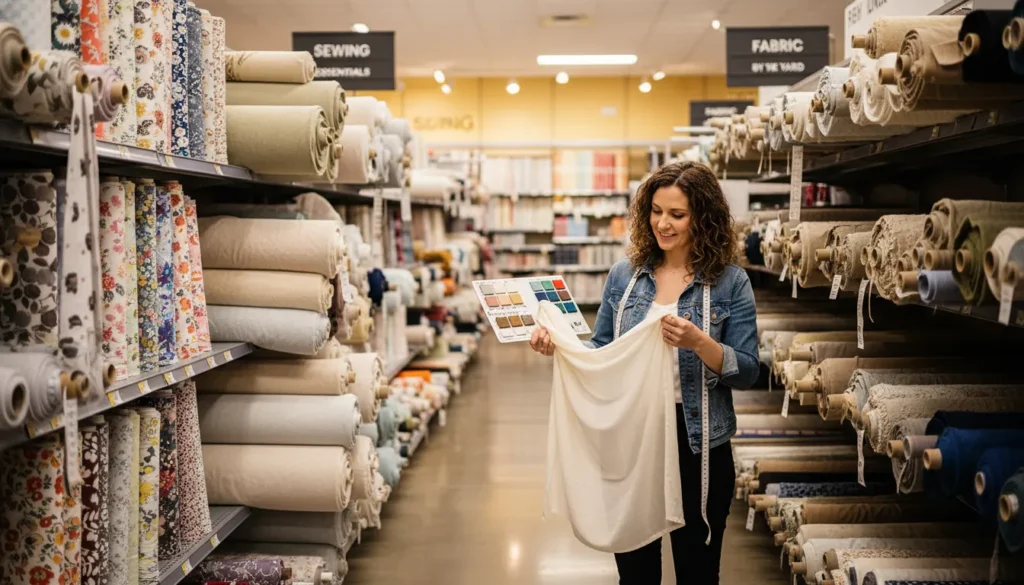
Makers used to talk about joann’s fabric the way bakers talk about flour: you didn’t overthink it—you just went, touched bolts, watched for coupons, and left with more than you planned. If you’re trying to source joann’s fabric today (or match what you used to buy there), you’re not alone—and the “where do I shop now?” question is real. I’ve had weeks where a single out-of-stock cotton print delayed an entire run of tote bags, so I’ve learned to treat fabric sourcing like a workflow, not a quick errand.
This guide breaks down what people mean by joann’s fabric, how to evaluate fabric quality fast, where to buy comparable fabrics now, and how to pair fabric buying with modern personalization tools (like laser cutting and fabric printing) so you can keep projects—and small businesses—moving.
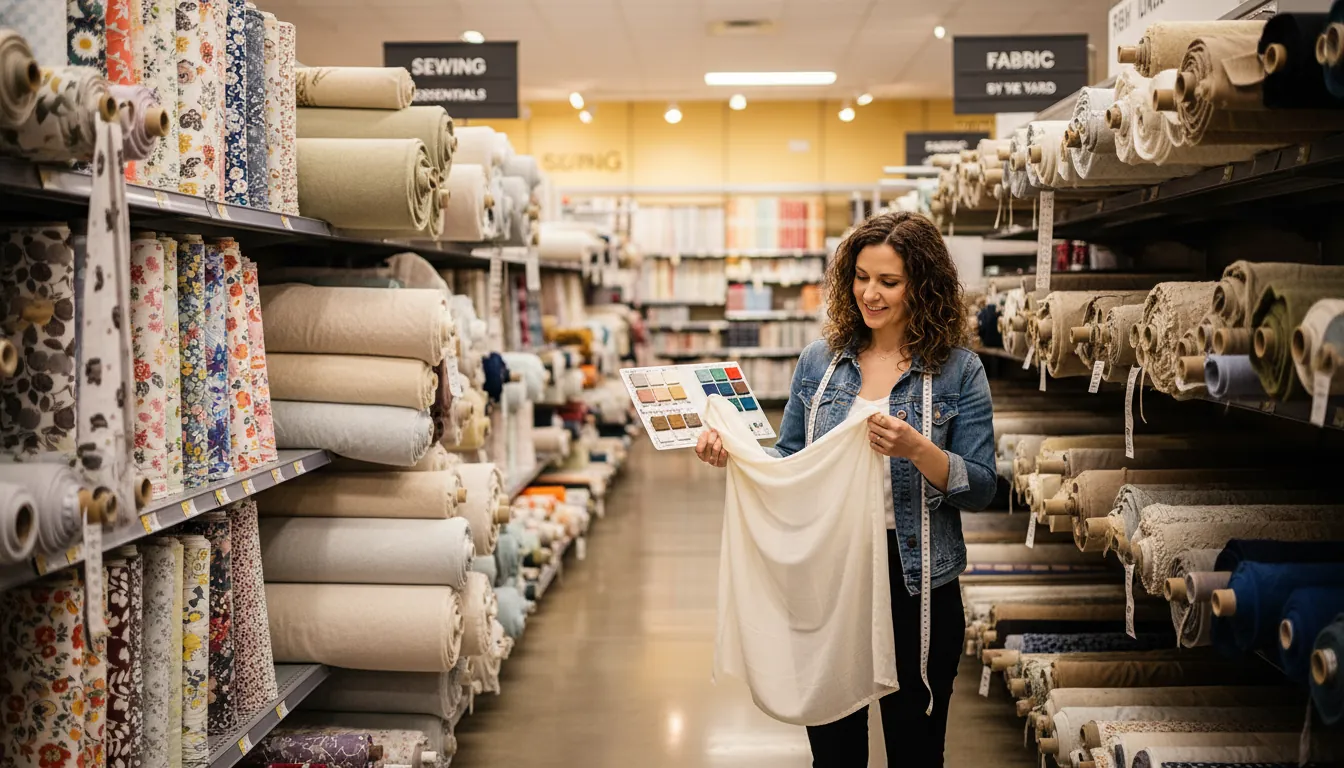
What “Joann’s Fabric” Usually Means (and Why It Matters)
When people say joann’s fabric, they typically mean one of three things: affordable fabric-by-the-yard, seasonal prints (quilting cottons, fleece), and “one-stop” convenience (thread, notions, interfacing, patterns). That mix made it easy to prototype, test sizes, or produce small batches without juggling multiple suppliers. It also shaped expectations: wide selection, frequent promos, and a hands-on shopping experience.
A key shift is that many makers now need to recreate that same experience across multiple channels—online fabric retailers, local quilt shops, big-box craft stores, and specialty suppliers. The good news: you can still get the same (or better) results if you shop with a few quality checks and a plan.
- Best use cases people sourced at Joann: quilting cotton, fleece, felt, home décor canvas, utility fabrics, basic notions
- What you may need to replace: consistent restocks, in-person feel test, coupon-driven pricing
- What you can upgrade now: specialty textiles, print-on-demand fabric, faster small-batch customization
Quick Reality Check: Is Joann Still the Right Search?
Depending on what you’re searching, “joann’s fabric” can point to:
- The legacy brand and its historical footprint (helpful for understanding what you used to buy)
- Unofficial “lookalike” domains and resellers (some are legitimate; some are risky)
- Other retailers targeting former Joann shoppers
To stay safe, verify you’re on an official retailer page and use secure checkout signals (valid domain history, clear returns policy, and customer support). For background on the company’s history and changes, Wikipedia’s overview is a starting point: JoAnn Fabrics.
How to Choose Fabric Like a Pro (Even When You Can’t Touch It)
When you can’t do the classic “drape test” in-store, you need a repeatable checklist. I use this exact process when ordering online for projects like zipper pouches, quilt blocks, and laser-cut appliqués.
1) Read the fiber content (it predicts behavior)
Fiber content tells you shrinkage, wrinkle, dye behavior, and how it handles heat.
- Cotton (100%): easy to sew, great for quilting and crafts, shrinks unless prewashed
- Polyester blends: less shrink, more wrinkle-resistant, can melt under high heat
- Rayon/viscose: soft drape, can distort, needs careful handling
- Canvas/duck: structured, great for bags and décor, check weight (oz)
2) Check fabric weight and opacity
Online listings often include GSM or oz/yd². If they don’t, that’s a yellow flag.
- Light (2–4 oz): linings, some apparel
- Medium (5–8 oz): quilting cotton, broadcloth, many craft staples
- Heavy (9–14+ oz): canvas, denim, upholstery
3) Look at repeat size and scale
Seasonal prints can vary wildly in scale. For small items (scrunchies, masks, key fobs), large-scale prints can look “cut off.”
4) Order swatches for anything you’ll sell
If you’re making products for customers, swatches are cheaper than remakes. I’ve saved real money by swatching first—especially when matching “close enough” replacements for familiar joann’s fabric prints.
Where to Buy Fabric Now (Comparable to Joann’s Fabric)
Here are common paths makers take to replace joann’s fabric shopping, depending on what matters most: price, selection, speed, or specialty.
Big craft retailers and fabric chains
These can feel closest to the old one-stop model, especially for basics and notions. If you’re a former Joann shopper, Michaels has a dedicated transition page: JOANN Shoppers | Your Favorite Fabrics – Michaels.
Local quilt shops (LQS)
Not always the cheapest, but often the best for:
- Higher-end quilting cottons
- Expert help on color matching and yardage
- Community classes and project support
Online fabric retailers and marketplaces
Great for variety and convenience. The tradeoff is you must do the “pro checklist” above and confirm return policies.
Print-on-demand and custom production
If your goal is uniqueness (not just replacement), custom printing can outperform traditional retail bolts—especially for brand-themed drops or personalized gifts.
Where to Buy Fabric Now That Joann Fabrics Is Closing
Price vs. Quality vs. Convenience: What Most Makers Actually Optimize
Most people think they optimize price. In practice, makers optimize risk: “Will this fabric behave the way I need, arrive on time, and match what I designed?”

A practical approach:
- For prototypes: buy affordable yardage, accept some variance
- For customer orders: prioritize consistency, reorderability, and documented specs
- For signature products: consider custom printing or specialty suppliers
Fabric + Personalization: How xTool Helps Makers Go Beyond “Basic Yardage”
If you used joann’s fabric mainly as a starting point, the next step is adding personalization that increases value—without adding hours of labor. That’s where digital fabrication tools can change your workflow.
Laser cutting fabric (clean edges, repeatable shapes)
For appliqués, patches, lace-like cutouts, and consistent pattern pieces, laser cutting can save time—especially on batches. I tried laser-cut felt shapes for a holiday ornament run and the consistency was night-and-day compared to hand cutting.
To understand which textiles cut well and how to avoid scorching, see: Laser Cutting Fabric and Textiles: The Ultimate Guide.
Printing on fabric (photos, logos, full-color designs)
If you’re moving from retail prints to custom graphics, fabric printing is the bridge. For beginners, the biggest wins are:
- Small runs (no bulk minimums)
- Personalized items (names, photos, team designs)
- Fast iteration (test, tweak, reprint)
A solid starting tutorial is: How to Print A Photo on Fabric?.
DTF materials for apparel makers
If your “joann’s fabric” projects include tees, tote bags, or uniforms, DTF workflows can scale quickly when paired with the right consumables. Browse options here: materials for xtool apparel printer.
Common Problems When Replacing Joann’s Fabric (and How to Fix Them)
| Problem | Likely Cause | Quick Fix | Preventative Step |
|---|---|---|---|
| Fabric feels thinner than expected | Different fiber/content or weight than original; wrong sub-type (e.g., quilting vs canvas) | Add interfacing/lining; double-layer; switch to heavier “home decor/canvas” equivalent | Check GSM/oz per sq yd, fiber %, and product line; order swatches; read reviews |
| Color doesn’t match photos | Screen/lighting differences; batch/dye lot variation | Compare in daylight; exchange for closer shade; use dye/tint for small shifts | Buy in-store or request swatch; purchase all yardage at once; note dye lot if available |
| Print scale is wrong | Listing photo not to scale; different repeat size between collections | Re-plan pattern layout; resize template; use smaller/larger motifs as needed | Check “repeat” and motif dimensions; look for ruler/scale images; order 1/4–1/2 yd test |
| Edges fray too much | Loose weave; cut on bias; dull blade | Overlock/zigzag edges; use fray check; pinking shears; apply seam tape | Pre-finish edges before handling; cut with rotary cutter + fresh blade; choose tighter weave |
| Fabric shrank after sewing | Not prewashed/preshrunk; heat/steam shrinkage | Re-block with steam and reshape; re-sew with added seam allowance if possible | Prewash/dry as you’ll launder; test a swatch; avoid high heat on first press |
| Laser cut leaves scorch marks | Too much power/slow speed; synthetic content melts; residue on bed | Increase speed/reduce power; mask with transfer tape; wipe with isopropyl; try a different setting | Run a cut test grid; use air assist and clean honeycomb/bed; choose laser-friendly fibers |
| Ink/transfer cracks after washing | Transfer not fully cured; wrong material for method; washed too hot | Re-press per instructions; switch to stretch/soft inks; wash inside-out on cold | Follow cure time/temp; test on scrap; use appropriate transfer for fabric type; avoid high heat drying |
Practical fixes I rely on:
- Always prewash cottons if the final item will be washed
- Buy extra 10–15% yardage when switching suppliers (shrink + defects)
- Test finishing (zigzag, serger, pinking, or binding) before committing
- Run a small cut/print test on scraps before production
A Simple Buying Plan (So You Don’t Miss Joann’s Fabric as Much)
If you want the old simplicity of joann’s fabric shopping, recreate it with a short system:
- Define the project spec (fiber, weight, stretch, wash method).
- Shortlist 2–3 sources (one local, one online, one specialty/custom).
- Order swatches or 1-yard tests for anything you’ll sell.
- Document what worked (supplier, SKU, care notes, settings if cutting/printing).
- Standardize “house fabrics” for your most common products.
This is how small shops avoid the “every order is a new experiment” trap.
Conclusion: Keep the Spirit of Joann’s Fabric—Upgrade the Outcome
Joann’s fabric was never just fabric; it was momentum—walk in with an idea, walk out ready to make. Even if your shopping habits change, you can keep that same creative speed by choosing materials with a clear checklist and leaning into tools that make customization repeatable. If you’re replacing old favorites, start with swatches and documented specs; if you’re building a brand, consider custom printing and precision cutting to create products people can’t find anywhere else.
FAQ: Joann’s Fabric (Search Questions People Ask)
1) What is the best alternative to joann’s fabric for quilting cotton?
Look for local quilt shops for premium cottons, or online quilting retailers that list fiber content, width, and weight. Order swatches if color matching matters.
2) How do I match a joann’s fabric print I used years ago?
Your best bet is to search by fabric line/collection name if you have it, then compare repeat scale and fiber content. If you can’t match it, consider custom printing a similar design.
3) What should I check before buying fabric online?
Fiber content, weight (GSM/oz), width, care instructions, return policy, and reviews with photos. For selling products, test-wash a 1-yard cut first.
4) Is fleece from joann’s fabric easy to replace?
Yes, but verify thickness and stretch. Fleece varies a lot by supplier; check weight and whether it pills after washing.
5) Can I laser cut fabric for appliqués and patches?
Many fabrics can be laser cut, but settings and material type matter to avoid scorching or melting. Use a guide like xTool’s fabric laser-cutting resource and test on scraps first.
6) What’s the easiest way to put a photo on fabric?
For beginners, start with a proven method and the right material setup. This guide walks through it step-by-step: How to Print A Photo on Fabric?.
7) Where are people shopping after joann’s fabric changes?
Many makers are splitting purchases: a big craft retailer for basics, a quilt shop for premium cottons, and online/specialty suppliers for unique textiles or custom printing.