

Reusable water bottles tend to start with good intentions: you buy one, carry it for a week, then it lives on your desk while you grab disposable plastic again. I’ve tested and rotated through enough bottles to learn the truth—your “best” bottle isn’t the one with the most features, it’s the one that fits your routine, tastes clean, and never annoys you. Are you refilling at a gym fountain, tossing it in a bag, or keeping ice water cold at your desk for hours? Those answers decide everything.
In this guide, we’ll break down what matters most—materials, insulation, lids, sizing, cleaning, and real-world use cases—so your reusable water bottles become a habit, not clutter.
Why reusable water bottles are worth it (beyond “saving plastic”)
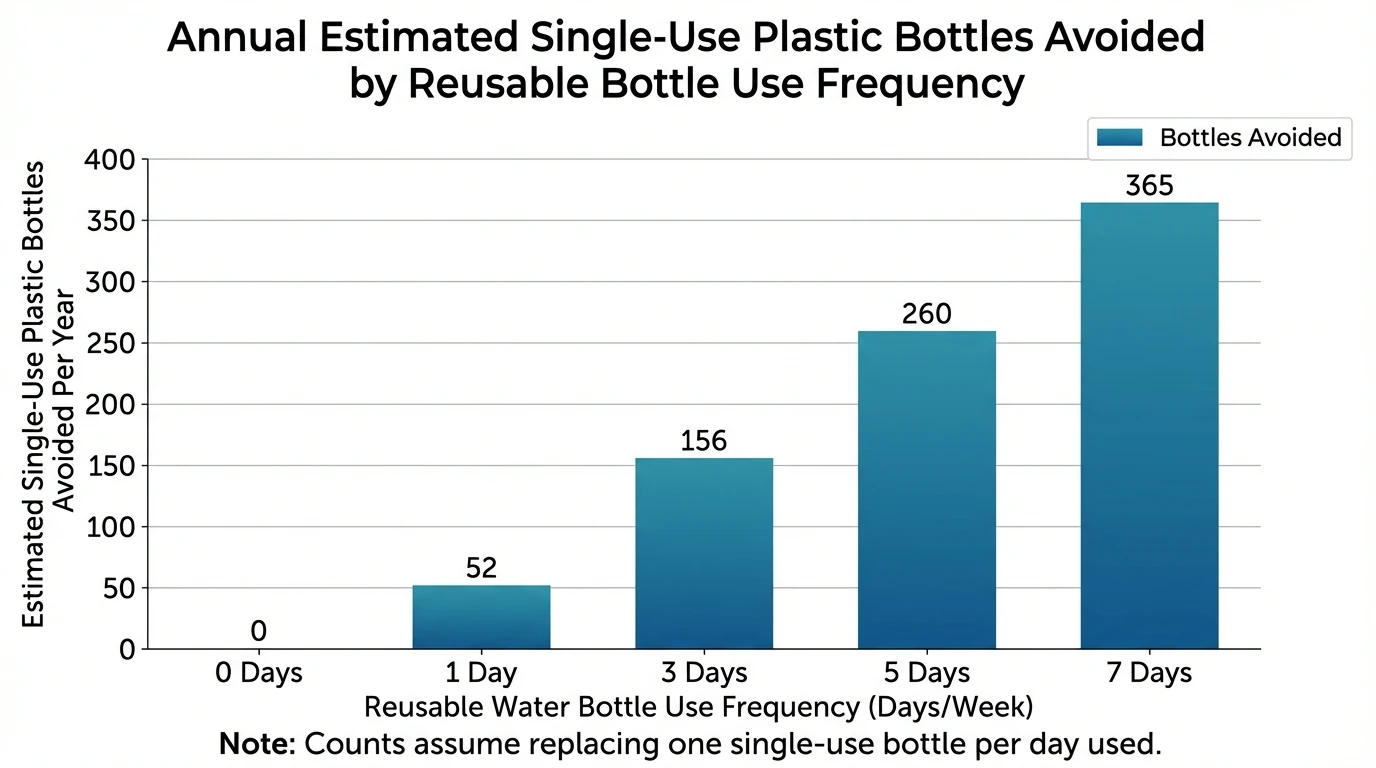
Reusable water bottles solve three daily problems: hydration consistency, waste reduction, and drink quality. From an environmental standpoint, they can cut down single-use bottle purchases dramatically over time—especially if you’re someone who buys water on the go. But the bigger day-to-day payoff is practical: you always have a reliable container that matches your preferences (cold, hot, straw, chug, sip).
What I notice most in practice is how temperature control changes behavior. When water stays cold for hours, I drink more without thinking; when coffee stays hot through a commute, I’m less likely to buy another cup. For a deeper look at the lifestyle and sustainability advantages, see What Are the Benefits of Reusable Water Bottles?.
The 6 features that actually matter when buying reusable water bottles
1) Material: stainless steel vs plastic vs glass (and what it means for taste)
Material affects durability, taste, weight, and insulation compatibility.
- Stainless steel: best all-around for durability and insulation; can be heavier, but premium builds reduce “metallic” taste (ceramic-lined interiors help).
- Plastic (BPA-free): lightweight and affordable; can retain odors/flavors over time, especially if used for sports drinks.
- Glass: pure taste and easy odor control; heavier and breakable unless sleeved.
Independent reviews consistently prioritize leak resistance, easy cleaning, and durability for long-term satisfaction—if you want a general benchmark for what top testers look for, see Wirecutter’s water bottle testing approach. For a clear comparison of material pros/cons, Corkcicle’s breakdown on Stainless Steel vs Plastic vs Glass Water Bottles is a solid starting point.
2) Insulation: when it’s essential (and when it’s overkill)
Double-wall vacuum insulation is the difference between “cool for an hour” and “cold all afternoon.” Insulated reusable water bottles shine when you:
- work long shifts
- commute
- travel
- drink slowly
- live in hot climates
If you mostly refill every 30–60 minutes (office cooler, gym fountain), you may prefer a lighter, non-insulated bottle. For most people, insulation is worth it because it makes the habit effortless.
3) Lid style: the make-or-break detail
In my experience, the lid determines whether a bottle gets used daily or “benched.” Choose based on how you drink:
- Straw lid: best for desk work and driving; encourages sipping.
- Chug spout: fast hydration at the gym; fewer parts than a straw.
- 360° sip / coffee-style lid: commuter-friendly; feels like a cup.
- Wide mouth: easiest for ice and deep cleaning; can splash if you’re walking fast.
Leakproof claims vary widely. A truly travel-ready lid should handle being tossed sideways in a bag for hours.
4) Size + shape: hydration goals vs portability
Capacity is only helpful if you’ll carry it. A few practical guidelines:
- 16–20 oz: easiest to carry; more refills.
- 24–32 oz: sweet spot for most days.
- 40 oz+: great at a desk; can be heavy and less bag-friendly.
Also consider cupholder compatibility if you drive—many people buy a big bottle and then stop using it because it doesn’t fit anywhere.
5) Interior and aftertaste: the hidden dealbreaker
“Water tastes like yesterday’s coffee” is a common complaint. If you alternate beverages, look for bottles designed to preserve pure taste, and avoid porous components that trap odors. In real use, odor issues usually come from lids, straws, and seals rather than the main bottle body.
6) Cleanability: the long-term success factor
If it’s annoying to clean, you won’t clean it enough—and then you won’t want to use it. Prioritize:
- minimal crevices
- removable gaskets
- wide access for brushes
- dishwasher-safe parts (when possible)
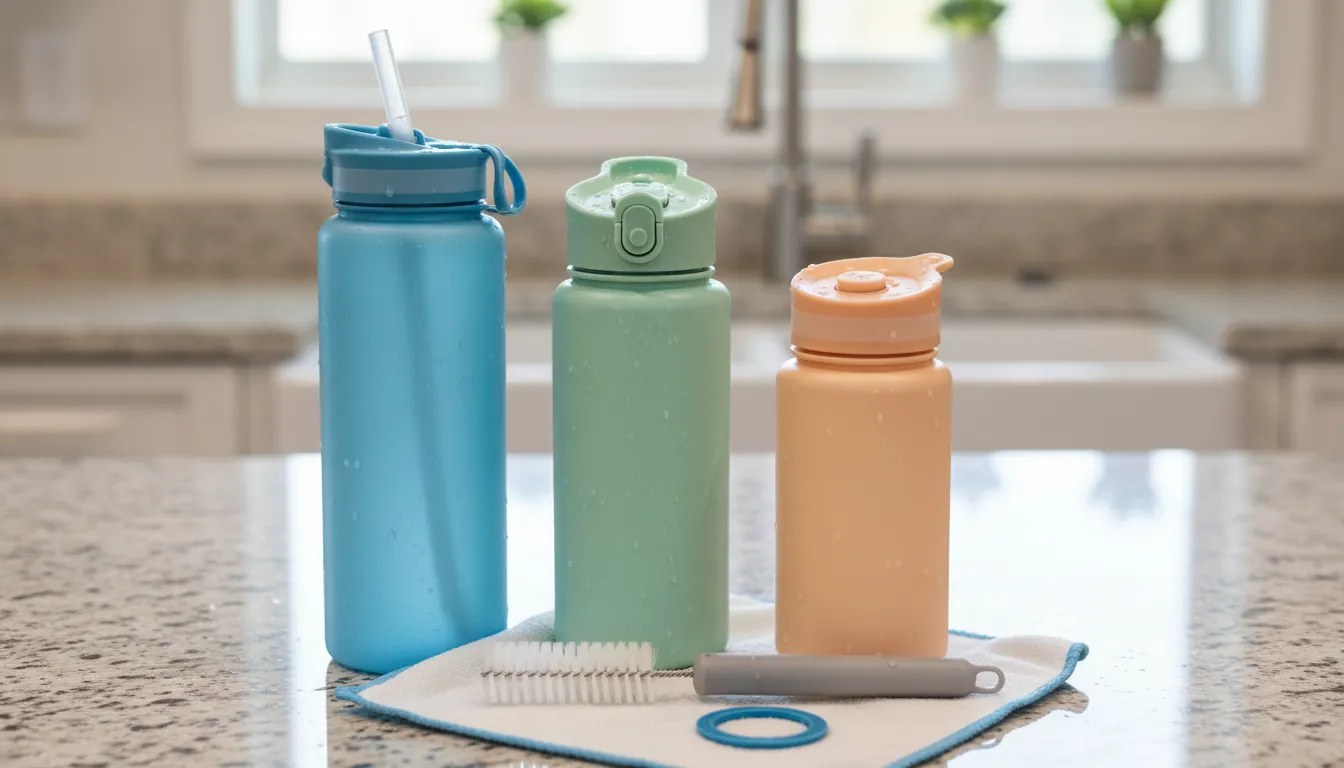
For a simple, repeatable routine, follow How to Clean Reusable Water Bottles.
| Use Case | Recommended Bottle Type | Ideal Size Range (oz) | Best Lid Style | Key “Must-Have” Feature | Common Mistake to Avoid |
|---|---|---|---|---|---|
| Commute | Insulated stainless | 20–24 | Chug | Cupholder fit | Choosing a bottle too wide for car/train cupholders |
| Gym | Lightweight plastic | 24–32 | Straw | Leakproof | Using a non-locking straw lid that leaks in a gym bag |
| Travel | Insulated stainless | 24–32 | Wide mouth | Leakproof | Packing a lid without a secure seal for pressure/tilt changes |
| Desk | Glass | 16–24 | 360 sip | Easy-clean | Picking a narrow-neck bottle that’s hard to scrub thoroughly |
| Kids | Straw cup | 12–18 | Straw | Impact resistance | Sending a glass or heavy bottle that’s likely to break or dent easily |
Matching reusable water bottles to real life: quick picks by scenario
For commuting (train, car, walking)
Your priorities are leak resistance and a lid you can use one-handed. I’ve found commuter bottles succeed when they:
- open and close quickly
- don’t drip after sipping
- fit bags without tipping over
A 360° sip-style lid can feel more natural than a sports spout when you’re half-awake and moving.
For the gym and training
Gym-friendly reusable water bottles should be easy to grip, fast-flowing, and simple to clean. If you use electrolytes or pre-workout, prioritize odor control and removable seals.
If your main goal is workout hydration, a dedicated guide like Choosing the Best Water Bottle for Your Gym Routine can help narrow the lid + size combo.
For travel (airports, road trips, long days out)
Travel is where insulation and durability pay off. Look for:
- a truly leakproof lock or seal
- a bottle that stands stable on uneven surfaces
- easy refills through narrow sinks and fountains
Also consider weight—overbuilt bottles can feel great at home but become annoying on long walks.
Reusable water bottles and sustainability: what “better” really means
Sustainability is not just about the bottle you buy—it’s about how long you keep it. A premium bottle used daily for years generally beats replacing cheaper bottles frequently. The most sustainable reusable water bottles are the ones with:
- replaceable lids/gaskets
- strong warranty/support
- durable finishes that don’t flake
For broader context on waste reduction and refill culture, the EPA guidance on reducing waste offers practical baseline principles that align well with daily bottle use.
Common reusable water bottle problems (and fixes that work)
Most issues are predictable—and solvable—if you know where to look.
- Bottle leaks in bag
- Check gasket alignment, overtightening (can warp seals), and lid threading.
- Replace worn seals; they’re consumable parts.
- Water tastes weird
- Deep-clean lid/straw components; soak seals.
- Avoid leaving flavored drinks overnight.
- Mold smell
- Disassemble fully and air-dry parts separately.
- Don’t store closed while damp.
- Ice melts too fast
- Confirm it’s vacuum-insulated; pre-chill the bottle if needed.
- Use larger cubes and minimize lid opening time.
For deeper cleaning steps and product-care best practices, a method like Wirecutter’s cleaning guide aligns with what I’ve found works in day-to-day use: consistent, thorough lid cleaning is the difference-maker.
What to look for in premium reusable water bottles (Corkcicle-style checklist)
Premium bottles tend to win on “little things” you feel daily—quiet bases, lids that don’t dribble, finishes that hold up, and interiors that preserve taste. In insulated drinkware, features like spill-resistant sip lids, non-slip silicone bases, and taste-preserving interiors are not just marketing; they remove the friction that breaks habits.
If you like your bottle to double as a lifestyle accessory (desk, meetings, travel photos, gifting), the design and collaboration factor matters too. Brands that treat drinkware like an everyday essential—not just gear—often deliver better lid systems and more thoughtful ergonomics. For an overview of categories and how they differ, What Are the Different Types of Water Bottles? can help you map “bottle types” to your actual routine.
This is the Best Reusable Water Bottle | America’s Test Kitchen
Buying checklist: choose the right reusable water bottles in 60 seconds
- Decide your primary use: commute, gym, travel, desk, or “all of the above.”
- Pick a lid style you genuinely like using (this is the #1 predictor of daily use).
- Choose the smallest capacity that still meets your refill tolerance.
- Prioritize easy cleaning: fewer parts, removable gasket, wide access.
- If you care about cold drinks, go insulated; if you care about light carry, consider non-insulated.
FAQ: Reusable water bottles
1) Are reusable water bottles safe for daily use?
Yes—choose reputable materials (BPA-free plastics, stainless steel, or glass) and clean regularly, especially lids and seals.
2) How often should I clean a reusable water bottle?
Rinse daily if you’re only using water, and deep-clean several times a week (or daily) if you use coffee, smoothies, or electrolyte mixes.
3) Do insulated reusable water bottles keep water cold longer than plastic bottles?
Typically, yes. Vacuum insulation is designed to slow heat transfer far more effectively than single-wall plastic.
4) What size reusable water bottle is best for most people?
A 24–32 oz bottle is the common “sweet spot” for portability and fewer refills, but your commute and bag size matter.
5) Why does my reusable water bottle smell even after washing?
Odor usually lives in the lid, straw, and gasket. Disassemble completely, soak components, and air-dry separately.
6) Is stainless steel better than glass for reusable water bottles?
Stainless steel is usually more durable and better for insulation; glass is best for pure taste but less impact-resistant.
7) What’s the most important feature to prevent leaks?
A well-designed lid with a reliable seal and durable gasket. Also make sure the lid threads smoothly and closes consistently.
Conclusion: make reusable water bottles a habit, not a purchase
Reusable water bottles work when they stop feeling like “one more thing to carry” and start feeling like your default. I’ve seen the biggest improvements come from choosing a lid you love, a size you’ll actually bring, and a bottle that’s easy to clean—because consistency beats perfection. If you want a bottle that looks premium, performs like a daily tool, and fits real routines, focus on insulation, taste, and leakproof design first.