
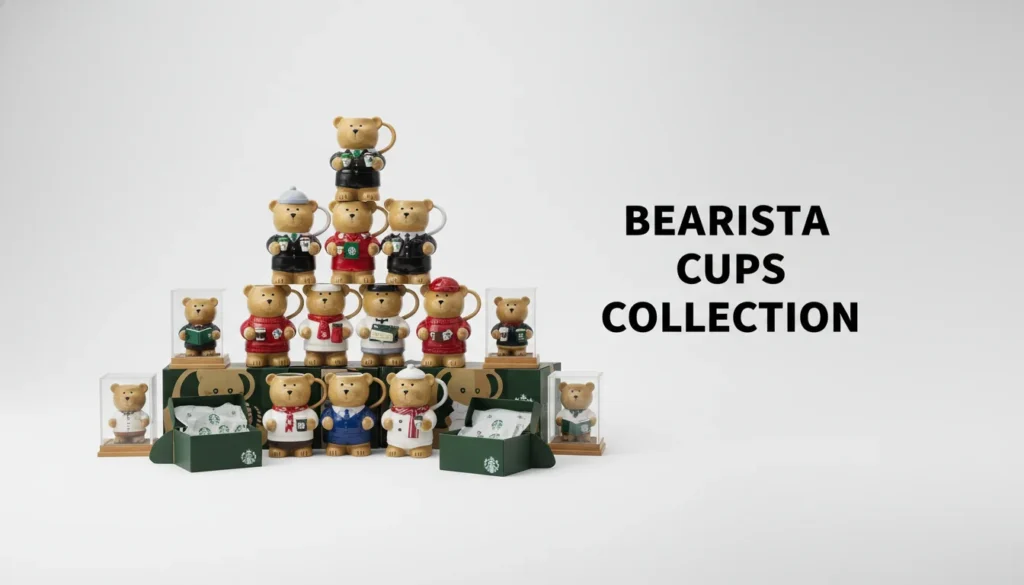
You’re in line for your usual coffee, and suddenly someone ahead of you is asking the barista about the bear cup. If you’ve ever wondered why Starbucks Bearista cups sell out fast, pop up all over resale sites, and spark collector chatter every holiday season, you’re not alone. I’ve tracked seasonal merch drops for years, and Bearista releases are one of the few items that can go from “sitting on the shelf” to “gone everywhere” in a single morning. So what are these cups, why do people want them so badly, and how do you reliably find each release without turning it into a full-time job?

What are Starbucks Bearista cups?
Starbucks Bearista cups are bear-themed reusable cups or tumblers released as part of seasonal Starbucks merchandise collections. “Bearista” blends bear + barista, referencing Starbucks’ long-running teddy-bear mascot used in plush and gifting lines. In cup form, the design is usually literal (a bear-shaped exterior) or strongly thematic (bear face, ears, paw textures, winter “sweater” details).
You’ll most often see Bearista cups during holiday and winter launches, though the exact timing can vary by market. Starbucks typically promotes seasonal merchandise through its newsroom and social channels, where collections and launch windows are announced (see Starbucks’ official seasonal merch updates like Sip in style: Starbucks winter merchandise collections and Celebrate the season with Starbucks holiday merchandise).
Common Bearista cup styles (what to expect)
- Cold cups with straw lids (often the most “viral” format)
- Tumblers with screw tops (more commute-friendly)
- Textured plastics that mimic fur, knits, or winter gear
- Limited colorways tied to a specific season or region
Why collectors want Starbucks Bearista cups (and why they sell out)
Collectors don’t chase Starbucks Bearista cups just because they’re cute—there’s a predictable set of “demand drivers” that repeats every year. From my experience watching launches, the frenzy is usually a mix of scarcity, giftability, and social proof.
1) They feel limited (even when they’re not officially numbered)
Starbucks merchandise is often produced in finite runs by season, store, and region. That “only here, only now” reality creates urgency. Even if Starbucks doesn’t label a Bearista cup as limited edition, the shelf life is short—and buyers act accordingly.
2) The design is instantly recognizable on camera
Bearista cups are made to be noticed: bold shapes, tactile textures, and seasonal cues. That makes them perfect for short-form video, gift guides, and “haul” content—amplifying demand once a post takes off.

3) They sit at the intersection of “collectible” and “usable”
A lot of collectibles live on a shelf. A Bearista cup can be displayed and used, which broadens the buyer base. Some collectors keep one pristine and use a backup—especially if the exterior is prone to scuffs.
4) Resale culture is real (but you should buy smart)
If you’ve browsed resale listings, you’ve seen Bearista cups listed at markups. You can compare listings and sold comps on large marketplaces like eBay’s Starbucks Bear listings, but don’t treat asking prices as “market value.” Look at sold listings, condition notes, and shipping costs to avoid overpaying.
How to find every Starbucks Bearista cup release (without the stress)
Finding Starbucks Bearista cups consistently is less about luck and more about building a simple routine. I’ve used the checklist below to catch high-demand drops without driving to five stores.
Step-by-step: a reliable release-tracking system
- Follow official announcements first. Start with Starbucks’ newsroom and seasonal posts (examples above) to know which collections exist and when they’re teased.
- Watch Starbucks social posts for exact dates. Teaser reels and posts can hint at drop days (and sometimes product names).
- Call 1–2 local stores the day before. Ask when they typically set seasonal merch and what time shelves are refreshed.
- Go early on launch day. The first wave of buyers often clears the most sought-after pieces.
- Check multiple store formats. High-traffic locations may sell out faster; smaller stores sometimes surprise you.
Starbucks’ viral Bearista cups return: How to get one
Pro tip: know which cup format matches your real use
A Bearista cold cup is fun, but if you want something that fits commute life, consider whether a leak-resistant lid style is more practical. If you’re deciding between formats, this guide can help: Tumbler vs Travel Mug: What’s the Difference?.
How to spot fakes, avoid scams, and buy safely
When Starbucks Bearista cups are hard to find, scammers follow the demand. I’ve seen the same red flags repeat across platforms—especially when listings rely on stock photos or rush you into off-platform payment.
Quick authenticity & safety checks
- Photos: Ask for real photos from multiple angles (bottom stamp/markings, lid details, texture).
- Pricing: Deep discounts on “sold-out everywhere” items are suspicious.
- Payment: Use protected checkout methods; avoid wire transfers or “friends and family.”
- Condition: Look for notes on scratches, discoloration, straw wear, or odor retention.
| Risk/Issue | What It Looks Like | How to Verify | Best Solution |
|---|---|---|---|
| Stock photos only | Same catalog-style images across multiple listings; no photo of the exact cup | Ask for timestamped photos showing bottom stamp, lid, straw, and any box/tags | Buy only from listings with clear, original photos of the actual item |
| Unusually low price | Price far below typical sold comps; “must sell today” urgency | Compare recent sold listings for the same Bearista model/size; check seller history | Avoid “too good to be true” deals; choose market-priced items from reputable sellers |
| No returns | Listing states “final sale,” “no refunds,” “as-is” for new/unused items | Read return policy and platform buyer protection; message seller for written confirmation | Purchase only where buyer protection applies; prefer sellers offering returns |
| Off-platform payment request | Requests PayPal F&F, bank transfer, gift cards, or to “avoid fees” | Keep all communication and payment within the marketplace; check platform rules | Refuse off-platform payments; report the listing/seller if pressured |
| Inconsistent logo/markings | Logo placement/font looks off; misspellings; poor print quality; missing Starbucks marks | Compare with official product photos and known authentic examples; request close-ups of markings | Pass on questionable items; buy from trusted sellers with provenance/receipts |
| Damaged lid or missing straw | Cracks, warped lid, loose seal; straw not included or wrong color/length | Request photos of lid threads/gasket and straw; confirm included accessories and condition in writing | Choose complete sets; negotiate replacement/partial refund only via platform |
Caring for Bearista cups (so they stay collectible)
Collectors often underestimate how fast daily use can dull a cup’s “like new” look. Textured plastics can trap residue, and seasonal finishes may scratch if tossed in a bag with keys.
Practical care habits that help
- Rinse soon after use to prevent staining and odor.
- Use a soft bottle brush around textured areas and lid threads.
- Let all parts dry fully before reassembling to reduce smells.
If you rotate between Bearista cups and stainless options, this cleaning guide is a solid baseline: How to Clean Stainless Steel Coffee Mugs. For anyone comparing everyday durability and insulation performance across brands, this breakdown is helpful too: Battle of the Bottles: Corkcicle vs. Stanley Tumblers.

Are Starbucks Bearista cups “worth it” in 2026?
“Worth it” depends on whether you’re buying for collecting, gifting, or daily use. From what I’ve seen, Starbucks Bearista cups deliver the most value when you do one of these:
- Collect intentionally: pick a theme (holiday-only, a single colorway, or one per year) instead of chasing everything.
- Buy for joy, not hype: if you love the design, you’ll never regret missing the “lowest price.”
- Avoid panic resale: if it’s truly sold out locally, set a price ceiling and wait for listings to normalize.
If your goal is a stylish everyday cup with strong temperature control, the “collectible” angle may matter less than insulation and lid design. That’s often where premium drinkware lines—and collabs—shine.
Conclusion: Your Bearista strategy, minus the chaos
The appeal of Starbucks Bearista cups is simple: they’re seasonal, recognizable, and genuinely fun to own. But the smart way to collect is calmer—track official announcements, learn your local store patterns, and buy safely when you do go secondary-market. I’ve found that once you choose your “rules” (one per year, holiday-only, or display + daily pair), the hobby becomes enjoyable again instead of stressful.
FAQ: Starbucks Bearista cups
1) What does “Bearista” mean on Starbucks cups?
It’s a Starbucks mascot concept combining “bear” and “barista,” used for plush and seasonal merchandise themes, including cups.
2) When do Starbucks Bearista cups usually come out?
Most releases show up around holiday and winter seasonal merchandise launches, but timing varies by country and store.
3) Why are Starbucks Bearista cups hard to find?
They’re tied to seasonal shipments with limited store quantities, and demand spikes quickly when social posts go viral.
4) Where is the best place to buy sold-out Bearista cups?
If stores are sold out, reputable marketplaces can work—just check sold comps, demand clear photos, and use protected payment.
5) How can I tell if a Bearista cup listing is fake?
Be cautious with stock-only photos, off-platform payment requests, inconsistent branding/markings, and prices that are far below typical sold listings.
6) Are Bearista cups good for hot drinks?
Many Bearista designs are cold-cup oriented; always check the specific product’s intended use and lid style before using with hot beverages.
7) Do Starbucks Bearista cups increase in value?
Some do, especially near launch, but resale value varies widely by condition, region, and how many units were available—there’s no guarantee.