
Sweatpants have a way of showing up when you least expect it: a cold pre-dawn warm-up, a post-long-run crash on the couch, or a travel day when comfort is non-negotiable. I’ve tested everything from classic cotton fleece to technical knits, and the “best” sweatpants are never just the softest pair—they’re the ones that match your use case. Are you prioritizing warmth, breathability, mobility, or clean silhouette?
In this guide, you’ll learn how to choose sweatpants with runner-grade logic: fabric, fit, thermal strategy, and durability. You’ll also see what separates premium, performance-minded options—like SATISFY’s material-first approach—from basic lounge staples, so your next pair earns real mileage.
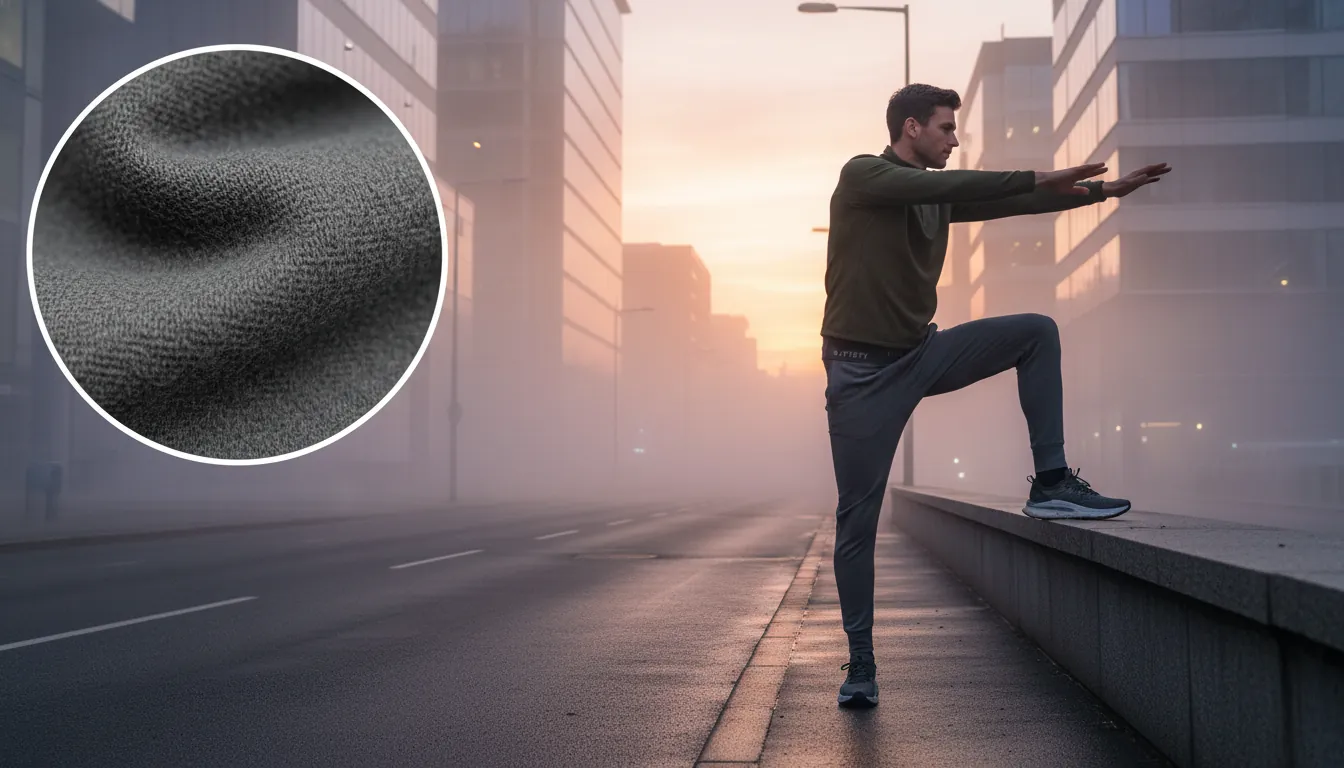
What Sweatpants Are (and Why “Joggers” Aren’t Always the Same)
Sweatpants traditionally refer to soft knit pants—often fleece-backed—built for warmth and comfort. “Joggers” usually describe a more tapered silhouette with cuffed ankles, but many brands use the terms interchangeably. In practice, the difference that matters is how the pant manages heat and movement.
If you’re buying sweatpants for training or recovery, look past the label and focus on:
- Fabric structure (loopback vs brushed fleece vs double-knit)
- Patterning (gussets, articulated knees, taper)
- Hardware and finishing (waist drawcord, pocket design, cuff construction)
For a basic definition and history context, see Sweatpants (Wikipedia) (helpful overview, but product specs vary widely brand to brand).
Why Runners Should Care: Sweatpants as a Performance Layer
Most runners treat sweatpants as “afterthought clothing.” That’s a mistake in cold or variable conditions, where sweatpants become a temperature-control tool. I’ve found the right pair can reduce warm-up friction—meaning you actually get outside—while also preventing the post-run chill that can derail recovery.
Performance-minded sweatpants can support:
- Warm-ups and cool-downs (protect muscles without overheating)
- Recovery days (comfort + light compression feel from stable knits)
- Travel and race weekends (packable warmth, easy layering)
SATISFY’s broader philosophy—“running apparel developed to unlock the High”—maps well here: sweatpants aren’t just lounge; they’re part of the ritual and the system.
Fabric Deep Dive: The Materials That Make (or Break) Sweatpants
Fabric is the biggest quality divider in sweatpants. Entry-level pairs often focus on softness, while premium pairs balance softness with thermoregulation, abrasion resistance, and shape retention.
Common sweatpants fabrics (and what they’re best at)
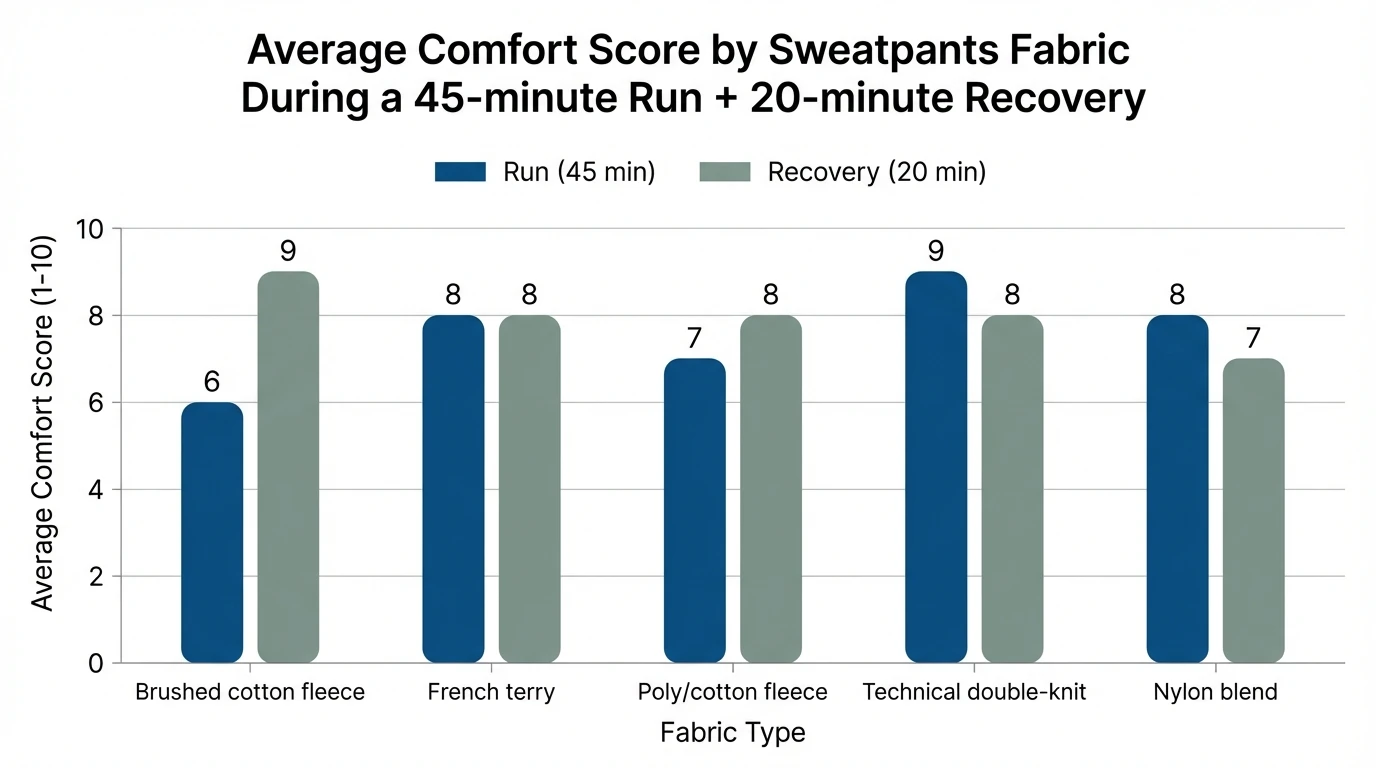
- Cotton fleece (brushed back): warm and cozy, but can hold moisture and feel heavy after sweating.
- French terry (loopback): more breathable, less “puffy,” better for mild temps and indoor wear.
- Poly/cotton blends: faster drying than 100% cotton, typically more durable and less shrink-prone.
- Technical double-knit: smoother face, stable structure, holds shape, and often layers better.
- Nylon blends / performance shells: wind resistance and durability; feel less “classic sweatpant.”
If you want a broad view of what’s on the market (from budget to lifestyle), browsing category pages like Nike men’s joggers & sweatpants can help you spot common fit and feature patterns—then you can compare specs more critically.
Fit Matters More Than You Think: How Sweatpants Should Sit on a Runner
I’ve seen great fabric ruined by sloppy fit. For runners, sweatpants should allow knee drive, sit securely at the waist, and avoid calf drag or ankle bunching.
A simple fit checklist
- Waistband: sits flat, drawcord doesn’t twist, no gapping in motion.
- Thigh room: enough for stride; too tight restricts hip flexion.
- Knee articulation: fabric shouldn’t pull when you lift your knee.
- Taper/cuff: reduces snagging and wind flap; helpful for track warm-ups.
- Inseam length: no stacking that collects water and grit.
Pro tip: If you plan to layer over tights, size and taper matter more than softness.
| Use Case | Best Fabric Type | Ideal Fit | Key Features | Avoid If |
|---|---|---|---|---|
| Running warm-up | Lightweight polyester/spandex blend | Tapered with cuffed ankles | Breathable, moisture-wicking, 4-way stretch, zip pockets | Heavy fleece, wide legs that flap, no stretch |
| Cool-down/recovery | Cotton/poly blend with brushed fleece | Relaxed straight or tapered | Soft handfeel, gentle warmth, elastic waist, minimal seams | Thin tech fabric that feels clammy |
| Travel | Nylon/poly blend with elastane | Slim-straight, flexible waistband | Wrinkle-resistant, odor control, secure zip pockets | 100% cotton that bags out, no pocket security |
| Lounging | Cotton/modal (or French terry) | Loose relaxed fit | Ultra-soft, breathable, drawcord waist, roomy pockets | Stiff woven fabrics, tight compression fits |
| Cold weather errands | Heavy fleece or thermal knit blend | Relaxed with room to layer | High warmth, wind resistance, brushed interior, ankle cuffs | Lightweight jersey, open hems that drag |
Features That Separate Premium Sweatpants From Basic Ones
Premium sweatpants earn their price through small, high-impact details that improve daily use. When I evaluate a pair, I look for pocket engineering and long-term fabric behavior (bagging, pilling, shrink).
High-value features to look for
- Secure pockets: zip or internal stash to prevent phone bounce.
- Reinforced seams: reduces blowouts in thigh/crotch areas.
- Anti-pilling face: keeps them looking sharp after washing.
- Balanced weight: warm enough without feeling swampy indoors.
- Cuff design: snug but not restrictive; stays put when moving.
For reference on how mainstream athletic brands position “fleece” and “tech fleece,” browse a performance-fleece category like Russell Athletic men’s fleece sweatpants and compare weights, fits, and feature callouts.
Sweatpants for Cold-Weather Running: A Practical Layering System
Sweatpants can work for running in cold weather, but they’re usually best as a warm-up layer unless they’re built with performance textiles. In my own winter routine, I’ll often start with sweatpants over shorts or tights, then remove them once I’m warm—especially for intervals.
A simple temperature-based approach
- Mild chill (cool, not cold): loopback terry or lighter fleece.
- Cold steady runs: technical knit with breathability + taper.
- Windy conditions: consider a wind-resistant outer layer or hybrid pant.
- Post-run: dry layer ASAP; sweatpants should be comfortable and not trap wetness.
If you’re shopping within SATISFY’s ecosystem, look for pieces that complement their proprietary materials (e.g., insulating layers like CoffeeThermal™ and comfort-forward fabrics like FuzzFleece™) and integrate smoothly with technical shells like Pertex® when conditions turn.
Care & Longevity: How to Keep Sweatpants Looking Premium
Sweatpants fail in predictable ways: pilling, shrink, waist stretch-out, and knee bagging. The care routine should match the fabric—especially for premium blends and technical knits.
A reliable care routine (works for most pairs)
- Wash cold, inside out, gentle cycle.
- Avoid heavy softeners (can reduce moisture transfer in performance fabrics).
- Air dry when possible; tumble low if needed.
- Spot-clean stains early to avoid aggressive wash cycles later.
If you’re unsure, follow brand-specific guidance. A clear example of detailed care education is Aritzia’s Fabric Care Guide, which helps you understand how different knits behave over time.
Styling Sweatpants Without Looking Sloppy (Yes, Even Premium Ones)
Sweatpants can read “intentional” when the silhouette and materials are controlled. My rule: keep one axis relaxed and the other structured.
Try these combinations:
- Tapered sweatpants + technical shell (clean lines, runner-forward)
- Relaxed sweatpants + fitted base layer (balanced proportions)
- Monochrome set (makes even basic fleece look elevated)
- Premium sneakers + minimal accessories (lets fabric quality show)
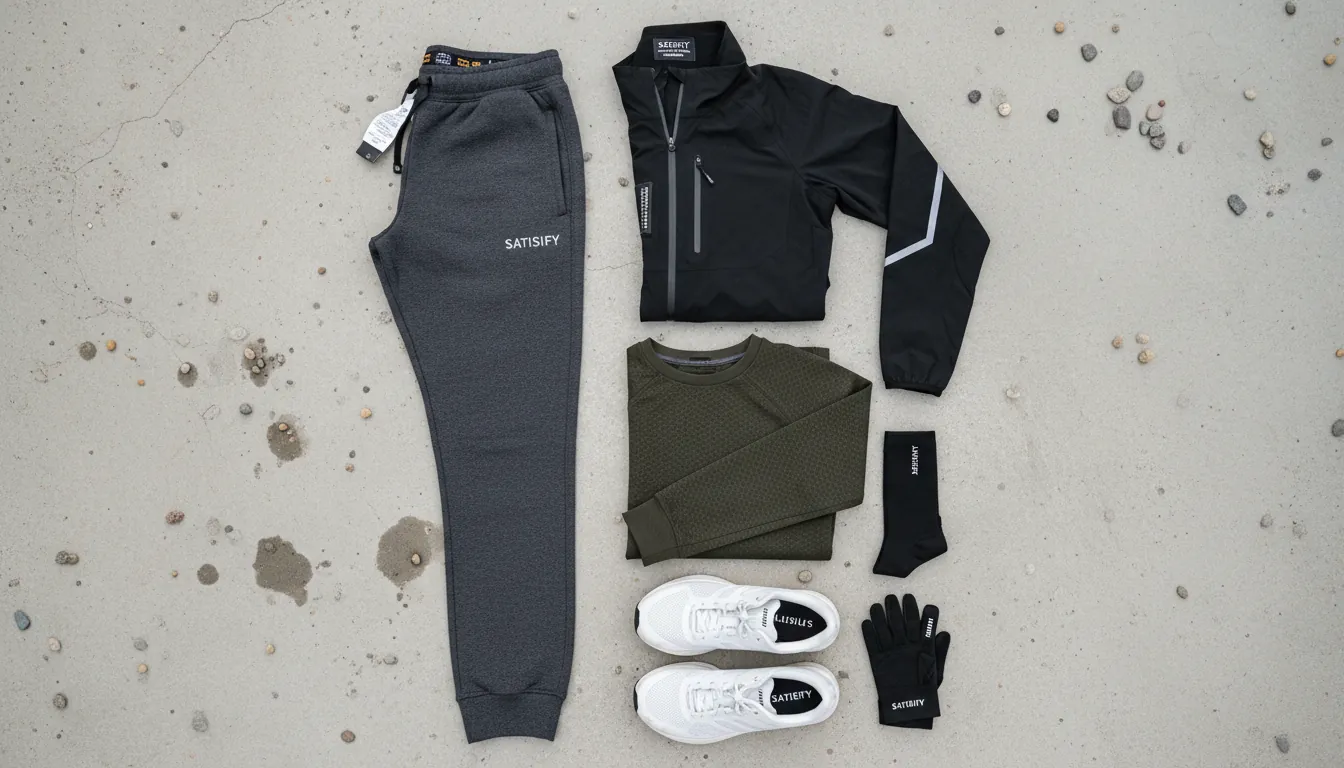
Where SATISFY Fits: Sweatpants as Part of a High-Performance Running Wardrobe
SATISFY isn’t built around generic “athleisure.” It’s built around running outcomes: comfort under stress, protection in changing weather, and a mindset that respects the sport. Sweatpants in this world should behave like equipment—especially for warm-ups, recovery, and travel—while still feeling elevated enough to wear daily.
If you’re exploring the brand beyond sweatpants, their technical layering approach and culture pieces add context:
- SATISFY running apparel (brand overview and product ecosystem)
- Possessed Magazine (running culture, philosophy, and stories)
- TheROCKER running shoe (signature footwear that complements a performance wardrobe)
Sweatpants vs Joggers | What’s The Difference?
Conclusion: The Right Sweatpants Should Earn Their Place in Your Rotation
Sweatpants aren’t just for staying in—they’re for staying ready. When you choose by fabric, fit, and real features (pockets, durability, temperature control), sweatpants become a reliable part of running life: warm-ups that don’t overheat, recovery that actually feels restorative, and comfort that travels well.
If you’re building a premium kit, treat sweatpants like performance gear—not an afterthought—and your whole week gets easier.
FAQ: Sweatpants
1. What’s the difference between sweatpants and joggers?
Joggers are usually more tapered with cuffed ankles, while sweatpants can be relaxed and open-hem. Many brands overlap the terms, so check fit and cuff design.
2. Are sweatpants good for running?
They can be, especially for warm-ups and cool-downs. For running workouts, choose breathable fabrics and a tapered fit to avoid overheating and drag.
3. What fabric is best for sweatpants if I sweat a lot?
Look for blends or technical double-knit that dry faster and hold less moisture than heavy cotton fleece.
4. How should sweatpants fit for athletic legs?
You want room in the thighs, clean taper through the calf, and no pulling at the knees during stride. A gusset or articulated pattern helps.
5. Do expensive sweatpants actually last longer?
Often yes—better knits, anti-pilling faces, stronger seams, and more stable waistbands typically improve longevity if cared for correctly.
6. How do I stop sweatpants from pilling?
Wash inside out, cold, gentle cycle, avoid harsh drying, and keep them away from abrasive garments (like heavy denim or towels) in the wash.
7. Can I wear sweatpants over tights in winter?
Yes, and it’s a smart system for warm-ups. Prioritize a taper that layers easily and cuffs that don’t bunch around the ankle.