
You’re mid-project, the seam ripper is already on the table, and you suddenly realize you’re short half a yard. In that moment, typing “textiles shop near me” isn’t just a search—it’s a rescue mission. The problem is that “near me” results can mix quilting boutiques, home décor showrooms, big-box craft aisles, and wholesale bolt sellers, all with very different pricing and services. This guide helps you find the right textiles shop near me in minutes and avoid the most common buying mistakes.
Why “Textiles Shop Near Me” Results Vary So Much
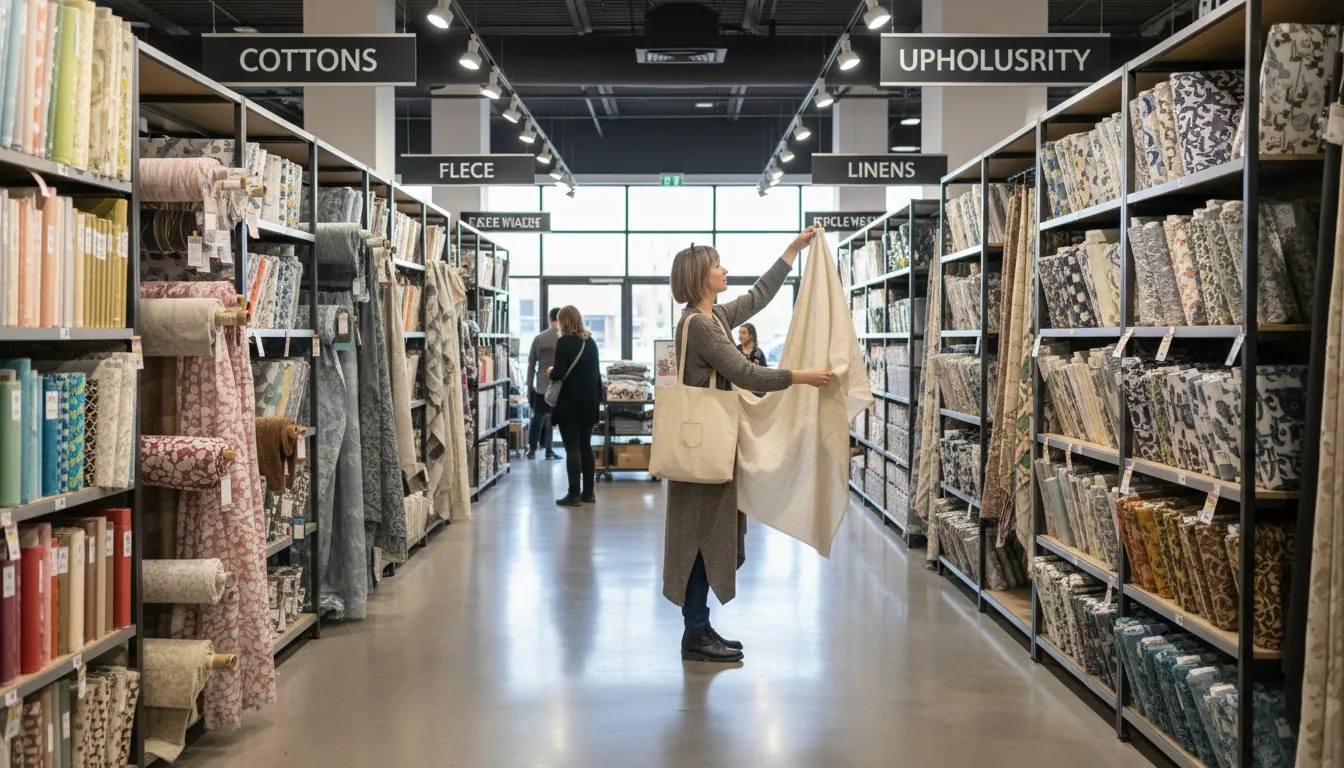
When people search textiles shop near me, they may mean one of four store types, and each serves a different job. Big craft retailers often stock basics (cotton, fleece, felt) and seasonal prints, while specialty fabric stores carry higher-end yardage, trims, and expert staff. Upholstery and interior design textile shops focus on durability, width, and performance fabrics, often offering measuring and installation support. Wholesale warehouses may be cheapest per yard but require bulk buys or limited browsing help.
To narrow your options quickly, decide what you need most:
- Speed (open late, curb pickup, in-stock basics)
- Selection (designer bolts, trims, specialty fibers)
- Guidance (consultations, pattern help, matching)
- Price per yard (bulk, remnants, member discounts)
For store discovery, directories like Yelp’s fabric stores near you are useful for filtering by reviews, photos, and “in-stock” mentions.
The 60-Second Checklist Before You Drive
I’ve learned (the hard way) that not all “fabric stores” are fabric-first. Before you leave, do a quick call or check the listing photos and confirm these basics. It saves time and prevents buying the wrong substrate for your project.
Ask or verify:
- Do they sell by the yard (not pre-cuts only)?
- Do they stock your category: apparel, quilting, upholstery, utility, or craft?
- Are notions available (thread, interfacing, zippers, needles)?
- Can they cut continuous yardage (no forced splits)?
- Do they have a returns policy on cut fabric?
If you’re shopping big-box options, you can also check local inventory pages (for example, a Walmart store fabric department may show what’s carried at a specific location).
What to Look for Inside a Great Textiles Shop Near Me
A high-quality textiles store is easy to spot once you know the signals. Beyond pretty prints, the best shops make it simple to choose the correct fabric for performance, feel, and longevity.
1) Clear labeling and fabric education
Strong stores label fiber content, width, weight, and care instructions. If labels are missing, staff should be able to explain shrinkage risk, stretch recovery, and best-use cases.
2) Lighting that shows true color
Color-matching under warm lighting causes heartbreak at home. Good shops use neutral lighting and offer swatches or allow small samples.
3) Cutting accuracy and consistent measuring
A reliable cutting counter matters. I once bought “2 yards” that came up short after squaring—now I always ask for a quick edge-square and confirm measurement marks.
4) Extras that save your project
Look for:
- Remnant bins and end-of-bolt deals
- Matching thread and interfacing guidance
- On-site services (hemming referrals, upholstery consultation)
Some specialty shops also offer design consultations similar to interior-focused stores that provide measure-select-install workflows (see examples of service-led textile businesses like P. Tree Textiles).
Pricing: Yardage vs. Value (What You’re Really Paying For)
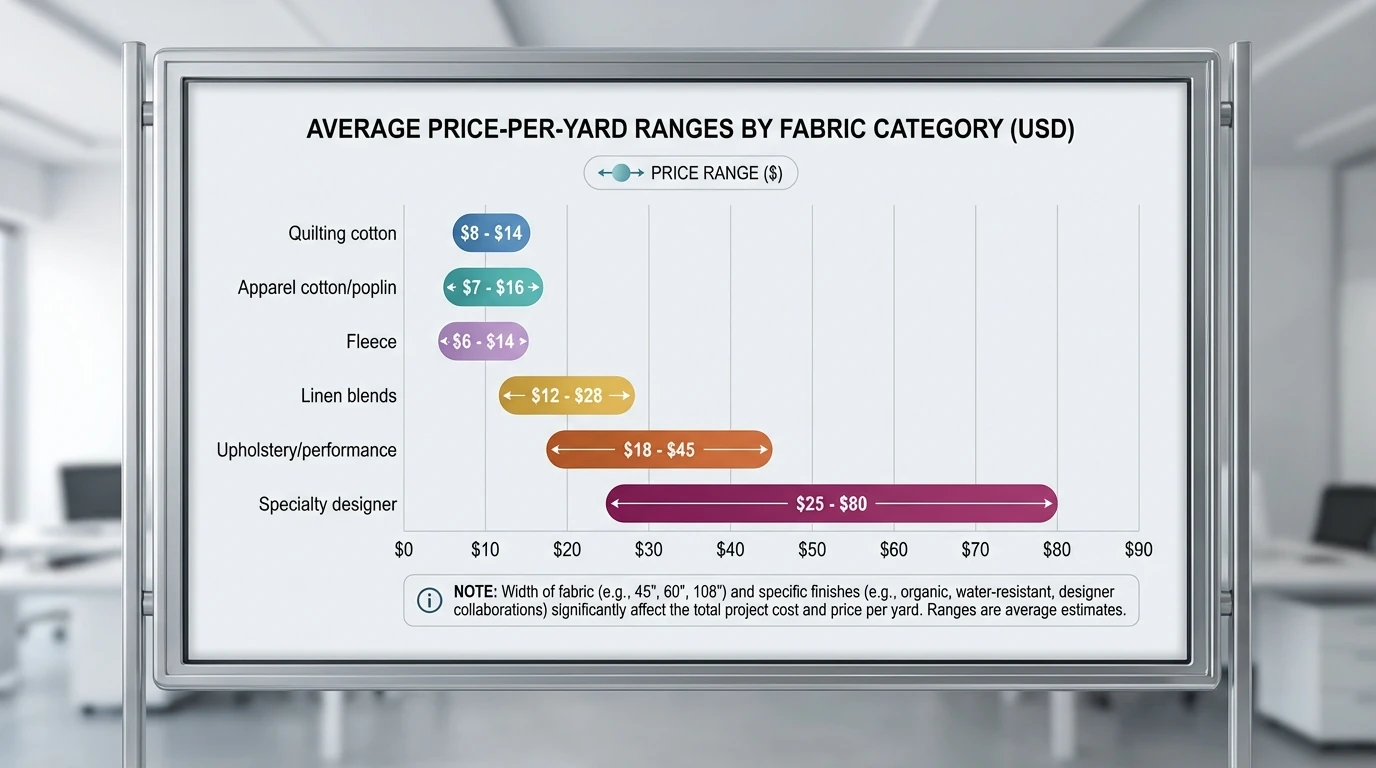
Price per yard is only one piece. A $7/yd cotton that pills, fades, or distorts after washing can cost more than a $12/yd cotton that stays crisp. Think in terms of project cost, not shelf cost.
Key drivers of value:
- Fiber (cotton vs. linen vs. wool blends)
- Weave/knit quality (density, stability)
- Finish (brushed, water-resistant, performance-treated)
- Width (upholstery often wider; can reduce seams and yardage)
Common Mistakes When Searching “Textiles Shop Near Me” (and How to Avoid Them)
Even experienced makers fall into these traps—especially when rushing.
| Mistake | Why It Happens | What To Do Instead |
|---|---|---|
| Buying without checking fabric width | Store listings default to “per yard/meter,” and width is easy to overlook; patterns assume a specific width | Verify width (e.g., 44/45″, 54″, 60″) and recalculate yardage using the pattern layout; buy extra for matching stripes/plaids |
| Skipping shrinkage testing | Assumes all fabrics behave the same; urgency to start cutting | Prewash/pretreat the same way you’ll launder the finished item; test a swatch for shrinkage and color bleed before cutting |
| Choosing wrong stretch direction | Confusion between lengthwise/crosswise stretch; fabric sold as “stretch” without clear guidance | Identify greatest stretch and align it per pattern (usually around the body); check recovery and use the recommended needle/elastic/stitch |
| Ignoring rub count for upholstery | Rub ratings (Martindale/Wyzenbeek) aren’t commonly shown; focus stays on color/texture | Choose fabric with an appropriate abrasion rating for the use (higher for seating); confirm it’s labeled upholstery or check specs before buying |
| Assuming “cotton” equals “quilting cotton” | “Cotton” describes fiber, not weight/weave/finish | Check fabric type and weight (quilting cotton vs poplin vs canvas vs lawn); order swatches and match the pattern’s suggested fabric categories |
| Not checking dye lot/bolt consistency | Fabrics can vary between bolts/batches; online reorders may differ | Buy all yardage at once from the same bolt/dye lot; compare in daylight and keep extra for future repairs or matching pieces |
If You’re Customizing Fabric or Apparel, Choose a Store That Supports Production
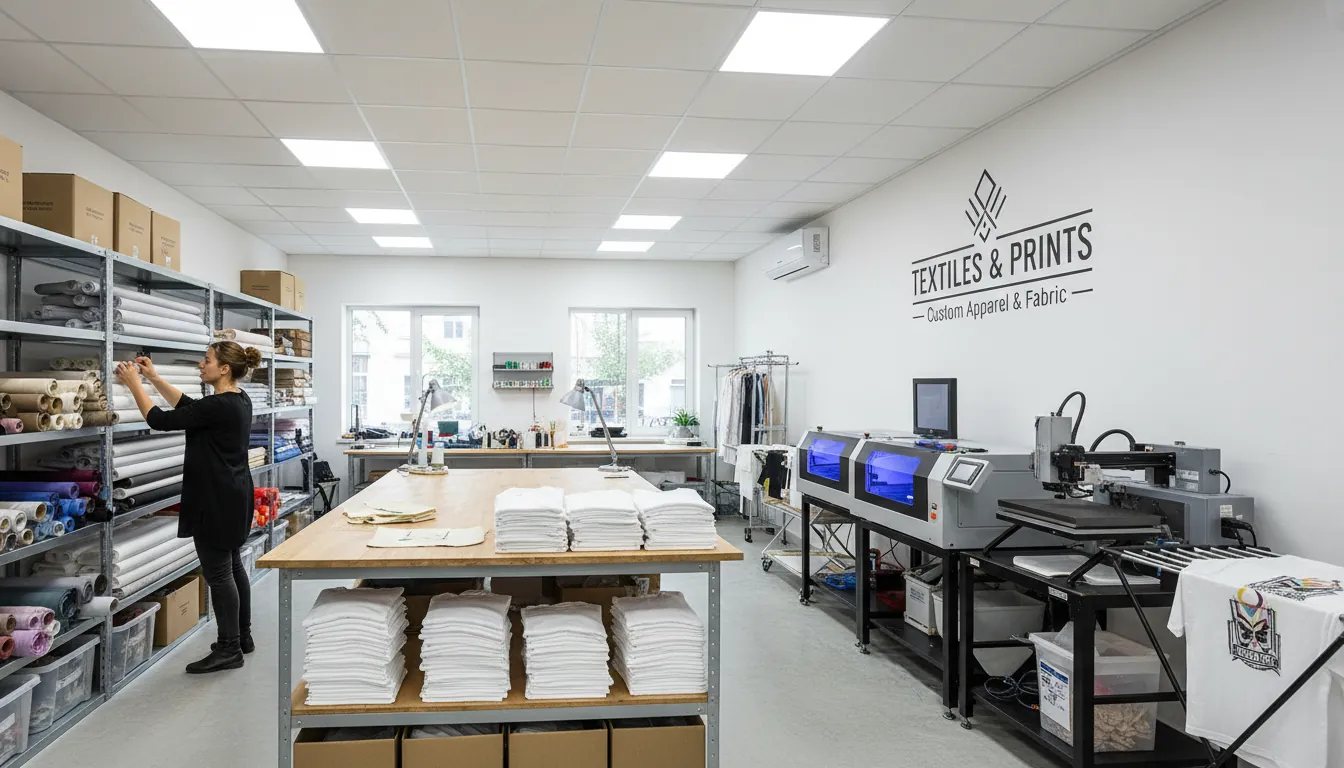
Many people searching textiles shop near me aren’t just sewing—they’re building small-batch products: tote bags, patches, uniforms, merch, and personalized gifts. In that case, the “best” store is one that consistently stocks blank garments, compatible films/vinyls, or printable materials.
From my own production experience, consistency matters more than one-time variety. You want suppliers that can repeat orders, keep color stable, and restock reliably. If you’re printing apparel, it helps to source proven consumables—see xTool’s curated materials for xTool apparel printer to reduce trial-and-error.
If your workflow involves cutting textiles (patch bases, appliqué pieces, stencils), learn the material rules first. xTool’s guide on Laser Cutting Fabric and Textiles: The Ultimate Guide breaks down what cuts cleanly and what to avoid for safety and results.
Online vs Local: When “Near Me” Wins (and When It Doesn’t)
Local textile shopping still has clear advantages:
- You can touch drape and thickness before buying.
- You can color match against a sample or garment.
- You can get same-day yardage for deadline projects.
Online wins when you need:
- Hard-to-find prints, specialty weaves, or bulk bolts
- Consistent reorders with saved SKUs
- Broader inventory (muslin bolts, solids, seasonal lines)
A practical hybrid strategy is to buy locally for sampling and urgent needs, then buy repeat yardage online once specs are confirmed. Many online retailers specialize in large-bolt basics (like muslin) and quilting categories (for example, browsing catalogs such as Fabric Depot can help you understand common bolt options and yardage formats).
How xTool Fits In: Turning Fabric Finds Into Sellable Products
A textiles shop near me solves sourcing; xTool helps turn that fabric into finished inventory. If you’re running a small business (or starting one), tools like laser cutters/engravers and DTF printing can speed up customization and increase margins on the same base materials.
Common maker-to-business workflows I’ve seen work well:
- DTF transfers for short-run apparel branding and full-color graphics
- Laser-cut appliqué and patches (material-dependent) for premium finishing
- Template cutting for repeatable production (pockets, tags, labels)
If you’re evaluating equipment specifically for apparel output, this roundup of The 5 Best T-Shirt Printing Machines For Small Businesses helps compare options and choose a setup that matches your volume and budget.
Fabric Shopping Guide: How to Buy Fabric Online
Conclusion: Find a Textiles Shop Near Me—and Leave With the Right Fabric
The best textiles shop near me isn’t always the closest—it’s the one that matches your project category, stocks consistent materials, and helps you choose correctly the first time. When you shop with a fast checklist, verify width and care, and think in terms of total project value, your fabric runs stop being stressful and start feeling like progress. If you’re turning fabric into products, pairing smart sourcing with the right production tools can help you scale without sacrificing quality.
📌 xTool Apparel Printer: One Click DTF Printer, Effortless Customization for Business
FAQ: Textiles Shop Near Me
1) What’s the difference between a fabric store and a textiles shop?
A textiles shop may include fabric plus trims, upholstery materials, consulting, and sometimes custom services, while a fabric store may focus mainly on yardage and basic notions.
2) How do I know how much fabric to buy?
Check your pattern yardage (or measure surfaces for upholstery), then add extra for shrinkage, pattern matching, and cutting errors—often 5–15% depending on fabric and project.
3) What should I ask the staff at a textiles shop near me?
Ask about fiber content, width, care instructions, shrinkage, stretch direction, and whether they recommend interfacing or lining for your use.
4) Are big-box craft stores good for apparel fabric?
They can be, especially for basics and beginner projects. For higher-end garments, specialty apparel fabric shops often offer better drape, stability, and fiber options.
5) How can I find a good upholstery textile store near me?
Search for upholstery fabric, interior fabrics, or window treatment showrooms. Look for consultation services, performance fabric options, and staff who discuss durability metrics.
6) What’s the best way to check fabric color accuracy before buying?
View it under neutral lighting, compare to your sample, and if possible buy a swatch or small cut first—especially for dye-sensitive projects.
7) Can I laser cut fabric I buy locally?
Some fabrics cut well; others can melt or produce unsafe fumes. Always confirm fiber content and follow a safety-focused material guide before cutting.