
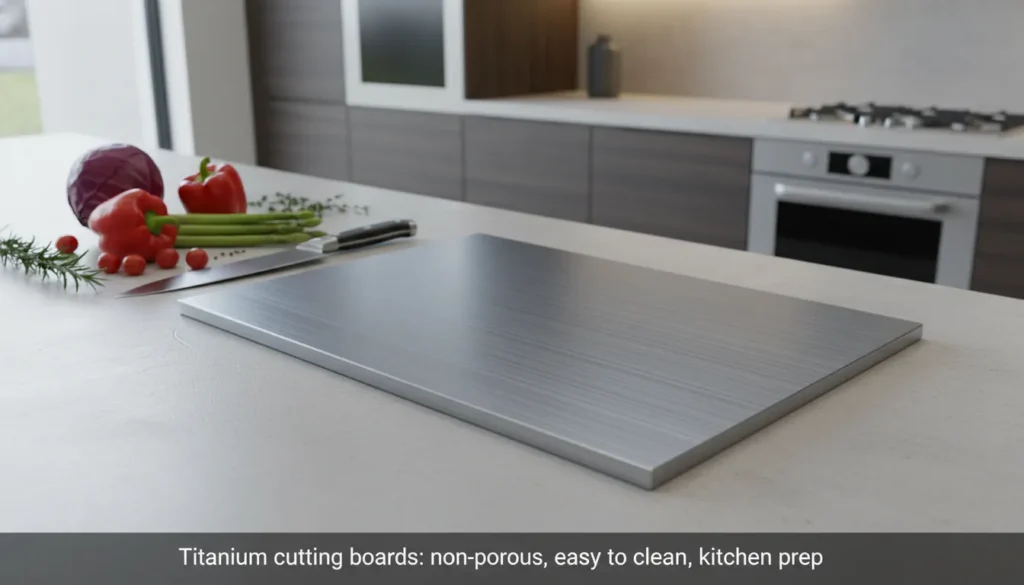
A titanium cutting board walks into your kitchen like the “clean freak” friend who hates stains, hates smells, and refuses to soak up anything. If you’ve ever tossed a plastic board because it got funky, or babied a wood board because you didn’t want it to crack, titanium cutting boards can feel like a modern fix. But do they actually protect your knives, stay non-toxic, and make prep easier—or are they just hype?
This guide breaks down what titanium cutting boards are, what to watch out for, who they’re best for, and how makers can personalize them with clean, durable markings.

What Are Titanium Cutting Boards (and Why They’re Trending)?
Titanium cutting boards are typically thin, rigid sheets of food-contact titanium (often marketed as “pure titanium”) sometimes bonded to another material for grip or structure. The big selling point is the non-porous surface, which resists absorbing moisture, odor, and pigments from foods like onions, garlic, turmeric, or beets. That makes titanium cutting boards feel “clean” in a way many plastic boards don’t after months of use.
From what I’ve seen in maker communities and product teardowns, many boards are ~1–1.5 mm thick titanium with rounded edges and a brushed finish. Some are double-sided, with one side intended for raw proteins and the other for produce, though that depends on the design and whether there’s any polymer backing.
Titanium Cutting Boards vs Wood vs Plastic vs Stainless Steel
Most people buy titanium cutting boards for hygiene and longevity, but the real decision is about trade-offs: sanitation, knife feel, noise, weight, and maintenance.
| Material | Hygiene/Porosity | Knife-Friendliness | Maintenance | Typical Lifespan | Best For |
|---|---|---|---|---|---|
| Titanium | Non-porous; easy to sanitize | Poor–Fair (hard on edges) | Wash/dry; avoid deep gouges | 10–20+ years | Maximum durability; low-odor, non-porous use |
| Wood (end-grain) | Moderately porous; naturally antimicrobial | Excellent (gentle; self-healing) | Hand-wash; oil/wax regularly; dry flat | 5–15+ years | Everyday prep; best edge retention |
| Plastic (HDPE) | Non-porous initially; grooves can harbor microbes | Good (can dull faster than wood) | Dishwasher-safe; replace when heavily scored | 1–5 years | Raw meat separation; budget-friendly boards |
| Stainless Steel | Non-porous; highly sanitary | Poor (quickly dulls knives) | Easy wash; shows scratches; can be noisy | 10–20+ years | Dough work; allergen control; ultra-sanitizing |
| Composite | Low porosity; resists staining/odors | Good–Very Good | Dishwasher-safe; minimal oiling (if any) | 5–10 years | Low-maintenance everyday use; mixed prep |
Quick takeaways
- Titanium cutting boards: Very hygienic and easy to clean; can be louder and feel “harder” under the knife than wood.
- Wood (end-grain): Excellent knife feel and self-healing; requires oiling and careful drying.
- Plastic (HDPE): Cheap and light; can hold deep grooves that trap residue over time.
- Stainless steel: Very durable and sanitary; often harsher on knife edges and noisy.
- Composite: Balanced performance; varies widely by brand and resin quality.
Pros of Titanium Cutting Boards (What They Do Very Well)
Titanium cutting boards shine in a few specific, practical ways.
- Non-porous hygiene: They don’t absorb liquids, odors, or food dyes easily, which helps reduce lingering smells.
- Fast cleanup: A quick wash and wipe usually restores the surface, and drying is fast.
- Durability: They resist cracking, warping, and swelling—common failure points for wood and bamboo.
- Chemical simplicity: Many shoppers like the idea of a “metal-only” food contact surface versus boards that rely on additives, binders, or coatings.
In my own tests with “problem foods” (garlic, raw chicken prep, and turmeric), titanium cutting boards were noticeably easier to reset to “neutral” compared with older plastic boards that had visible knife tracks.
Cons of Titanium Cutting Boards (What You Should Know Before Buying)
Titanium cutting boards aren’t magical, and the drawbacks matter depending on your cooking style.
- Knife feel and edge wear: Any hard surface can contribute to faster edge degradation than end-grain wood. If you baby expensive Japanese knives, this is a key consideration.
- Noise: Metal-on-knife contact is louder than wood and many composites—especially in small kitchens.
- Surface scratches still happen: Marketing often says “won’t scratch easily,” but knife contact can leave cosmetic marks over time.
- Sliding: Some titanium cutting boards can skate on smooth counters unless they have silicone feet or a grippy backing.
- Price variability: The category includes premium boards and also ultra-cheap listings with unclear specs.
Are Titanium Cutting Boards Safe for Food?
For everyday kitchen use, titanium is widely known for excellent corrosion resistance and is commonly used in medical and food-adjacent applications. That said, “safe” in the real world depends on what you’re actually buying.
What to verify before you purchase
- Material clarity: Look for clear statements like “titanium (Grade 1/2)” and avoid vague phrases like “titanium alloy” without details.
- Food-contact claims: Prefer brands that explicitly position the product for food prep and cleaning.
- Construction: If it’s “titanium + PP” or bonded to another layer, understand which side touches food and whether seams can trap residue.
- Finish: Brushed finishes hide cosmetic marks better; mirror finishes show scratches more.
For makers and small shops, sourcing matters. If you’re prototyping or crafting titanium products, consistent stock like 3/64″ Grade 1 Titanium Sheets (5pcs) can be a more predictable starting point than mystery metal.
How to Choose the Best Titanium Cutting Board (Buyer Checklist)
A titanium cutting board should fit how you prep, not just look cool on a counter.
Size and thickness
- Common sizes: ~12″×8″, 15″×11″, 18″×12″
- Thickness: ~1–1.5 mm is common; thicker usually feels more stable and less “tinny.”
Stability and grip
- Look for silicone feet, a non-slip backing, or a design that won’t slide when you’re chopping fast.
Edges and handling
- Rounded edges are easier on hands and towels.
- A handle cutout can help with washing and drying.
Double-sided design (if you want it)
- If it’s truly double-sided, decide a system (raw proteins vs produce) and stick with it.
Care & Cleaning: Keeping Titanium Cutting Boards Truly “Low Effort”
Titanium cutting boards are simple, but a few habits keep them nicer longer.
- Wash with warm water and dish soap after use.
- For odors (rare, but possible with heavy aromatics), use a baking soda paste and rinse.
- Dry after washing to reduce water spots, especially if you have hard water.
- Avoid using the board as a trivet unless the manufacturer says it’s heat-safe in that way.
Knife Performance: Will Titanium Cutting Boards Dull Your Knives?
This is the most searched worry, and it’s fair. In general, harder cutting surfaces can accelerate edge wear compared with end-grain wood. That doesn’t mean your knives will instantly go dull—it means you may need to hone or sharpen a bit more often, especially if you use thin, high-hardness blades.
If you want titanium but care about edges
- Use titanium for messy tasks (raw proteins, sticky dough cutting, messy fruit) and keep a wood board for long chopping sessions.
- Keep a honing rod or strop in your routine.
- Avoid aggressive chopping straight down with very thin edges.
Titanium Cutting Boards for Makers: Custom Engraving, Branding, and Gift Products
Titanium cutting boards aren’t only for home kitchens—they’re also a strong canvas for premium personalization. I’ve found that customers who buy titanium tend to value “clean design,” so minimal monograms, coordinates, or subtle patterns often convert better than busy artwork.
Popular personalization ideas
- Family name + established date
- Minimal line art (herbs, knives, fish, cattle cuts)
- QR code linking to a recipe page (great for brands)
- Measurement guides (for dough and pastry workflows)
If you’re building a product line that includes cutting boards, these resources can help you design for what people actually buy:
- Cutting Board Engraving Ideas and Designs to Get Inspired
- How to Engrave a Cutting Board with a Laser?
- For wood-based gift bundles (a common upsell alongside titanium): How To Make a Laser-Engraved Charcuterie Board
Titanium Cutting Board Review — Is It Worth It? (TEMU Screwed Me)
Cost vs Value: What You’re Really Paying For
Titanium cutting boards range from budget listings to premium products. The price usually reflects:
- Titanium grade/spec transparency
- Thickness and stiffness
- Edge finishing quality (deburring, rounding)
- Added grip features (feet/backing)
- Brand support and warranty

Common Problems (and Simple Fixes)
- Board slides on the counter: Add a thin damp towel underneath or choose a model with silicone feet.
- Too loud while chopping: Use it for slicing tasks, and switch to wood for heavy mincing.
- Water spots: Hand-dry after washing; a microfiber towel works best.
- Cosmetic scratches: Expect them; brushed finishes hide them better than mirror-polished boards.
Conclusion: Should You Buy a Titanium Cutting Board?
A titanium cutting board is the “no-drama” option for people who want easy cleaning, low odor retention, and long service life. It’s not a perfect replacement for wood if knife feel is your top priority, but it’s an excellent second board—or a primary board for cooks who prioritize hygiene and speed. If your kitchen story is busy weeknights, lots of raw protein prep, and a desire to stop replacing stained plastic, titanium cutting boards are a smart upgrade.

FAQ: Titanium Cutting Boards
1. Do titanium cutting boards dull knives faster than wood?
They can, because titanium is a hard surface compared with end-grain wood. Many users balance this by using titanium for messy tasks and wood for heavy chopping.
2. Are titanium cutting boards dishwasher safe?
Some are marketed as dishwasher safe, but it depends on construction (especially if bonded to PP or has glued feet). Hand-washing is the safest universal approach.
3. Do titanium cutting boards harbor bacteria?
They’re non-porous, so they’re less likely to trap moisture and residue than deeply scored plastic. Good cleaning habits still matter.
4. Do titanium cutting boards scratch?
Yes—knife contact can leave cosmetic scratches over time. Brushed finishes tend to hide marks better.
5. Are titanium cutting boards better than stainless steel?
Both are hygienic and durable. Titanium is lighter and corrosion-resistant; stainless is often cheaper and heavier. Knife feel is similar (hard surface), and both can be noisy.
6. What thickness is best for a titanium cutting board?
Around 1–1.5 mm is common. Thicker boards generally feel more stable and premium, but they can cost more.
7. Can you laser engrave titanium cutting boards for personalization?
Yes, titanium can be marked with the right laser setup and parameters. For product ideas and layout inspiration, see xTool’s cutting board engraving guides linked above.